
Unbiased headlines. Facts, not spin.
Every story is an unbiased news briefing written from 110+ sources across the spectrum — sources linked so you can verify it yourself.
 tech
Notable (6/10)
June 24, 2026 at 01:46 AM
tech
Notable (6/10)
June 24, 2026 at 01:46 AM
White House Orders Federal Agencies to Drop Quantum-Vulnerable Encryption by 2030, Five Years Ahead of Schedule
The Order
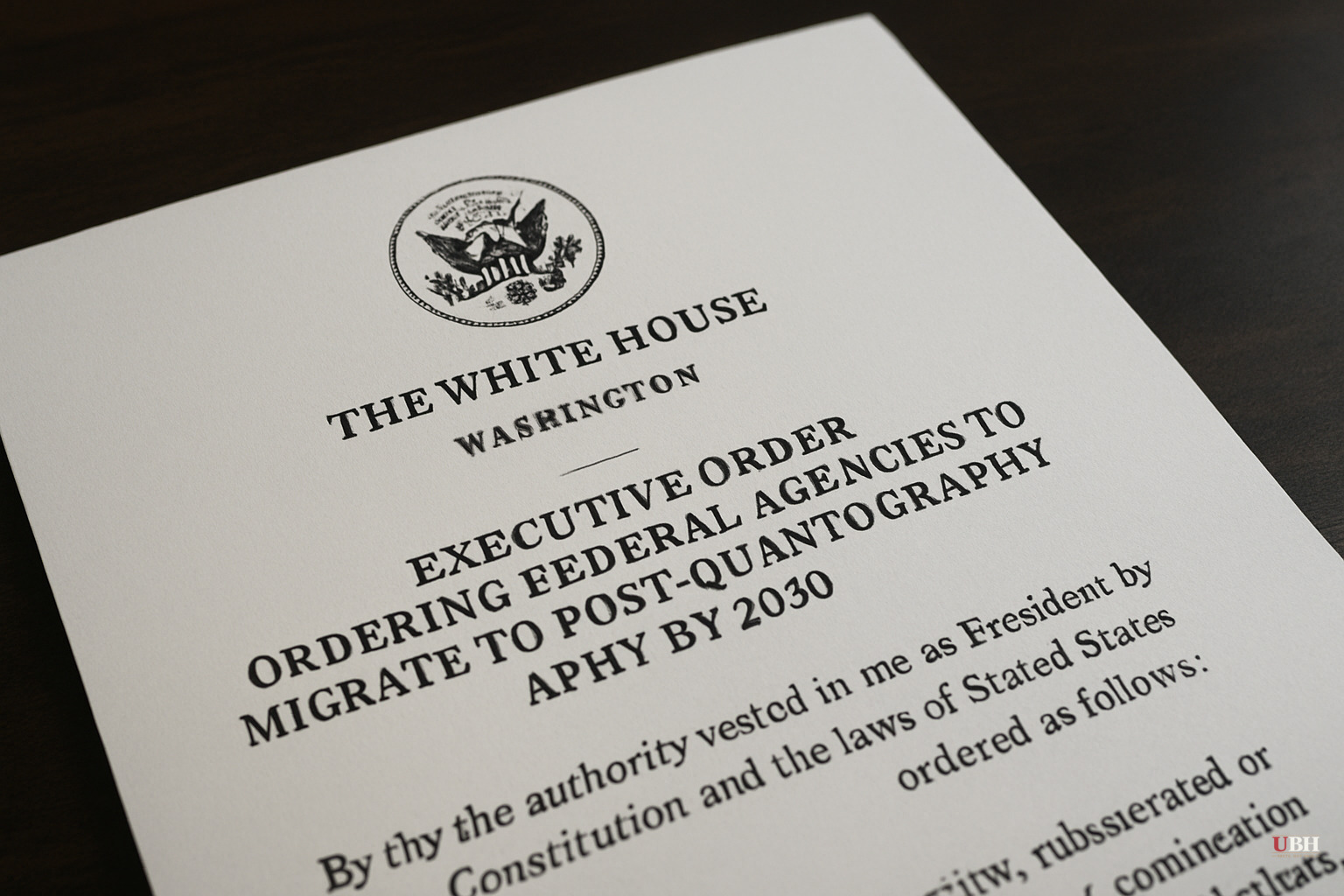
The White House issued an executive order titled Securing the Nation against Advanced Cryptographic Attacks requiring that computing systems classified as 'high-value assets' and 'high-impact systems' complete their transition to post-quantum cryptographic key establishment by December 31, 2030, and to quantum-safe digital signature schemes by December 31, 2031, according to Ars Technica's reporting on the order.
For most affected organizations, that deadline is four to five years earlier than the 2035 timeline previously set under National Security Agency guidance published in 2022. NSA's 2022 framework only covered defense and intelligence systems under its own authority, with a 2030-2033 window. Everything outside that narrower category had until 2035. That cushion is now gone for anyone whose systems land in the new high-priority classifications.
Why Now
The shift is driven by updated threat modeling. Recent research suggests the computing resources and cost required to build a cryptographically relevant quantum computer are significantly lower than the previous consensus held. That changes the math on when adversaries — read: China — could plausibly crack today's encryption.
The executive order makes the risk explicit: adversaries may already be harvesting encrypted U.S. data with the intention of decrypting it once a capable quantum machine exists. That "collect now, decrypt later" strategy doesn't require a working quantum computer today. It just requires patience and storage.
Google and Cloudflare reached the same conclusion independently. Both companies accelerated their own internal PQC migration timelines to 2029 following the same wave of research, according to Ars Technica.
The Standards Are Ready
The good news is the cryptographic tools exist. NIST finalized its first three post-quantum encryption standards on August 13, 2024, after a decade-long standardization project. According to NIST directly, those algorithms are 'ready for immediate use' and cover a broad range of applications, from encrypted email to e-commerce transactions.
NIST has been pushing system administrators to begin migration 'as soon as possible' since that release. The White House order now puts legal and regulatory weight behind that recommendation for federal systems and their contractors.
What the Order Actually Requires
Beyond the 2030/2031 deadlines, the order extends obligations to critical infrastructure owners and operators. Jordan Kenyon, senior quantum scientist at Booz Allen, told Ars Technica that those operators 'can now expect support in developing their PQC migration plans.' Covered contractors could also face proposed rules requiring them to incorporate FIPS-compliant post-quantum algorithms by end of 2030 and to disclose cryptographic vulnerabilities. FIPS — Federal Information Processing Standards — is the set of standards NIST maintains for non-military federal computer systems.
Brian LaMacchia, a cryptography engineer who oversaw Microsoft's post-quantum transition from 2015 to 2022 and now works at Farcaster Consulting Group, put it plainly to Ars Technica: 'For any system that falls into this new bucket of high-value assets and high-impact systems, their transition timelines just got shortened by 4-5 years. That is a significant shortening.'
The Strongest Objection
The legitimate pushback here isn't that post-quantum cryptography is unnecessary. It's that compressed timelines create their own security risks. Migrating encryption across thousands of federal and contractor systems in four years, while simultaneously maintaining existing operations, is a massive engineering undertaking. Rushed implementations historically introduce vulnerabilities. Critics of aggressive mandates argue that a poorly executed migration on a tight deadline may leave agencies more exposed during the transition period than a slower, more deliberate approach would have. That concern deserves to be taken seriously.
The counterargument is equally concrete: the "collect now, decrypt later" threat doesn't wait for a comfortable rollout schedule. If adversaries already hold encrypted U.S. government data, the clock is running whether agencies feel ready or not. The 2035 deadline assumed a more generous quantum development timeline that recent research no longer supports.
What Comes Next
The unresolved question is classification scope. The 2030/2031 deadlines apply specifically to 'high-value assets' and 'high-impact systems' — categories that still need formal definition for many organizations. How broadly those buckets get drawn will determine how many systems are actually subject to the accelerated timeline versus the older 2035 standard that presumably still governs everything below the threshold.
For federal contractors, the proposed rulemaking mentioned in the order is a concrete next step to watch. If regulations requiring FIPS-compliant post-quantum algorithms are finalized and applied to covered contractors, companies that do business with the federal government will face binding compliance obligations, not just guidance, by 2030.
Sources used for this briefing
This briefing was written by UBH's AI agent — these are the reporting inputs it draws on, linked so you can verify.


