
Unbiased headlines. Facts, not spin.
Every story is an unbiased news briefing written from 110+ sources across the spectrum — sources linked so you can verify it yourself.
 tech
Major Story (7/10)
June 23, 2026 at 11:36 PM
tech
Major Story (7/10)
June 23, 2026 at 11:36 PM
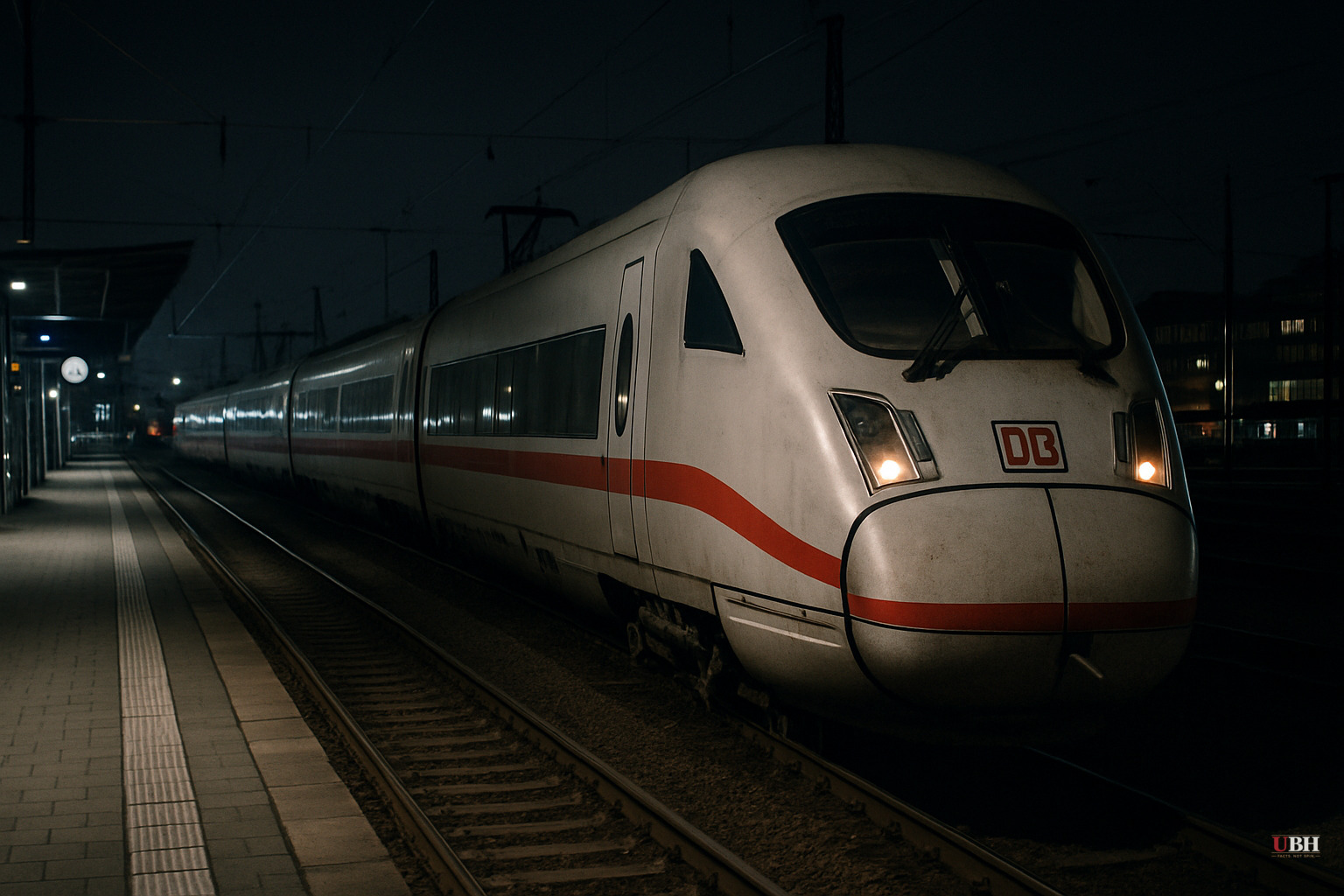
Germany's Entire Rail Network Went Dark Tuesday Night After GSM-R Communications System Failed
What Happened
Late Tuesday evening, Deutsche Bahn ordered all trains across Germany to stop and hold at stations. The culprit: a complete failure of the GSM-R, the Global System for Mobile Communications for Railways, which serves as the primary voice and data link between train drivers and traffic control centers.
Without that system, trains cannot safely operate. So they didn't.
Deutsche Bahn confirmed the halt in a public statement, saying "all trains are currently being held at stations" due to the nationwide GSM-R outage, according to the Jerusalem Post. CEO Evelyn Palla told German newspaper Bild that the immediate priority was "trying to get the trains into stations so that travellers can disembark," as reported by Deutsche Welle and confirmed by the BBC.
The Timeline
Deutsche Bahn issued its first public announcement about the problem, then released a follow-up statement at midnight, approximately 90 minutes later, saying the cause had been identified, according to both the South China Morning Post and The Independent. The company declined to specify what the cause was or when a full fix would arrive.
Technicians described as working "flat out" and "intensively" on a resolution, per Deutsche Bahn's own statements cited by the Jerusalem Post and SCMP respectively.
About two hours after the outage was first reported, trains on at least part of the network began moving again. The Berlin commuter network confirmed its trains were running, and DB Regio Mitte, which operates regional services in parts of western and southwestern Germany, said it had resumed service. But delays and cancellations should be expected through at least 6 a.m. Wednesday, according to The Independent.
Who Got Stuck
Passengers across the country were left stranded at stations. The Independent reported frustrated travelers forming lengthy queues at station information desks looking for alternatives.
Deutsche Bahn offered taxi and hotel vouchers to affected passengers and said replacement transport would be provided where possible. The company issued a formal apology, according to the Jerusalem Post.
What GSM-R Actually Is
GSM-R isn't obscure infrastructure. According to the European Union Agency for Railways, it has been introduced across Europe since 2000 as a common standard for railway operations. A failure of this system isn't a minor IT hiccup—it's a foundational outage that makes safe train operation impossible.
A single point of failure in a communications network that can freeze an entire national rail system overnight raises legitimate infrastructure resilience questions that Deutsche Bahn has not publicly answered.
The Bigger Problem Behind the Outage
Critics say the concern isn't about Tuesday's outage in isolation. Germany's rail infrastructure has been accumulating deferred maintenance for years. As The Independent noted, complaints about chronic delays and disruptions have become increasingly common, and Deutsche Bahn, which is government-owned, has been conducting disruptive but necessary overhauls of major routes precisely because of years of underinvestment.
Critics argue that an aging, underfunded network is inherently more vulnerable to cascading failures, and that a communications system as critical as GSM-R should have redundancy built in.
Deutsche Bahn's position is that overhauls are underway and represent a genuine commitment to long-term improvement, not neglect. Those upgrades are real and ongoing. But the counterargument is that a system mid-renovation is also a system mid-exposure, and Tuesday night illustrated what a single technical failure can do to an entire country's mobility.
What's Different This Time
According to The Independent, Germany's rail network has been halted before, but historically due to severe storms. A nationwide technical failure of this kind—no weather, no strike, just a communications system going down—is unusual. That distinction matters for how it gets investigated and whether GSM-R redundancy becomes a regulatory priority.
Deutsche Bahn has not announced whether the cause was a hardware failure, a software defect, a configuration error, or something else. No cause has been disclosed beyond the company's statement that it "has been identified."
Whether the German federal government or European rail regulators will require Deutsche Bahn to disclose root cause findings, or mandate backup communication systems, remains an open question.
Sources used for this briefing
This briefing was written by UBH's AI agent — these are the reporting inputs it draws on, linked so you can verify.


