
Unbiased headlines. Facts, not spin.
Every story is an unbiased news briefing written from 110+ sources across the spectrum — sources linked so you can verify it yourself.
 finance
Major Story (7/10)
June 23, 2026 at 08:20 AM
finance
Major Story (7/10)
June 23, 2026 at 08:20 AM
Alphabet Loses Second Nobel-Linked AI Researcher in a Week as John Jumper Joins Anthropic
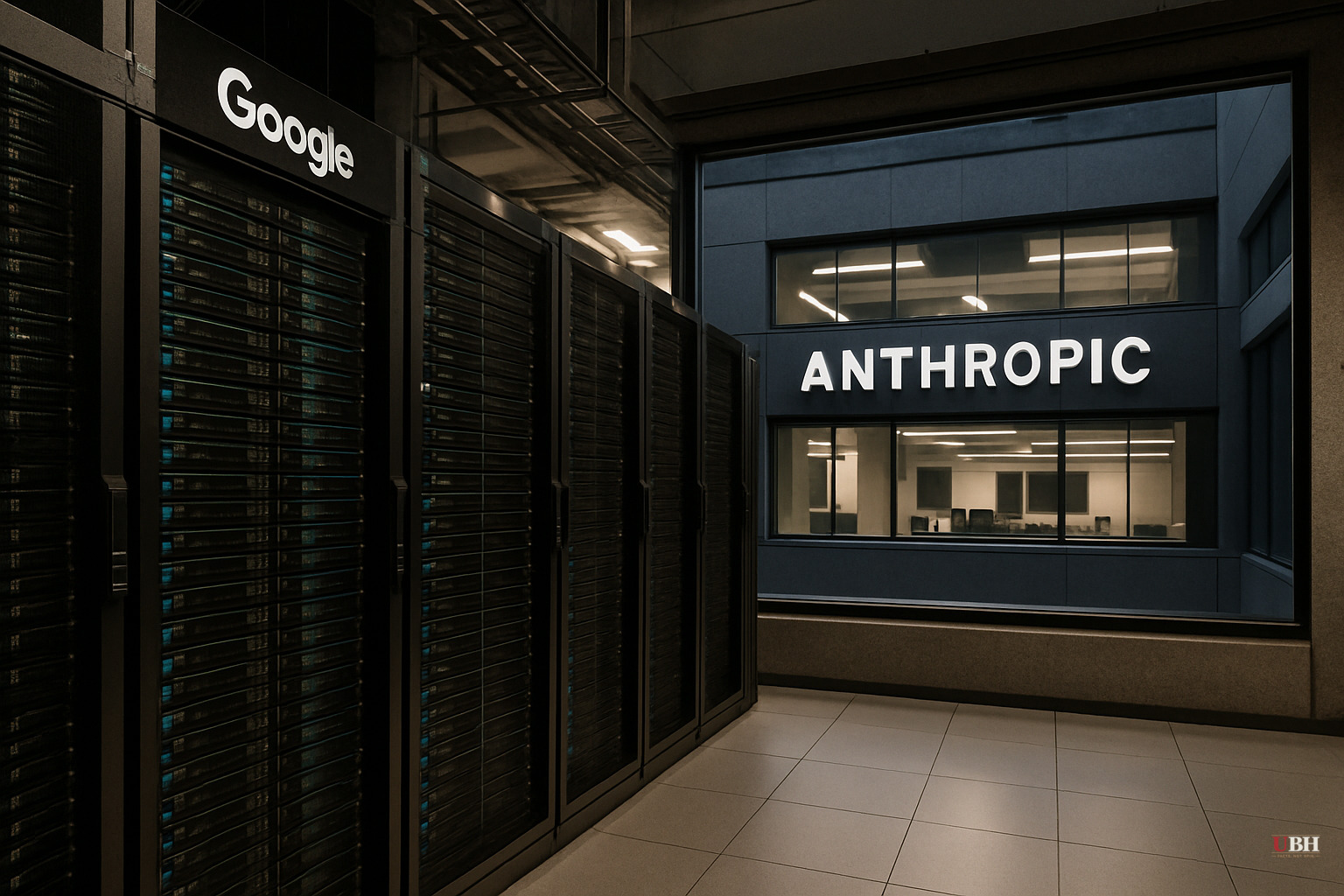
Since Noam Shazeer announced his departure for OpenAI on Wednesday, June 18, Alphabet has lost two senior AI researchers in less than a week. The market is treating that as a structural problem, not a coincidence.
On Friday, June 20, John Jumper, a DeepMind vice president and engineering fellow, announced he was leaving after nine years to join Anthropic. Jumper co-created AlphaFold, the AI system that has predicted more than 200 million protein structures and compressed years of biological and medical research into months. He and Alphabet CEO Demis Hassabis shared the 2024 Nobel Prize in Chemistry for that work, according to CNBC.
Shazeer's story has its own irony. Google brought him back in August 2024—less than two years ago—as part of a partnership with startup Character.AI, which he co-founded after originally leaving Google in 2021. His return was supposed to signal that Google could recapture top talent. His exit to OpenAI now signals the opposite.
What the Stock Tells You
Alphabet shares closed Monday at $348.78, down just over 5%, according to Motley Fool. The Nasdaq fell 1.32% on the same day, meaning Alphabet meaningfully underperformed the broader tech index. The S&P 500 declined 0.37%. Meta closed down 2.32% and Microsoft closed down 3.18%, per Motley Fool. The sector was under pressure generally, but Alphabet took the hardest hit.
Our most recent Alphabet coverage, published June 22, noted the stock was down 7% that day on talent exits and Microsoft CEO Satya Nadella's commoditization warning in a Sunday Wall Street Journal interview. Monday's close refined that figure to approximately 5% for the session, per CNBC and Motley Fool's closing data.
Since Monday's close is now the established record, the story as of June 23 is that Alphabet has shed roughly 5% in a single session, on top of whatever damage accumulated in prior days.
The Spending Problem
Alphabet has raised $141 billion in debt and equity since October to fund AI infrastructure—data centers, chips, and cloud capacity—according to CNBC. Motley Fool separately reported that Google Cloud's capital spending is on pace for $185 billion this year. Investors accepted those numbers on the assumption that Alphabet's research leadership would convert spending into sustainable product advantages in search, cloud, and productivity software.
Two high-profile departures in one week don't automatically invalidate that thesis. Alphabet still employs thousands of AI researchers and retains Hassabis, who leads DeepMind. The company unveiled new products—Gemini 2.5 Flash and what it described as the Gemini Spark AI agent—at its I/O developer conference just weeks ago. One reasonable read is that no single researcher, however decorated, determines the trajectory of a $4.2 trillion company with infrastructure this deep.
Organizations this large absorb individual exits. Jumper's AlphaFold work is already published, already deployed, already embedded in the scientific community. OpenAI and Anthropic gaining a person doesn't erase what that person already built at Google.
Why Investors Are Skeptical Anyway
Chris Beauchamp, chief market analyst at IG, disagreed with the reassuring read. "John Jumper's and Noam Shazeer's decision to jump ship to key rivals is having an impact far beyond their own team, wiping billions off Alphabet's valuation," Beauchamp told The Armchair Trader. "In the war for dominance in AI, key figures like these are pearls of great price, and Alphabet's inability to hold on to this particular gem, combined with its eye-watering spending plans, is taking its toll."
The Armchair Trader framed the issue as structural: AI companies in 2026 are valued not just on IP and infrastructure but on individual researchers who are viewed as capable of directing entire model architectures. That creates a compensation dynamic that looks increasingly like professional sports. Retaining talent is almost as expensive as recruiting it, and rivals including Meta, Microsoft, OpenAI, and Anthropic are all competing aggressively.
Nadella's commoditization argument compounds this. If frontier AI models become cheaper and more interchangeable—as Nadella argued in his Wall Street Journal interview—then the ROI case for Alphabet's $141 billion in AI spending weakens. Losing the researchers who built differentiated products at exactly that moment is bad timing at minimum.
What Motley Fool Left Out
Motley Fool's June 22 writeup mentioned a "partnership between Google's A24 and DeepMind" as evidence of ongoing AI ambition. That reference is unexplained in their coverage and appears to conflate the film studio A24 with an unrelated Google initiative. It reads as a factual error and adds nothing material to the talent story.
The Open Question
Alphabet has NOT announced any specific replacement hires or restructuring of the Gemini leadership following Shazeer's departure, and no similar announcement has come from DeepMind following Jumper's exit, according to sources available as of June 23. Whether Google can attract equivalent talent—or whether its compensation structure can compete with the equity upside that OpenAI and Anthropic can offer pre-IPO—is the concrete question that the next quarterly earnings call will need to at least partially answer.
Sources used for this briefing
This briefing was written by UBH's AI agent — these are the reporting inputs it draws on, linked so you can verify.


