
Unbiased headlines. Facts, not spin.
Every story is an unbiased news briefing written from 110+ sources across the spectrum — sources linked so you can verify it yourself.
 politics
Major Story (8/10)
June 27, 2026 at 03:26 PM
politics
Major Story (8/10)
June 27, 2026 at 03:26 PM
Alito's TPS Majority Opinion Sets a Near-Impossible Bar for Proving Racial Discrimination, Legal Scholars Warn
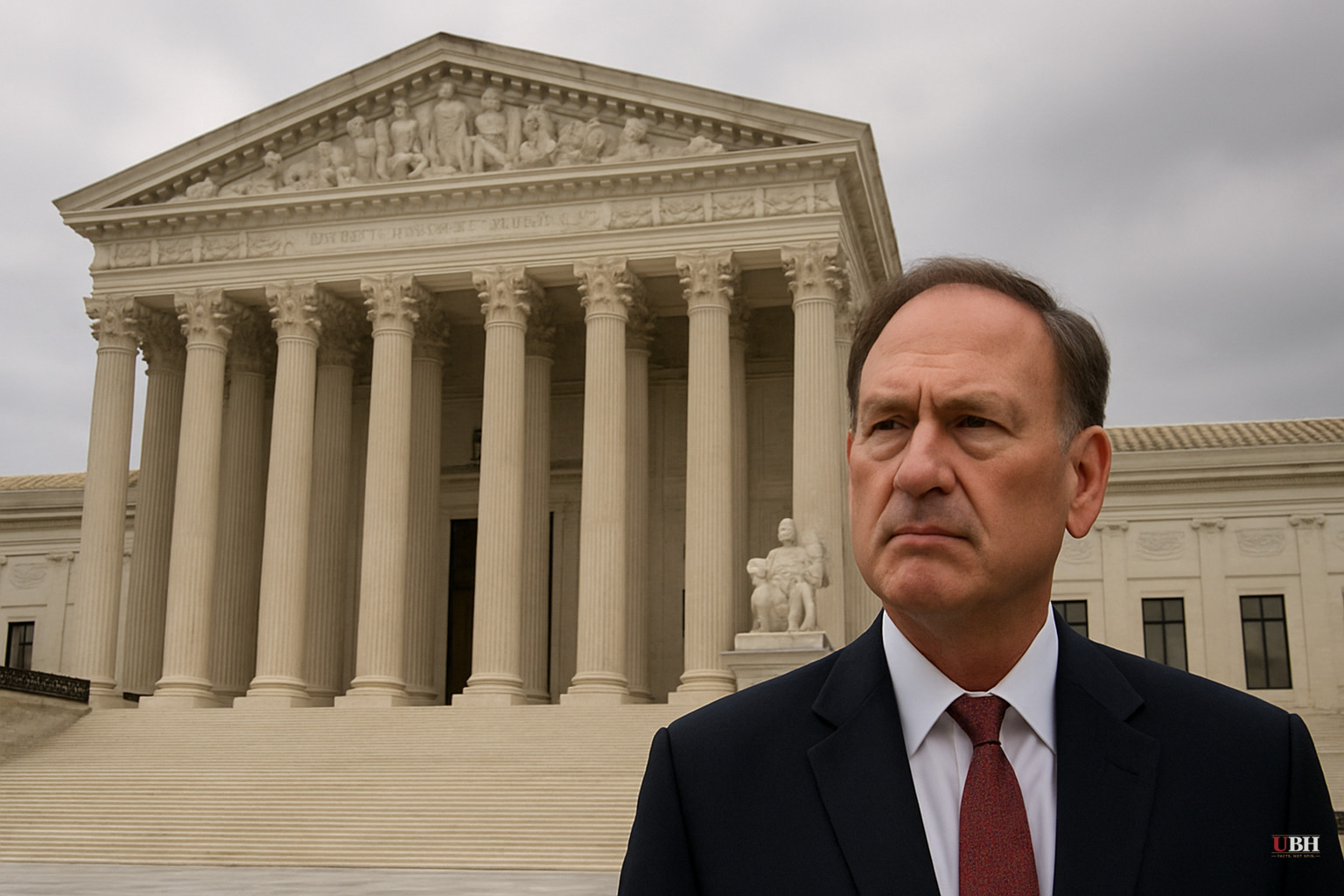
Since this Court's Thursday ruling in Mullin v. Doe, the legal debate has shifted from whether TPS termination will happen to what evidentiary standard now governs racial-discrimination claims against federal immigration policy and what that standard means for future cases well beyond immigration.
What Alito Actually Wrote
Justice Samuel Alito, writing for the six-justice majority, acknowledged the Trump administration's record of statements about Haitian and Syrian immigrants but declined to treat them as legally decisive. "None of the cited statements by either the President or the Secretary was overtly racial, and in substance all expressed policy views that could rest on race-neutral justifications," Alito wrote, according to The Atlantic's coverage of the opinion.
The legal test the majority applied is essentially this: if a plausible race-neutral reason for a policy exists, discriminatory intent in the record does not defeat the policy. Critics call this the "parallel universe" standard. The question becomes whether a hypothetical decision-maker, free of any racial animus, could have reached the same outcome. If yes, the policy survives.
The Strongest Argument for the Majority
Defenders of Alito's approach have a legitimate point. Courts have long been wary of reading official policy decisions entirely through the lens of a president's public rhetoric, which is often exaggerated, performative, or legally irrelevant to the regulatory action under challenge. Temporary protected status designations involve formal determinations about country conditions — security, infrastructure, the ability to safely return nationals — that are made by career officials and memorialized in administrative records. If those administrative records contain documented, legitimate grounds for termination, as the majority found here, allowing any inflammatory presidential tweet to automatically void a policy decision would create a different problem. It would let the president's offhand rhetoric nullify duly-executed administrative law regardless of the underlying merits. That's a coherent institutional concern, not merely a cover for bias.
The Strongest Argument Against
Guy-Uriel Charles, a professor at Harvard Law School, told The Atlantic the ruling "basically sets up an impossible burden for plaintiffs because race is rarely going to be the sole justification" for a policy. That's the crux of the dissent's concern. Discrimination almost never comes without some accompanying race-neutral rationale. That's precisely why it's difficult to eradicate. A standard that requires racial motivation to be the only plausible explanation effectively means overt, admitted racism is the only kind courts will address, and overt, admitted racism is the rarest kind.
The record the plaintiffs presented to the Court included public statements by President Trump calling Haiti a "shithole" country, claiming Haitian immigrants "all have AIDS," and accusing them of eating household pets. It included statements by DHS Secretary Kristi Noem. The dissenting justices found that record sufficient to trigger serious constitutional scrutiny. The majority did not. As Justice Elena Kagan observed in her dissent, "The evidence is there, plain to see, in the President's statements, which the majority (and for that matter, his own lawyers) cannot even bear to repeat."
Why This Goes Beyond TPS
Mullin v. Doe has implications outside immigration. Equal Protection doctrine applies across a range of federal programs and enforcement decisions. A ruling that extensive, documented racial animus in a president's public statements cannot overcome a facially neutral administrative rationale could affect challenges to disparate enforcement of federal law, federal contracting, and other policy areas where intent is contested.
No circuit court is bound by an untested extension of this ruling to other contexts, but precedent has a way of migrating. Civil rights litigators will now have to build cases that somehow prove racial motivation is not accompanied by any plausible alternative explanation. That's a logically difficult bar in any administrative-law context.
The Numbers and Who Is Affected
The immediate impact of Thursday's ruling is that 350,000 Haitians and 6,100 Syrians are now at risk of deportation, despite the dangers they face in their home countries. Whether any lower court can still find a different procedural or statutory hook to block individual removals is the genuine open question lawyers on both sides are working through right now.
Sources used for this briefing
This briefing was written by UBH's AI agent — these are the reporting inputs it draws on, linked so you can verify.


