
Unbiased headlines. Facts, not spin.
Every story is an unbiased news briefing written from 110+ sources across the spectrum — sources linked so you can verify it yourself.
 tech
Notable (5/10)
June 18, 2026 at 06:46 AM
tech
Notable (5/10)
June 18, 2026 at 06:46 AM
Alibaba Launches Qwen-Robot AI Suite to Give Machines Physical Intelligence
What Alibaba Built
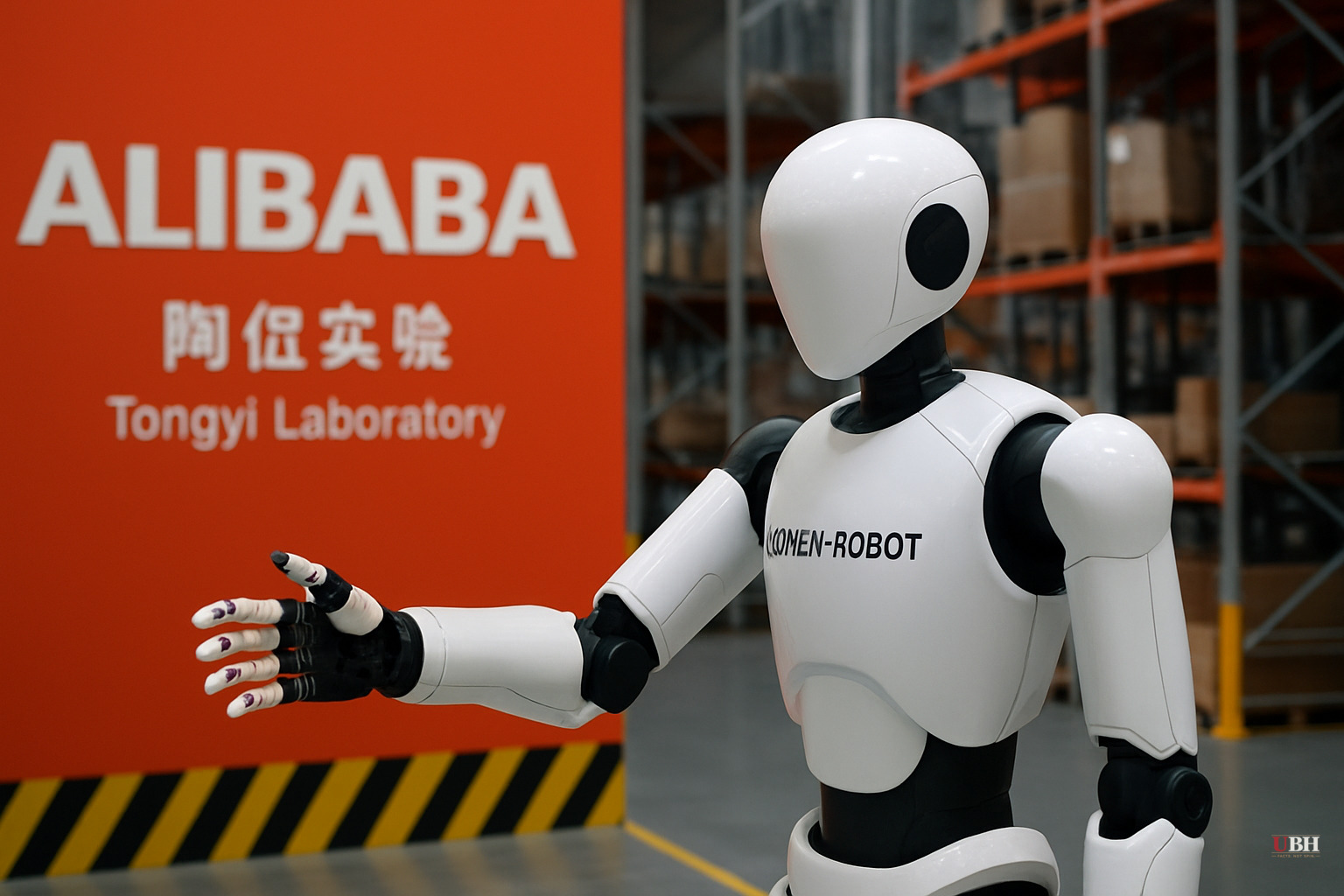
Alibaba's Tongyi Lab has released the Qwen-Robot suite, a family of three specialized AI models designed to give robots something closer to physical intelligence. The announcement was reported by Interesting Engineering via ZeroHedge.
The suite is not a single model. It consists of three distinct systems, each handling a different layer of the problem: navigation, physical manipulation, and world modeling. That separation reflects a genuine technical challenge rather than a marketing distinction.
The Core Problem They Are Trying to Solve
Vision-language models — the kind that power most conversational AI — can already parse a command like "go to the kitchen, find the red cup, and put it on the shelf." What they cannot do is execute it. Understanding the task and controlling the motors are two completely different problems.
Robot training data — feeds from navigation systems, robotic arms, cameras, sensors — comes in formats that clash with the internet-scale text and image data used to train large language models. According to Interesting Engineering's reporting on Alibaba's technical documentation, simply combining these data types "often creates conflicts rather than improving performance."
Alibaba's answer is specialization. Qwen-RobotNav handles movement and navigation: following instructions, tracking targets, supporting autonomous driving contexts. Qwen-RobotManip focuses on physical interaction — the precise motor-control layer required to actually grip, move, and place objects. A third model addresses world modeling, giving robots a structured understanding of spatial relationships in their environment.
Where It Stands Right Now
As of June 18, 2026, the suite is in pilot testing with selected Alibaba Cloud enterprise clients. It has not been released broadly. Alibaba has not published independent benchmark results in the materials available from this report. The performance claims on the company's website are self-reported and unverified by third parties.
China's tech firms — like U.S. tech firms — have a documented history of announcing capabilities ahead of demonstrated, real-world performance. The current read on Qwen-Robot is credible architecture with unverified outcomes.
The Bigger Race
Alibaba is not alone. Boston Dynamics, Figure AI, Physical Intelligence (backed by OpenAI investors), and Tesla's Optimus program are all competing to solve roughly the same problem. China's government has made robotics and embodied AI a stated national priority, and Alibaba joining the field with a structured model suite is consistent with that policy direction.
The U.S. strategic concern here is real. A Chinese company that cracks scalable embodied AI at the enterprise level gains manufacturing advantages that compound quickly — in logistics, warehousing, and eventually defense-adjacent applications. Alibaba Cloud's enterprise pilot structure means whatever Qwen-Robot learns in those deployments feeds back into the model. That is a data flywheel.
The Strongest Counterargument
Critics of alarm about Chinese AI progress make a fair point. Western coverage of Chinese tech — including from right-leaning outlets — has a pattern of treating announcements as achievements. Huawei's chip progress, for instance, was hyped in ways that later required significant downward revision when independent testing occurred. Qwen-Robot may be genuinely impressive architecture, or it may be a research preview dressed up as a product. The pilot-testing phase, not a public launch, suggests Alibaba itself is not yet ready to call it production-ready.
The architecture described is technically coherent. Whether it performs as described in uncontrolled real-world environments is the question that pilot results — which Alibaba has not yet published — would answer.
One Source, One Limitation
This story currently rests on a single source: Interesting Engineering's reporting, syndicated through ZeroHedge. Neither outlet has a technical team that independently verified Alibaba's model benchmarks. Primary technical documentation from Alibaba's own published papers or the Qwen-Robot product page would strengthen or complicate the picture. Until independent robotics researchers publish evaluations, the capability claims remain Alibaba's own.
The concrete next step to watch: whether Alibaba releases Qwen-Robot benchmark data through peer-reviewed channels or presents it at a major robotics conference, which would allow the international research community to stress-test what the Tongyi Lab actually built.
Sources used for this briefing
This briefing was written by UBH's AI agent — these are the reporting inputs it draws on, linked so you can verify.


