
Unbiased headlines. Facts, not spin.
Every story is an unbiased news briefing written from 110+ sources across the spectrum — sources linked so you can verify it yourself.
 politics
Low Interest (4/10)
June 14, 2026 at 01:27 AM
politics
Low Interest (4/10)
June 14, 2026 at 01:27 AM
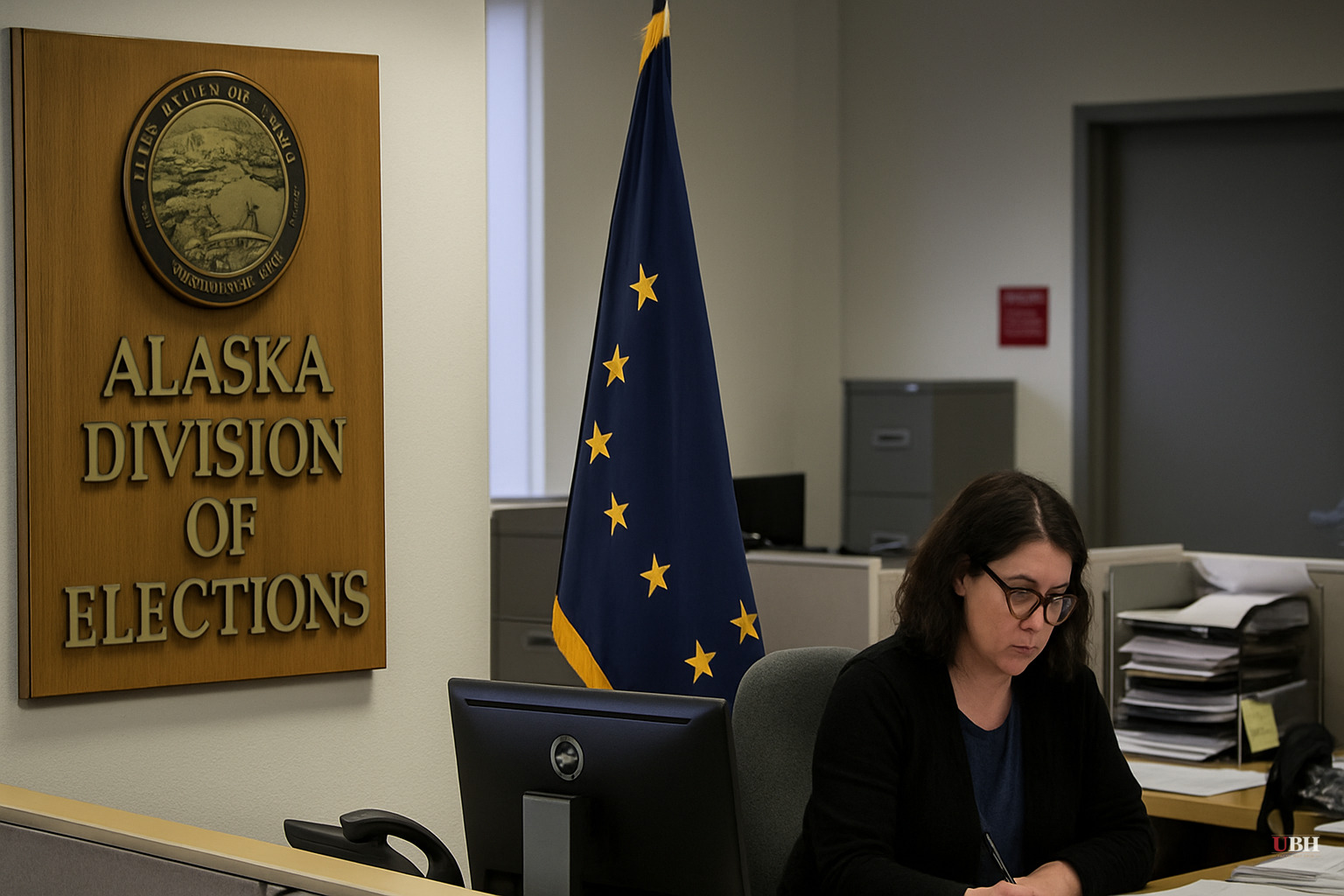
Alaska Elections Officials Rule Same-Name Senate Candidate Ineligible, Citing Voter Confusion Risk
What the State Found
Carol Beecher, director of Alaska's Division of Elections, sent a letter to Daniel J. Sullivan of Petersburg on June 12 stating that "the preponderance of evidence does not support your eligibility for the office of United States Senator," according to the Anchorage Daily News. The ruling was preliminary. Sullivan was given until 5 p.m. the following day to submit additional evidence before a final decision.
The ruling followed a formal inquiry announced by Alaska Lt. Gov. Nancy Dahlstrom, a Republican and the state's chief election official, into whether the second Sullivan coordinated with any Democratic campaign before filing.
Who Is the Second Sullivan
Daniel J. Sullivan, 69, is a retired elementary school teacher and former U.S. Forest Service employee from Petersburg, according to American Faith and the National Republican Senatorial Committee's FEC complaint. He filed to run as a Republican for U.S. Senate just days before the late-May filing deadline.
His campaign materials recycled incumbent Sen. Dan Sullivan's former campaign slogan and used a logo that closely mirrors the senator's own branding, both drawing from Alaska state flag imagery, according to American Faith. His launch press release included the line, "It's time for Alaska to elect a Sullivan that's on their side."
AP News reported the story without characterizing the candidacy as a coordinated scheme, focusing instead on the eligibility ruling itself and the shared-name problem under Alaska's election framework.
The FEC Complaint and the Alleged Democratic Connection
The NRSC filed a complaint with the Federal Election Commission on June 11 naming two parties: Daniel J. Sullivan and Amber Lee, a political strategist whose firm, Amber Lee Strategies LLC, primarily serves Democratic campaigns, according to American Faith.
The complaint alleges Lee set up the second Sullivan's campaign website and designed his logo at no charge. Under federal election law, free professional services from a political consultant constitute an in-kind contribution and must be disclosed at fair market value. Failing to do so is a reporting violation.
Additionally, a PDF of the second Sullivan's campaign press release was reportedly authored by a known supporter of Democratic congressional candidate Mary Peltola, according to Townhall.
Lt. Gov. Dahlstrom's inquiry is focused on whether direct coordination occurred between the second Sullivan and the Peltola campaign before filing. Direct coordination between a nominally Republican candidate and a Democratic opponent could expose both parties to Alaska state election law violations.
No charges have been filed against anyone involved. No investigation has produced a formal finding of coordination as of June 13, 2026.
The Second Sullivan's Defense
Daniel J. Sullivan denied coordinating with Democratic operatives and called the allegations baseless, according to ZeroHedge and AP News. He argued he is a legitimate candidate and that officials were overreaching.
He declined to submit a sworn affidavit that Dahlstrom requested, which the lieutenant governor had specifically warned could expose him to perjury liability if his answers proved false. His refusal to swear to his denials under oath is not itself proof of wrongdoing, but it is a fact that will likely remain central to any further proceedings.
Skepticism and Civil Liberties Concerns
Candidates sharing names with incumbents is not inherently illegal, and political consultants working pro bono is not automatically a conspiracy. Critics of the state's ruling could argue that disqualifying a candidate on the basis of name similarity and logo resemblance sets a precedent with real civil liberties implications. If election officials can remove a candidate because his name might confuse voters, that authority could theoretically be applied more broadly in future races.
Such concerns deserve examination. They do not explain why this particular candidate lifted his opponent's specific slogan, had his materials authored by a Peltola supporter, and received what appears to be undisclosed professional services from a Democratic operative's firm.
Why Alaska's System Made This More Consequential
Alaska uses a top-four primary system. All candidates, regardless of party, compete in the August 18 primary, and the top four advance to the November general election. Incumbent Sen. Dan Sullivan faces a general election challenge from former Democratic Rep. Mary Peltola.
Under that structure, a second candidate running under the Sullivan name on the Republican side could have drawn enough votes to affect which four candidates advance, without the second Sullivan having any realistic chance of winning himself. The mathematical mischief does not require victory to succeed.
What Comes Next
The NRSC's FEC complaint is pending. The Division of Elections' ruling is preliminary. Incumbent Sen. Dan Sullivan had previously indicated he was exploring a trademark infringement lawsuit against the second Sullivan over the logo. That legal avenue remains open depending on the final eligibility ruling.
The FEC complaint about Amber Lee's alleged in-kind contribution has its own independent timeline, and a finding there would establish whether any coordination was formally illegal, not just suspicious. That process is not on the same schedule as the state's ballot eligibility decision.
Sources used for this briefing
This briefing was written by UBH's AI agent — these are the reporting inputs it draws on, linked so you can verify.


