
Unbiased headlines. Facts, not spin.
Every story is an unbiased news briefing written from 110+ sources across the spectrum — sources linked so you can verify it yourself.
 finance
Major Story (7/10)
June 27, 2026 at 10:10 AM
finance
Major Story (7/10)
June 27, 2026 at 10:10 AM
Alan Greenspan Dead at 100. His Easy-Money Legacy Is Still Costing Americans.
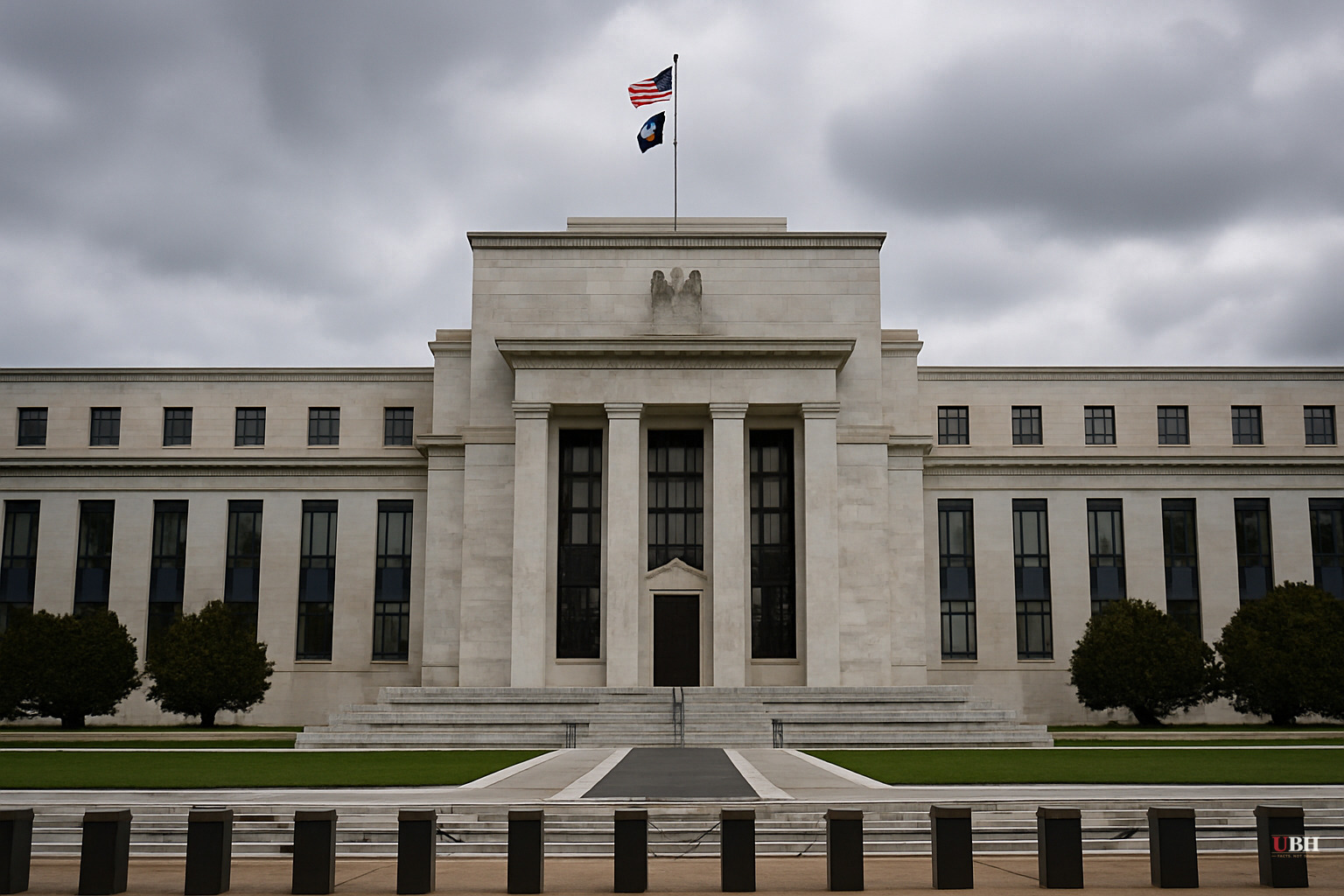
Alan Greenspan is dead. He served as chairman of the Federal Reserve from 1987 to 2006, and for most of that time he was treated as close to infallible by both parties, Wall Street, and the financial press. The reckoning came later.
The biographical irony is stark. In 1966, Greenspan published an essay titled "Gold and Economic Freedom" that argued, in plain terms, that fiat currency was a tool governments used to confiscate wealth through inflation. He wrote that gold-backed money restrained deficit spending and prevented the boom-bust cycles that come from monetary manipulation. That essay got him into Ayn Rand's intellectual circle in New York and helped build his reputation as a serious free-market economist.
Then he took the job.
The Greenspan Put
The transformation began almost immediately. When markets crashed on Black Monday in October 1987, Greenspan's Fed moved fast, cutting rates and affirming its willingness to provide liquidity. Markets noticed. Over time, investors came to operate on a working assumption: if asset prices fell far enough, the Fed would rescue them. That expectation became known as the "Greenspan Put."
According to Jeffrey Tucker writing in The Epoch Times, that 1987 response marked the beginning of what later evolved into Quantitative Easing, the now-standard practice of money creation as a crisis management tool. Tucker argues it was also a direct repudiation of Paul Volcker's approach from 1979 to 1982, the last period when the Fed allowed a recession to run its course rather than stimulate its way out.
The honest defense of Greenspan's approach deserves to be heard before criticizing it. His supporters, including many mainstream economists, argue that flexible monetary policy prevented genuine depressions. The 1987 crash could have been catastrophic without Fed intervention. Discretionary policy, they say, is better than rigid rules in a complex global economy where shocks arrive in unpredictable forms.
What the Moderation Masked
But the moderation masked something. Every time the Fed cushioned a downturn, it also prevented the market corrections that clear out bad debt and misallocated capital. The bailout of Long-Term Capital Management in 1998. The response to the dot-com crash. Each intervention lowered rates further, pushed investors into riskier assets searching for yield, and inflated new bubbles.
By 2003, Greenspan's Fed had cut the federal funds rate to a then-record low of roughly 1 percent and held it there. The housing market, already inflating, accelerated. Mortgage credit loosened to the point of absurdity. When the entire structure collapsed, Greenspan acknowledged before Congress that he had found a "flaw" in his ideology. His assumption that financial institutions' self-interest would protect shareholders and equity proved wrong.
That congressional testimony was one of the more remarkable moments in modern financial history. The man who had written about the discipline that markets impose on themselves admitted, under oath, that he had been wrong.
The Debt He Left Behind
Greenspan's tenure coincided with and helped enable a structural shift toward higher public and private debt levels and the financialization of the economy. His successors inherited both his framework and his toolkit and used both aggressively after the 2008 collapse.
No single person caused the debt trajectory the U.S. now faces. Congress votes the spending. Presidents sign the bills. But the institutional framework that made it possible to fund chronic deficits at low cost — the expectation that the Fed would always step in to keep borrowing cheap — took its modern shape under Greenspan.
Tucker's piece, published via ZeroHedge, frames Greenspan as a cautionary story about what happens when someone who understands a principle in theory acquires institutional power and abandons it in practice. Tucker's piece appears in a firmly libertarian outlet with a gold-standard editorial sympathy, and readers should weigh that context.
A fair critique from the center-left looks different but lands in a similar place: Greenspan was insufficiently willing to regulate the financial products, particularly the exotic mortgages and debt-finance instruments, that his easy-money environment had supercharged. Notably, Greenspan himself spoke of "irrational exuberance" in 1996 but did not act decisively to prick bubbles.
The Unresolved Question
The genuinely open question Greenspan's death raises is whether the system he built can be unwound without the very crash he spent his career trying to prevent. The combination of bailouts for markets and persistently low rates fostered the belief that the Fed would always clean up after bubbles — reducing the perceived downside of speculation and leading to higher leverage across the financial system.
Greenspan was 100 years old. He outlived the financial system he defended and watched the 2008 collapse he helped create. Whether his successors can engineer a soft landing from the debt trajectory his era established is the question policymakers have not yet answered.
Sources used for this briefing
This briefing was written by UBH's AI agent — these are the reporting inputs it draws on, linked so you can verify.


