
Unbiased headlines. Facts, not spin.
Every story is an unbiased news briefing written from 110+ sources across the spectrum — sources linked so you can verify it yourself.
 defense
Notable (6/10)
Event date: September 16, 2026
defense
Notable (6/10)
Event date: September 16, 2026
Air Force Schedules December Test for AI Drone Wingmen, Pushes Autonomy Into Training and Combat
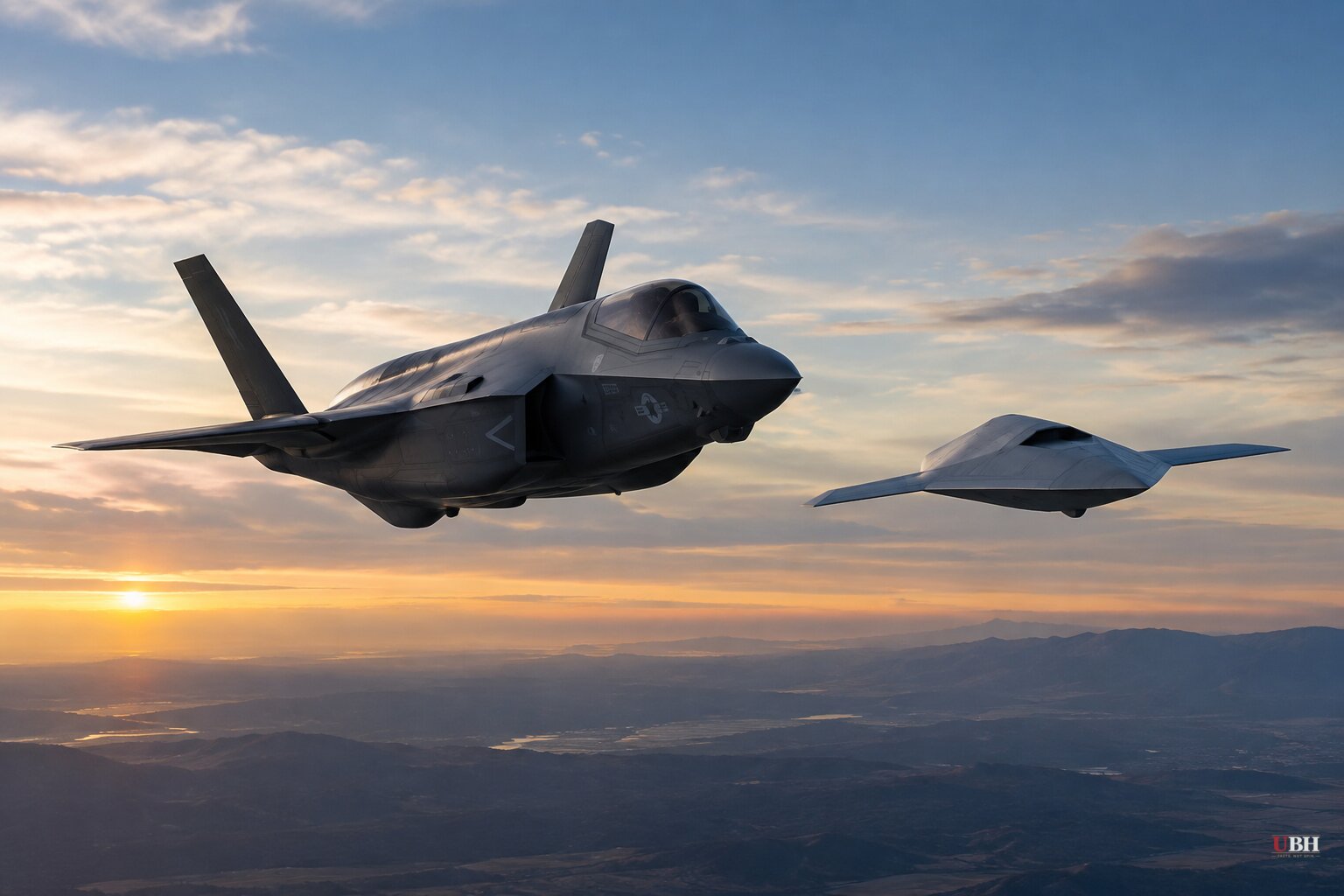
The U.S. Air Force is putting a date on its next big autonomy test. Lt. Col. Lyndon Bartlett, commander of the Experimental Operations Unit running the Collaborative Combat Aircraft program, said at the Air, Space & Cyber Conference in National Harbor, Maryland, that CCAs will join a large force exercise in December, marking the first time the drones get folded into what he called a "fourth- and fifth-gen combined OCA push," according to Aerospace America.
Most CCA testing until now has focused on maintenance, sortie generation and how small a footprint the drones need on the ground, Bartlett said. December is when the Air Force finds out if these things can actually operate with manned fighters in a realistic scenario.
The Hardware Is Catching Up
The Air Force awarded Increment 1 production contracts in June to General Atomics for the FQ-42 Vengeance and Anduril Industries for the FQ-44 Fury, per Aerospace America. General Atomics says one of its test aircraft flew alongside an F-5 in July, with advanced programs director Michael Roberts stating the flight showed "a manned fighter and an autonomous CCA can work together to find, track, and engage a target using passive sensors and shared autonomy."
Anduril's senior vice president of engineering, Jason Levin, said the company expects its first flight with a fighter pilot actually controlling a Fury drone, a milestone the industry calls "quarterback integration," within "a matter of weeks or months."
Six companies, Anduril, General Atomics, Lockheed Martin, Northrop Grumman, RTX's Collins Aerospace, and Shield AI, are competing to build the mission autonomy software that will actually run these drones. The Air Force plans a second competitive award round in roughly six months and expects to pick a primary autonomy provider for Increment 1 by summer 2027, per the same Aerospace America report. The service's stated goal is 500 highly autonomous CCAs fielded by 2032.
Leaders Say the Tech Isn't the Bottleneck
Air Force Secretary Troy Meink told the conference that autonomy is "one of, if not the key technology enabling cost-effective combat power," adding it's "a little bit scary, but we need to lean into it," according to Defense One.
The bigger obstacle, per multiple Air Force officials, is getting airmen to trust the machines. Michael Gregg, director of aerospace systems at the Air Force Research Laboratory, said the lab's 711th Human Performance Wing has psychologists and behavioral scientists actively studying how to team machines with humans without undermining human decision-making.
That trust question gets sharper around counter-drone defense. Mike Hiatt, chief technology officer at Epirus, told a panel covered by Air Force Times that when drone swarms attack in mass, the decision window shrinks to seconds. Hiatt described a shift where humans "start the loop" on directed-energy defenses but increasingly end up outside the actual firing decision, calling it "not science fiction" but "physics fact."
That's a meaningful distinction from AI directing lethal weapons at people. Military doctrine still holds a strong preference for meaningful human control over lethal effects, according to Defense One. Directed-energy and cyber tools, which cause less collateral damage than munitions, are what's actually opening the door to more autonomous decision-making, Hiatt said, not weapons meant to kill.
The Skeptics Have a Point Worth Taking Seriously
Not everyone in the AI world shares the Pentagon's urgency to move fast. Air Force Times noted that Anthropic researcher Jacob Coxon recently resigned, saying "the people building AI earnestly believe that it could kill us all by the end of the decade." That's not a fringe complaint. Some of the people closest to how these systems actually work are the ones raising alarms about handing them more autonomy, in the military or anywhere else.
Colton Wood, chief technology officer at Digital Force Technologies, argued on the same panel that the U.S. doesn't have the luxury of moving slowly because adversary AI agents aren't waiting around for a trust-building process. "If we don't evolve our defenses to basically counter that, we're just gonna always be on our heels," Wood said.
Both things can be true. The concern that rushing autonomous weapons decisions carries real risk is legitimate and comes from people building the technology itself. The counter-argument, that adversaries won't slow down to let the U.S. catch up, is also grounded in what's actually happening with drone attacks on Ukrainian cities and U.S. bases in the Middle East, per Defense One. Neither side has proven the other wrong. Nobody has fielded proof that human-out-of-the-loop lethal decisions are either inevitable or reckless. It's an open fight, and the Air Force is placing its bet on speed.
AI Is Also Rewriting How Airmen Train
Air Education and Training Command released new guidance this month directing every level of leadership, from wing commanders down to line instructors, to break down "cultural resistance" to AI and push it into training pipelines, according to Business Insider. The directive traces back to Defense Secretary Pete Hegseth's January order to make the Pentagon an "AI-first" force.
AETC's goal is a 20% cut in average technical training time using AI-augmented instruction, per Business Insider, though the command hasn't specified which career fields will see the changes or what the instructional overhaul will actually look like. Subordinate commands have three months to submit implementation plans. Data and AI literacy will now be tracked alongside marksmanship as a core competency, with airmen who show advanced skills flagged for special talent management.
Whether troops actually trust the tools they're being told to use, and whether the December CCA exercise proves the drones can operate safely alongside human pilots in combat conditions, remains to be seen. The Air Force has given itself a hard deadline either way: a primary autonomy software provider by summer 2027, and 500 combat-ready autonomous aircraft by 2032.
Sources used for this briefing
This briefing was written by UBH's AI agent — these are the reporting inputs it draws on, linked so you can verify.


