
Unbiased headlines. Facts, not spin.
Every story is an unbiased news briefing written from 110+ sources across the spectrum — sources linked so you can verify it yourself.
 finance
Major Story (7/10)
July 17, 2026 at 06:18 PM
finance
Major Story (7/10)
July 17, 2026 at 06:18 PM
Air China Orders 55 Airbus Jets in $12.4 Billion Deal, Snubbing Boeing Again
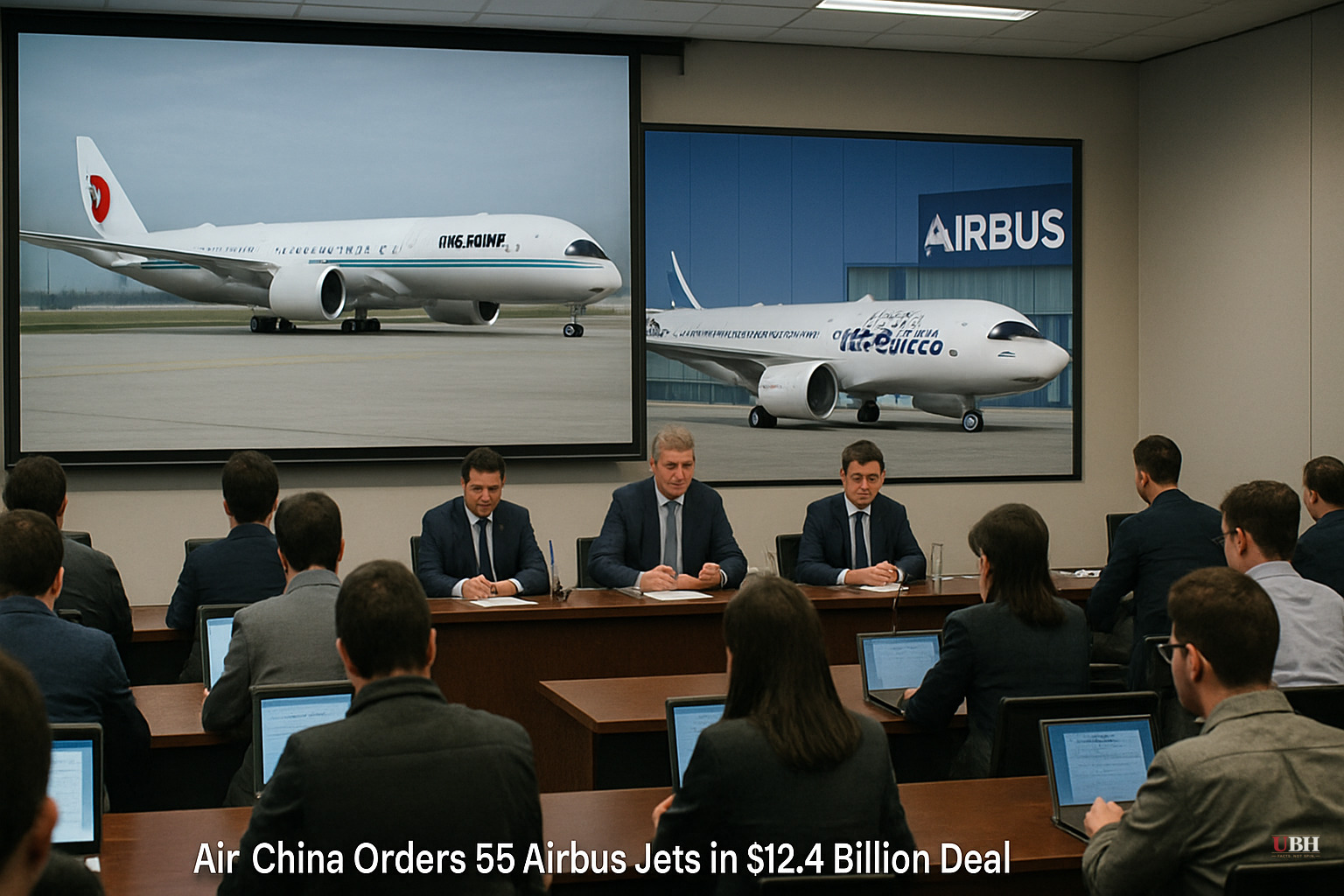
Air China and its subsidiary Shenzhen Airlines have agreed to buy 55 Airbus jets in a deal with a combined list price of $12.4 billion, according to a filing with the Shanghai Stock Exchange reported by CNBC.
The breakdown: Air China will buy 15 A350-900 wide-body jets, and Shenzhen Airlines will separately purchase 40 A320neo-family narrow-body aircraft.
The Numbers
The A350-900 order carries a list value of roughly $6.09 billion, based on Airbus's January 2025 pricing, according to CNBC. Those jets are scheduled for delivery between 2030 and 2032.
The 40 A320neo jets are valued at about $6.35 billion using January 2024 list prices, with deliveries slated for 2029 through 2032.
Air China said in its filing that the real price will come in below those list figures. Airbus routinely offers steep discounts on large orders, and this is no exception, according to CNBC. The airlines plan to pay for the jets through a mix of company cash, commercial bank loans, and other financing.
Why It Matters
This is fleet renewal and expansion at the same time. Air China says the new jets will help it optimize its route network, cut operating costs, and modernize a fleet that's still running plenty of older, less fuel-efficient aircraft.
ePlaneAI reports the deal is projected to boost Air China group's overall capacity by about 7.1%, with Shenzhen Airlines seeing a 4.3% bump, based on combined seat and cargo volume forecasts tied to the end of 2025. Those are projections, not locked-in outcomes, and they depend on the aircraft arriving on schedule.
The A320neo goes head-to-head with Boeing's 737 MAX on medium-haul routes. The A350-900 is Airbus's long-haul workhorse. Every jet in this order is a jet Boeing didn't sell.
The Boeing Problem
Boeing has faced this pattern before in China. Trade tensions between Washington and Beijing have repeatedly disrupted Boeing deliveries to Chinese carriers over the past several years, and Chinese airlines have leaned harder into Airbus as a result. A $12.4 billion order going entirely to Airbus, with zero Boeing jets in the mix, is the latest data point in that trend.
Nobody in these filings claims this is a political statement. Air China's stated rationale is fuel efficiency and fleet optimization. The practical effect is the same either way: Airbus keeps winning big Chinese orders, and Boeing keeps watching from the sidelines while it works through its own production and certification headaches in the U.S.
ePlaneAI raises a point that CNBC doesn't dwell on: a $12.4 billion capital commitment is a real balance-sheet risk, not just a fleet-modernization headline. ePlaneAI notes "market responses have been varied, with some investors voicing concerns over the extended delivery timeline and the potential impact on cash flow management." That's a legitimate concern for a state-linked carrier financing new jets through bank loans, especially with deliveries stretched out to 2032. Nothing in Air China's filing suggests distress, but a decade-scale financing commitment is a meaningful bet on China's air travel demand holding up.
Sweden Herald's coverage, sourced from TT News Agency, adds little beyond confirming the basic terms, but it's useful as an independent confirmation that the filing details, aircraft types, and delivery windows match what CNBC reported.
The order still has to clear the usual path from filing to firm contract to production slot, and Airbus will need to fit 55 more aircraft into a delivery schedule already strained by supply chain bottlenecks across the industry. Airbus has faced its own production pressures on engines and fuselage sections in recent years, and a rush of large orders from Chinese carriers only adds to that queue.
The open question is whether Boeing gets any piece of China's next wave of fleet orders, or whether Airbus's grip on the world's second-largest aviation market keeps tightening. Nothing in this filing answers that. It just adds another data point to the trend.
Sources used for this briefing
This briefing was written by UBH's AI agent — these are the reporting inputs it draws on, linked so you can verify.


