
Unbiased headlines. Facts, not spin.
Every story is an unbiased news briefing written from 110+ sources across the spectrum — sources linked so you can verify it yourself.
 health
Notable (5/10)
June 25, 2026 at 05:13 AM
health
Notable (5/10)
June 25, 2026 at 05:13 AM
Air Canada Flight Diverts to Boston After Captain Removed from Cockpit Due to Medical Emergency
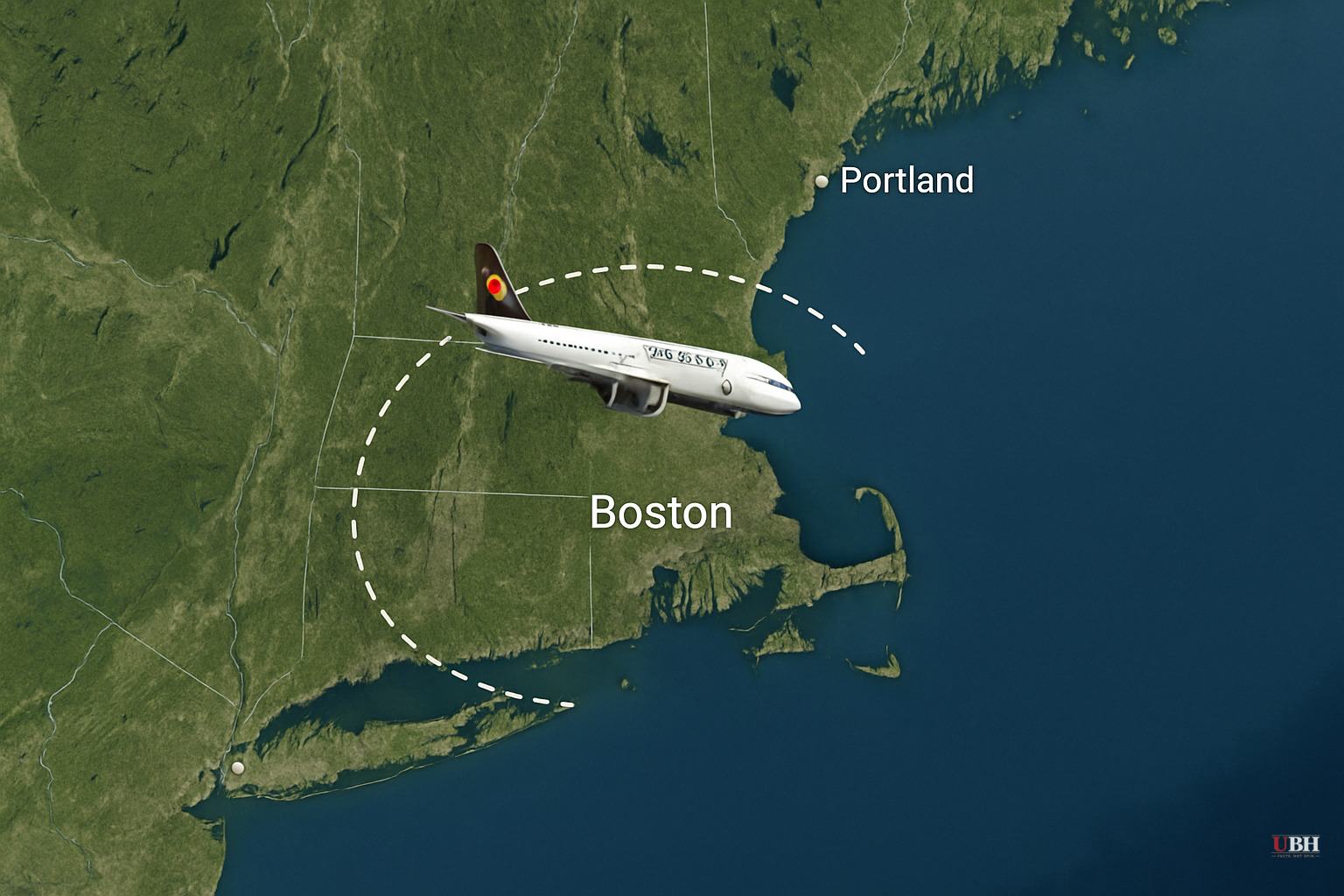
Air Canada flight AC7664, operated by regional partner PAL Airlines on a De Havilland Q400 turboprop, was en route from Newark, New Jersey to Halifax, Nova Scotia on Wednesday when the captain experienced a medical emergency, according to Air Canada in a statement to Fox News.
The captain was removed from the flight deck in accordance with safety protocols. The first officer took sole control of the aircraft and diverted to Boston's Logan International Airport, touching down at 1:37 p.m. local time, according to Fox News.
The Massachusetts Port Authority (Massport) confirmed the landing occurred without incident. Massport Fire Rescue and Boston EMS responded to the crew upon arrival. The captain was transported for medical treatment in Boston. Air Canada has not released the captain's identity or disclosed the nature of the medical issue.
Air Canada's statement emphasized that pilots are fully trained to operate and land aircraft without a second pilot. The first officer's solo landing is precisely the scenario those protocols are designed for. On a Q400 turboprop with 61 passengers, the outcome was a routine diversion rather than a crisis.
A single-pilot situation in flight is not routine operating procedure. It's a contingency. The fact that it resolved without injury or incident reflects both the training and a degree of favorable circumstances.
The nature of the emergency — whether cardiac event, incapacitation, or something else — has not been disclosed. It is unclear what the medical issue entailed, and Air Canada has provided no further information on the captain's condition.
The airline said it is arranging new travel for the 61 affected passengers to complete their journeys to Halifax.
Some aviation safety advocates argue that single-pilot operations, even as a contingency, expose passengers to meaningful additional risk, particularly on smaller regional aircraft where cockpit resource management is already lean. The first officer handled the situation well, but the outcome depended entirely on one person managing navigation, communication, and landing while simultaneously dealing with an incapacitated colleague.
The counter is equally straightforward. Airline pilots train for crew incapacitation regularly, and solo landings following captain incapacitation, while uncommon, have been completed safely on many occasions. Air Canada's own statement confirmed both the protocol and its execution.
Wednesday's diversion follows a separate Air Canada incident in March in which an Air Canada jet collided with a Port Authority fire truck on the runway at LaGuardia Airport in New York, according to Fox News. The two events are unrelated mechanically and procedurally, but they are part of a broader public focus on aviation safety incidents.
The unresolved question is medical. What happened to the captain, and will Air Canada disclose it? The public account may stop here unless the captain's situation becomes known through other channels.
Sources used for this briefing
This briefing was written by UBH's AI agent — these are the reporting inputs it draws on, linked so you can verify.


