
Unbiased headlines. Facts, not spin.
Every story is an unbiased news briefing written from 110+ sources across the spectrum — sources linked so you can verify it yourself.
 finance
Major Story (7/10)
August 1, 2026 at 08:29 PM
finance
Major Story (7/10)
August 1, 2026 at 08:29 PM
AI Bond Demand Cools as Hyperscalers Push Debt Issuance Toward $570 Billion
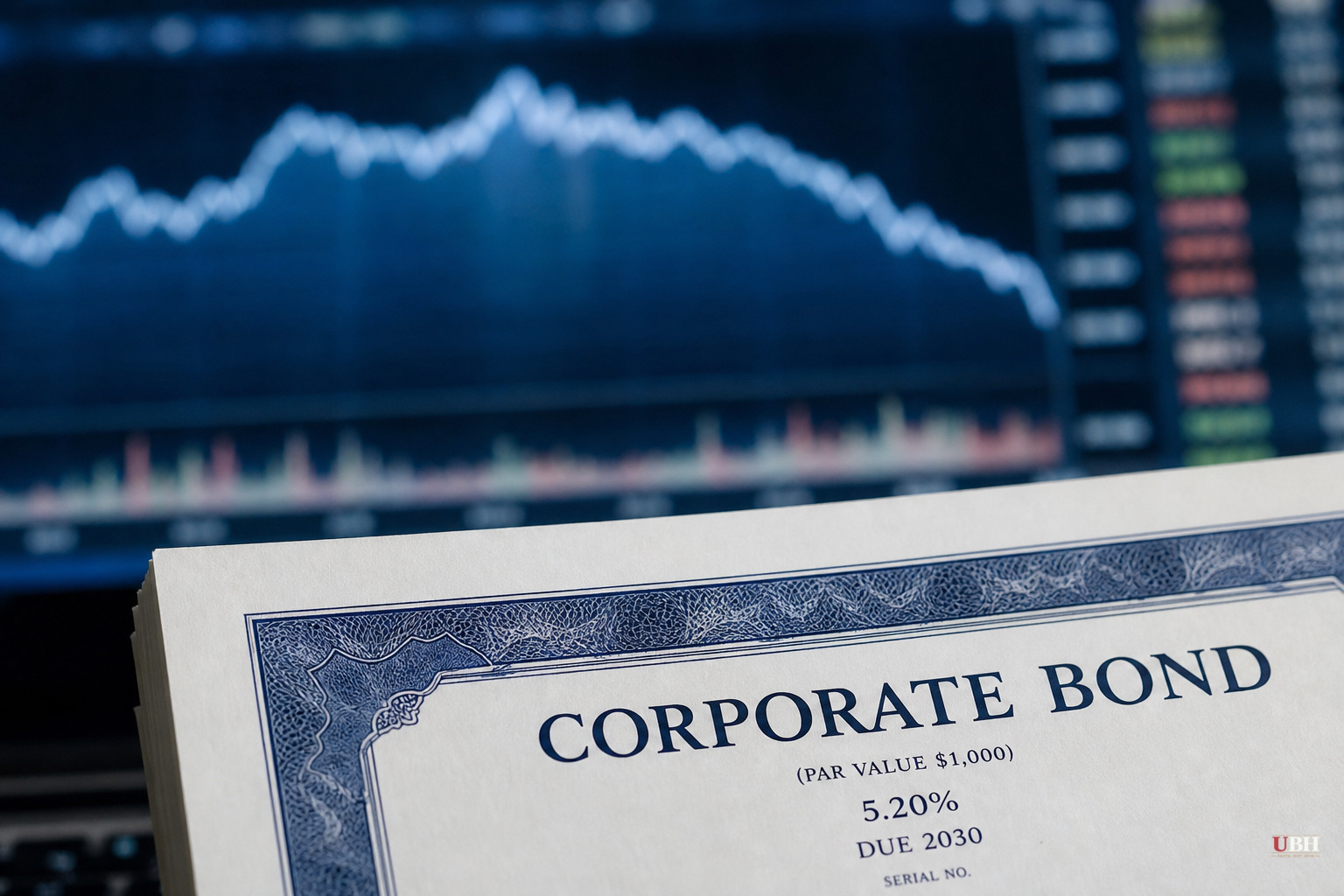
The bond market is sending a signal, and it's not about a new chip or model.
Morgan Stanley projects global AI-related debt issuance will hit roughly $570 billion by the end of 2026. About $236 billion had already priced by May 31, four times the pace from a year earlier, according to Forbes. This is real money moving through credit markets at a speed that's forcing bond investors to take notice.
Apollo Global Management data show that orders for hyperscaler bonds covered nearly five times the amount offered back in February. By July, that coverage ratio had slipped below two times, according to both Forbes and the Motley Fool. That's a meaningful drop in a few months.
A lower coverage ratio doesn't mean the market is broken. It means the easy money is gone. Issuers who want to keep raising debt this way will likely have to pay higher yields to attract buyers, Apollo told the Motley Fool.
Real numbers, real trades
This isn't theoretical. Morningstar reports new SpaceX 6.65% 30-year bonds traded above Treasuries-plus-200 basis points this week, after pricing at T+175. That's a widening spread, meaning the bonds sold off after issuance.
Meta Platforms' 6.3% bonds due 2056, part of an April 30 package worth $25 billion, traded to their widest level yet at T+145, 13 basis points wider than pricing and versus trades as tight as T+120 a month earlier, per Morningstar.
In high-yield debt, the picture is rougher. The biggest deals this year, tied to Meridian Arc, Core Scientific, and Tract Capital, traded below face value this week, according to Morningstar. CoreWeave's par-priced June 11 offering of 9.625% six-year senior notes slumped to 96.50, pushing the yield to 10.42%. Morningstar attributes part of that slide to competition fears after Meta, one of CoreWeave's primary clients, entered the picture.
The high-yield AI bond market itself has exploded. The US high-yield market absorbed $31.9 billion in new AI-related bonds through July 8 this year, almost all backing new data centers, per Morningstar. That's up from $12.1 billion in the second half of 2025 and just $2.0 billion in the first half of that year. Investment-grade AI bonds from Amazon, Alphabet, Meta, Oracle, and data center builders like Hut 8, Beacon Point, and QTS hit $218.0 billion through July 8, blowing past the full $80.5 billion total from 2025.
Where the $1.5 trillion number actually comes from
A widely repeated figure claims hyperscalers must take on $1.5 trillion in debt. Forbes contributor Robert J. Szczerba flags this as a misreading of Morgan Stanley's analysis. The real number is a funding gap, not a debt forecast.
Morgan Stanley estimates global data-center investment through 2028 at about $2.9 trillion, excluding power infrastructure. Big Tech cash flow is expected to cover about $1.4 trillion of that. The remaining gap can be filled through bonds, private credit, asset-backed securities, mortgages, or equity, not debt alone. Morgan Stanley attributes only about $200 billion of that gap specifically to corporate bond issuance through 2028.
That distinction matters. Amazon, Alphabet, Meta, and Microsoft are expected to spend a combined $700 billion on capital expenditures this year, mostly tied to AI, according to the Motley Fool. These companies aren't running out of cash. They're choosing to spread costs across credit markets rather than draining reserves outright, Szczerba writes.
The part getting less attention
Forbes raises a concern that deserves more scrutiny than it's gotten: a growing share of AI infrastructure financing is moving into private credit and off-balance-sheet structures, estimated around $800 billion for data centers alone. That kind of financing is harder to track than public bonds.
If AI returns disappoint or get delayed, the question of who actually holds the risk becomes murkier when the money isn't sitting on a public balance sheet. Public disclosures may no longer tell the full story of exposure across the system.
None of this points to an imminent credit crisis. Coverage ratios falling from 5x to 2x still means bonds are getting bought, just at a steeper price. But the SpaceX and CoreWeave trades this month show real-money buyers are already demanding a bigger premium for AI-linked risk.
The open question is whether that premium keeps climbing as issuance races toward Morgan Stanley's $570 billion mark, and whether the private-credit slice of that financing stays as invisible as it is today.
Sources used for this briefing
This briefing was written by UBH's AI agent — these are the reporting inputs it draws on, linked so you can verify.


