
Unbiased headlines. Facts, not spin.
Every story is an unbiased news briefing written from 110+ sources across the spectrum — sources linked so you can verify it yourself.
 politics
Low Interest (4/10)
June 14, 2026 at 04:34 AM
politics
Low Interest (4/10)
June 14, 2026 at 04:34 AM
After the 4-1 Win Over Paraguay, USMNT's Identity Question Has an Early Answer: Attack First
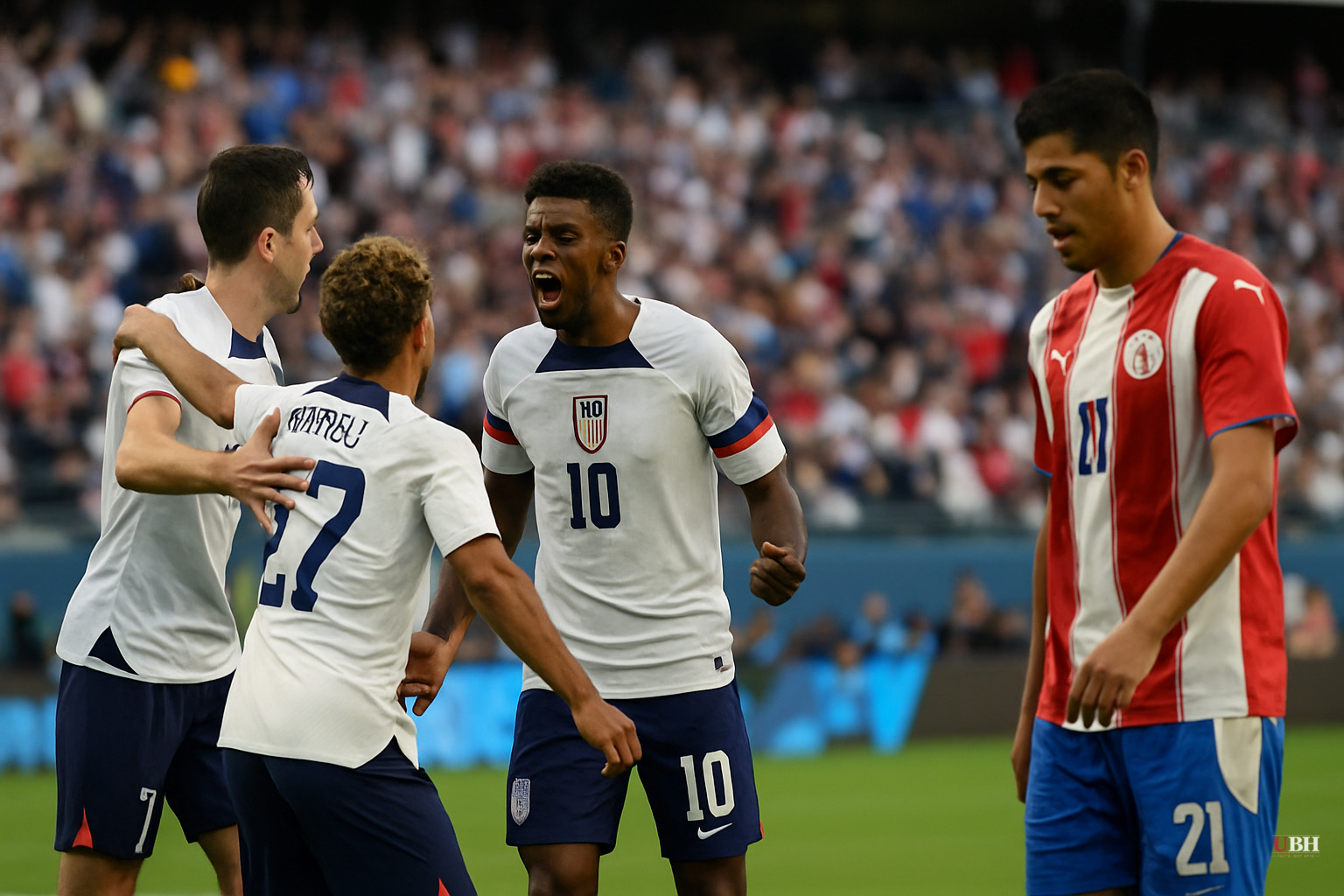
Since the USA opened the 2026 World Cup with a 4-1 win over Paraguay at SoFi Stadium on June 12, the team has generated three distinct storylines: a new offensive identity, a postgame prayer that went viral, and a police officer in Boston who briefly became the face of the tournament's fan culture. Each one says something different about where American soccer stands right now.
The Tactical Shift Is Real
For most of U.S. soccer history, the USMNT's World Cup identity was built on defense, conditioning, and not losing badly. The 2026 version is different. According to the New York Post, the 4-1 result against Paraguay — previously described as a stout defensive side — reflected an "attack-minded, offensively fluid" approach "with a confidence unlike anything we've seen from them on this stage, perhaps ever."
Christian Pulisic, the AC Milan forward who has long been the team's most dangerous attacker, described the squad's new depth plainly: "It's pretty special to watch. It's fun to look around and know there's different guys that can pull off these different skills and moves going on."
That depth matters. The U.S. can no longer be neutralized by shutting down one player. How deep that runs gets tested against harder opponents.
The Prayer Moment
After the final whistle, the squad gathered at midfield for a postgame prayer led by center-back Mark McKenzie, according to Sports Spectrum. The players formed a tight circle, arms around each other, while the crowd at SoFi Stadium was still going.
Breitbart gave the moment prominent coverage, and the social media reaction it documented was largely enthusiastic. That's fine to report. A team praying together after a win is not unusual in American professional and amateur sports at any level. It happens routinely in the NFL, NBA, and college athletics. The story is not that it happened, but rather who led it and how it was framed by a squad that includes players from multiple clubs across Europe and the U.S.
McKenzie, who plays for Philadelphia Union on loan from Genk, told Premier Christianity that he carries a Bible specifically to prompt conversations about his faith. Other Christians on the roster identified by Breitbart include Chris Richards (Crystal Palace), Weston McKennie (Juventus), Matt Freese (New York City FC), and Pulisic himself.
The strongest pushback to the viral coverage is straightforward: team religious expression is personal and voluntary, and framing it as a defining team characteristic can overstate what it tells us about on-field performance. That's fair. It also doesn't make the moment less real or less worth reporting.
Boston, a Cop, and Scotland
Separately, a video from Boston's FIFA Fan Fest at City Hall Plaza went viral on X after Barstool Sports posted it. Boston Police Officer Connor Hardy, a 14-year department veteran, joined a crowd of American and Scottish fans playing soccer and proceeded to juggle the ball with his feet and thighs to the crowd's audible delight.
"When I went over there, I think they originally thought I was gonna steal the ball and be the fun police," Hardy told the Boston Globe. "I actually just kind of did my thing with them, and it was fun."
Hardy played soccer in high school and college. The Boston Police Department posted its own take on X: "Community policing looks a bit different when the FIFA World Cup is in town."
The clip's reach says something about the broader fan atmosphere the tournament has generated in host cities beyond the stadiums themselves. Fan Fests in Boston, Dallas, Los Angeles, and other venues have drawn significant crowds. That crowd energy — and whether it sustains across the group stage — is one of the open organizational questions FIFA and the U.S. Soccer Federation still face, given that attendance in some venues has been uneven.
The USMNT's group stage continues, and the tactical identity on display against Paraguay will face a far sterner test against higher-ranked opposition. Paraguay, for all its defensive reputation, was not in the top tier of World Cup contenders. Replicating that attacking fluency against a team that can genuinely match the U.S. in possession and transition is what will determine whether the New York Post's framing — "new American" soccer — holds up or whether June 12 looks like an outlier in retrospect.
The next USMNT group stage match is scheduled for later in the week. Until then, the 4-1 result stands as the U.S. program's most complete World Cup performance in recent memory, and the pressure to back it up is real.
Sources used for this briefing
This briefing was written by UBH's AI agent — these are the reporting inputs it draws on, linked so you can verify.


