
Unbiased headlines. Facts, not spin.
Unbiased Headlines is an independently owned news organization. We bring you the facts, not opinions, written fresh from 110+ named sources. Sources linked so you can verify it yourself.
 politics
Major Story (8/10)
Event date: September 6, 2026 ·
politics
Major Story (8/10)
Event date: September 6, 2026 ·
AfD Wins Record 43.8% in Saxony-Anhalt, Falls Four Seats Short of German State Majority
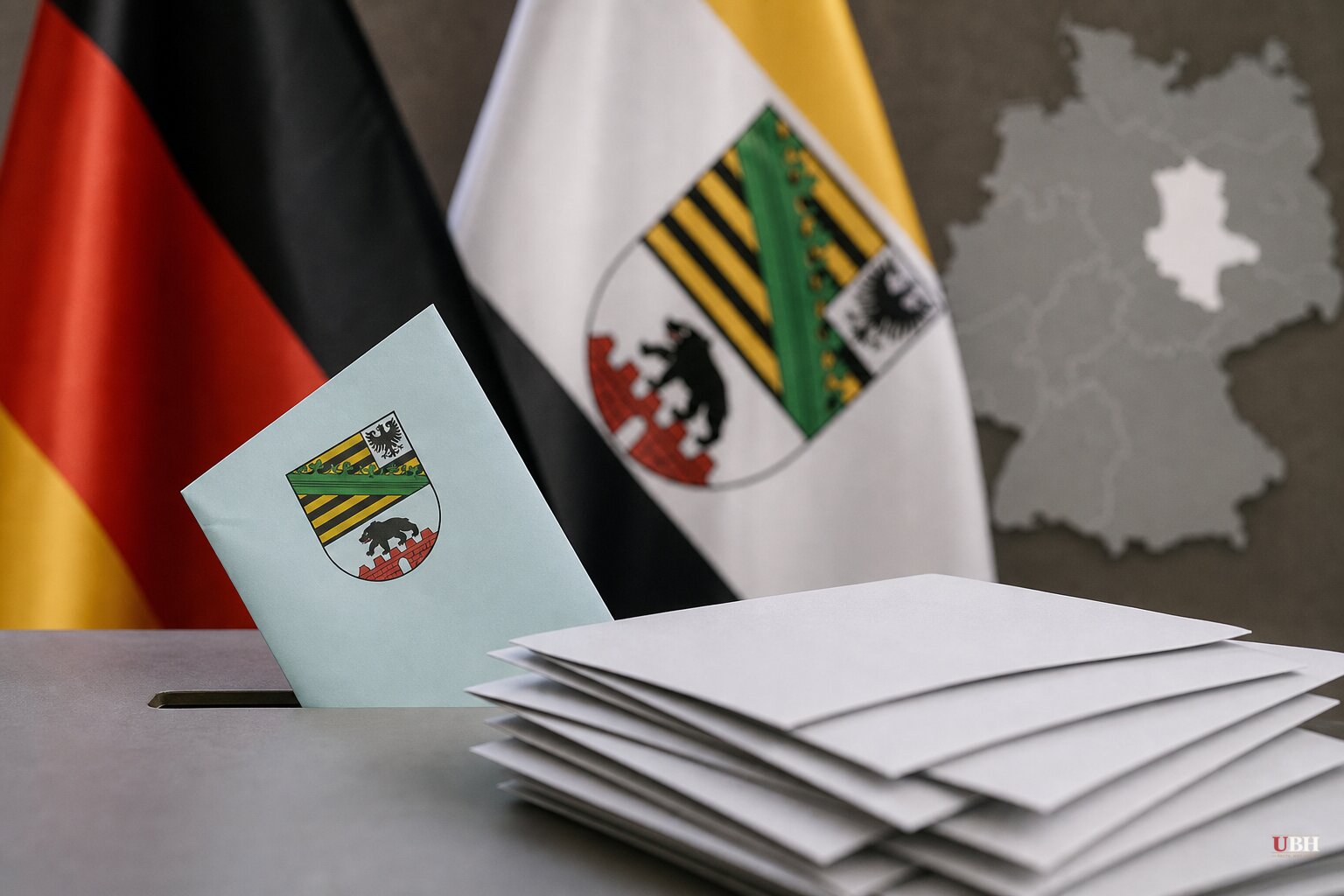
Since polls closed Sunday, September 6, in the eastern German state of Saxony-Anhalt, final results have put Alternative for Germany (AfD) at 43.8% of the vote, according to Breitbart. That's 39 seats in the state parliament, four short of the 43 needed for an outright majority.
The AfD's result more than doubles the 20.8% the party won there in 2021, according to the Epoch Times. Chancellor Friedrich Merz's Christian Democratic Union (CDU), which has run Saxony-Anhalt since 2002, collapsed from 37.1% in 2021 down to 17.2%, per Breitbart's reporting on the final count. The Social Democrats and the Greens each finished around 9%, also-ran results by any measure.
No Majority, No Clear Path
AfD's 35-year-old lead candidate, Ulrich Siegmund, had ruled out serving as a junior coalition partner before the vote, telling supporters at the party's Magdeburg rally that he would only take the minister-president job if AfD won enough seats to govern alone, according to the Epoch Times.
Siegmund declared victory Sunday night. "We have written history," he said, according to Fox News, adding that voters had sent a message that "things cannot carry on like this" and that it was "also a signal toward Berlin." He took a direct shot at the chancellor: "Every day this man is in the chancellery is one too many."
Every other party currently expected to sit in the new parliament, the CDU, SPD, Greens and Left Party, has publicly refused to form a government with AfD. CDU general secretary Franziska Hoppermann told reporters, "AfD is a right-wing extremist party. It wants to leave the euro, that would be economic downfall. It works closely together with Russia, it wants a completely different social model. We will not work with them," according to Fox News.
The small left-wing populist Bündnis Sahra Wagenknecht (BSW) is the only conceivable partner. The outcome could involve a left-right populist coalition built around shared opposition to mass migration and to further Western military support for Ukraine against Russia. BSW has stopped short of endorsing an AfD government outright but has signaled it could use its seats as leverage in negotiations, per Breitbart's reporting. Without BSW, the alternatives are a minority AfD government unlikely to survive votes, or fresh elections. Siegmund has told supporters he'd welcome new elections, predicting AfD could win 50 or 60% next time if the CDU can't form a durable coalition, according to the Epoch Times.
The Extremism Label, and the Case Against It
Germany's domestic intelligence agency has classified AfD as a right-wing extremist organization, NPR reported. The party rejects this as politically motivated persecution by an establishment trying to shut down a legitimate opposition movement. AfD supporters and figures like Siegmund argue the label ignores that the party won its result through an open democratic vote on a platform of stricter immigration enforcement, tax cuts and ending mass migration, not through anything resembling the authoritarian tactics the label implies.
Critics, including CDU's Hoppermann, point to specific AfD positions: leaving the euro currency, closer alignment with Russia, and a proposed "remigration and deportation" drive targeting illegal immigrants. They cite these as the substantive basis for the extremism concern rather than mere disagreement over policy.
What NPR and Breitbart Each Leave Out
NPR's coverage focused heavily on Siegmund's polished TikTok-native campaign style and quoted a former AfD supporter, law student Hannes Kreschel, arguing the party's economic platform "only adds up for the financially well-off." It included far less on the actual vote mechanics or coalition math than Breitbart, which detailed the seat count but framed CDU's collapse as a personal "referendum" on Merz without citing a poll that specifically tested that framing.
What Happens Next
Coalition negotiations in Magdeburg are the immediate next step, with BSW's posture the key variable. If talks collapse and no government forms, Saxony-Anhalt could face new elections, a scenario Siegmund has already told his own supporters he wants. Merz's national government, already unpopular over Germany's sluggish economy according to the Epoch Times, now faces the same coalition-math problem playing out in miniature in Magdeburg, with implications for how the CDU handles the "firewall" strategy heading into future state contests.
Sources used for this briefing
6 links from 6 independent newsrooms (syndicated copies of the same report count once)
These are the sources it draws on, linked so you can verify.


