
Unbiased headlines. Facts, not spin.
Every story is an unbiased news briefing written from 110+ sources across the spectrum — sources linked so you can verify it yourself.
 tech
Notable (6/10)
June 18, 2026 at 02:01 PM
tech
Notable (6/10)
June 18, 2026 at 02:01 PM
Adobe Rolls Out AI Assistants to Photoshop, Premiere, Illustrator, InDesign, and Frame.io in Public Beta
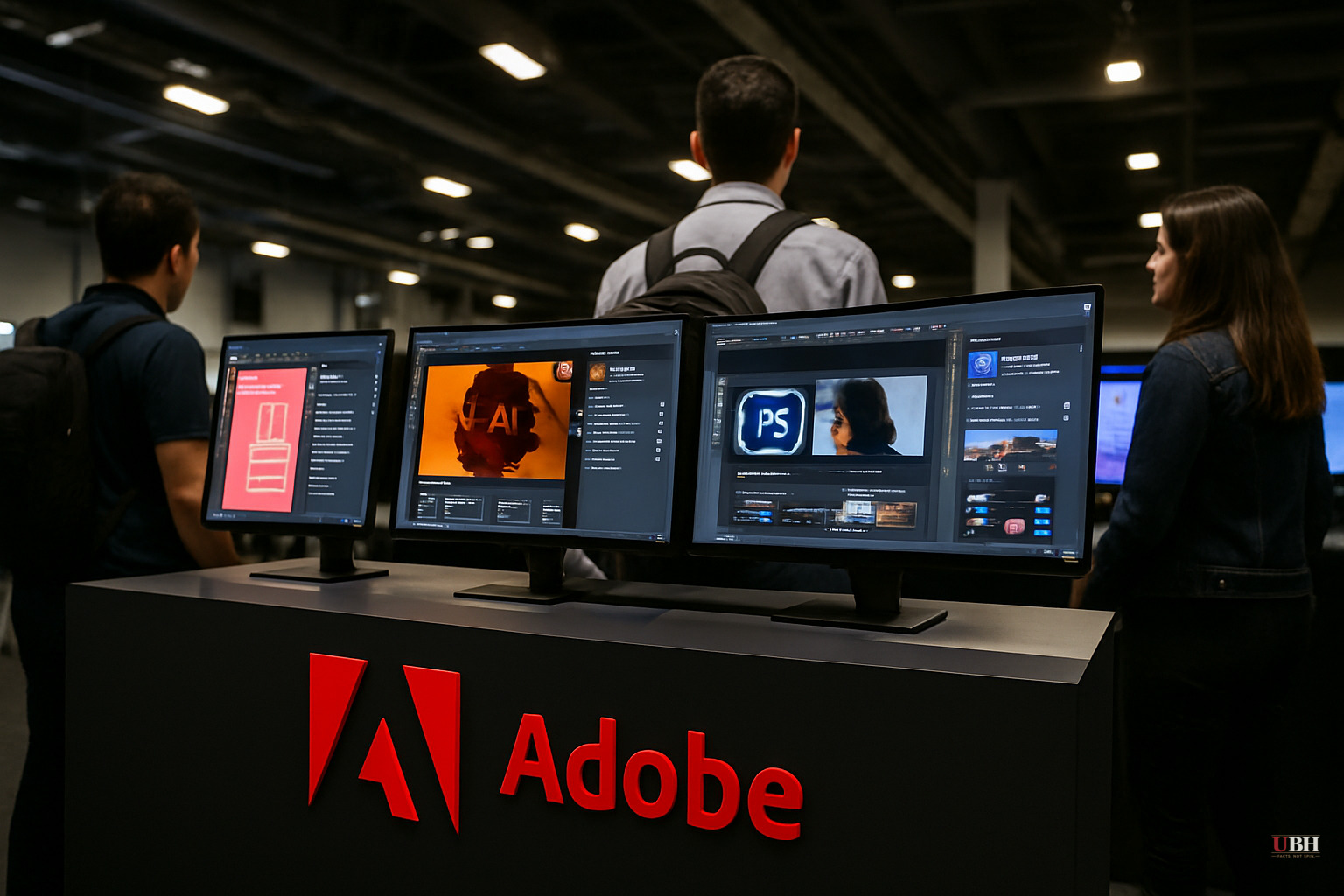
Since Adobe began seeding its AI assistant into Express, Acrobat, and Firefly over the past year, the company has been working toward the same capability in its flagship editing suite. That expansion arrived on June 18, 2026, when Adobe pushed a public beta of app-specific AI assistants to Photoshop, Premiere, Illustrator, InDesign, and Frame.io simultaneously, according to The Verge and TechCrunch.
What Each Assistant Actually Does
All five are built on what Adobe calls its "conversational creative agent," but each one is tuned for its host app rather than being a generic chatbot dropped into a menu. The distinctions matter.
In Premiere, users can describe footage in natural language and have the assistant sort assets into bins, batch-rename clips based on what's happening on screen, identify interview questions in recorded speech, add timeline markers, and generate a working first-cut structure. Adobe says the goal is eliminating the setup work in the Project panel and Timeline, according to The Verge.
In Photoshop, the assistant handles layer organization, background swaps, and asset resizing through descriptive prompts, a prompt-based workflow already familiar from Firefly.
In Illustrator, TechCrunch reports the assistant can reorganize layers across a document and flag missing fonts. Both The Verge and TechCrunch note that Firefly is already supported by ChatGPT, Claude, and Microsoft Copilot, and Adobe has said Google Gemini and Slack integration are coming.
Firefly Gets a Structural Overhaul
Alongside the Creative Cloud rollout, Adobe launched a redesigned Firefly AI studio in private beta. Two new features anchor the update.
The first is Elements: you can save AI-generated characters, objects, and locations under a name and reuse them across projects. Upload a reference image of a character, call it "Charlie," and Firefly will place that same character in new scenes without requiring a fresh description each time. The Verge describes it as solving the consistency problem that plagues generative AI workflows, where slight prompt variations produce noticeably different results.
The second is Projects: a single container that stores assets, generations, and creative context together so teams can pick up where they left off. TechCrunch notes this is particularly useful for ongoing campaigns or video series.
Firefly's assistant also gained the ability to generate brand kits (logos, color palettes, and brand identity assets) from a plain-language description of a company's name and style, or from uploaded existing collateral. A Quick Cut feature lets it assemble raw clips into a polished first draft.
The Canva Comparison
TechCrunch is direct about the competitive framing: "Adobe is slowly transforming Firefly to increasingly resemble Canva, at least when it comes to AI features." That's a pointed observation. Canva built its audience by making design accessible to non-professionals; Adobe built its with professionals who needed depth. The AI assistant push is clearly an attempt to capture both ends: keep the pros while lowering the barrier for everyone else.
That tension is worth naming. Creative professionals have a legitimate concern that tools optimized for "describe what you want" prompts will erode the skill differential that justifies their rates. If a Premiere assistant can batch-rename and rough-cut a timeline in seconds, the value of a junior editor who used to spend hours on that setup changes. Adobe has positioned the assistants as handling "tedious set-up work" rather than creative judgment, but where that line sits in practice is unresolved.
The strongest counterargument: automation of rote tasks has historically expanded the market rather than collapsed it. When Photoshop added Content-Aware Fill, photographers didn't disappear—they spent less time cloning and more time shooting. The same logic may apply here. But the speed of the current AI curve is faster than previous tool generations, and "may apply" is not a guarantee.
No Investigation, No Charges
No regulatory review of Adobe's AI rollout has been announced as of June 18, 2026. The EU AI Act's obligations around AI-generated content disclosure remain a potential compliance question for Adobe's European users, but no enforcement action has been filed.
What's Still Open
Adobe confirmed that Google Gemini and Slack support are planned but has not given a release date, according to TechCrunch. The new Firefly studio features—Elements and Projects—are in private beta, not public beta, meaning most users cannot access them yet. The public beta for the Creative Cloud AI assistants is live as of today, but Adobe has not stated a general availability timeline. How the assistants handle proprietary or client-sensitive assets, and what data Adobe retains from prompt interactions, are questions the company has not addressed in these announcements.
Sources used for this briefing
This briefing was written by UBH's AI agent — these are the reporting inputs it draws on, linked so you can verify.


