
Unbiased headlines. Facts, not spin.
Unbiased Headlines is an independently owned news organization. We bring you the facts, not opinions, written fresh from 110+ named sources. Sources linked so you can verify it yourself.
 health
Notable (6/10)
Event date: October 15, 2026 ·
health
Notable (6/10)
Event date: October 15, 2026 ·
ACOG Replaces 2014 Menopause Bulletin, Strongly Recommends Hormone Therapy for Hot Flashes
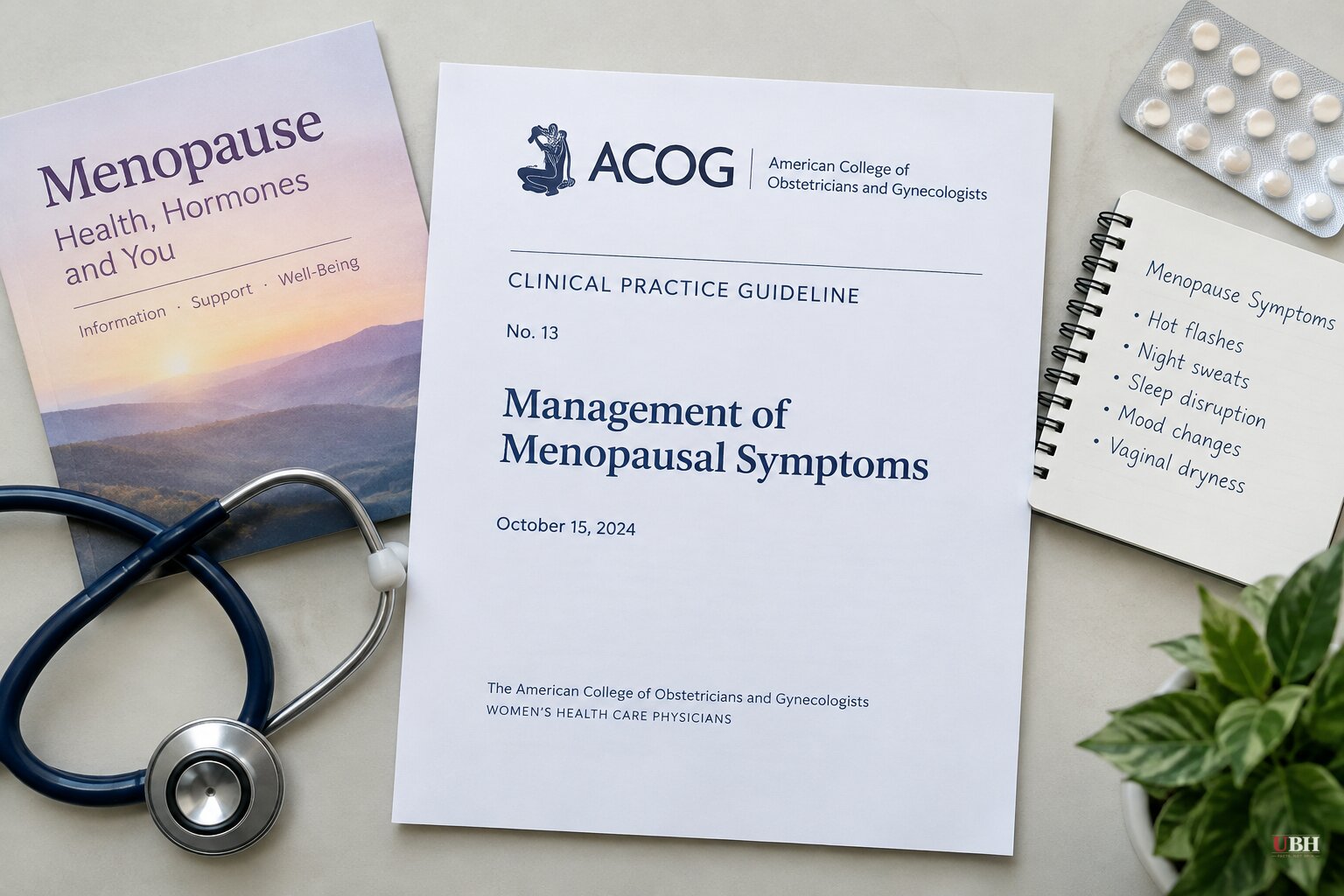
The American College of Obstetricians and Gynecologists (ACOG) published its new menopause guidance today, Oct. 15, in Obstetrics & Gynecology. Clinical Practice Guideline No. 13 replaces Practice Bulletin No. 141, issued in January 2014.
ACOG calls it the most comprehensive menopause guidance it has put out. It covers hot flashes and night sweats (vasomotor symptoms, or VMS), sleep disturbance and mood changes.
What ACOG now recommends
The headline recommendation is a strong one. ACOG recommends systemic menopausal hormone therapy for VMS and VMS-related sleep disturbance in women without contraindications. Women with a uterus get estrogen plus a progestogen. Estrogen alone is appropriate "if endometrial protection is not needed."
ACOG also suggests a combination of conjugated estrogen and bazedoxifene as an alternative to estrogen-progestogen therapy.
The guideline grades treatments with a modified GRADE framework. "ACOG recommends" means the benefits clearly outweigh the harms. "ACOG suggests" means the balance depends on the patient and calls for shared decision-making.
On nonhormonal options, SSRIs, SNRIs and neurokinin receptor antagonists received strong recommendations. Cognitive behavioral therapy, mindfulness, exercise, clinical hypnosis and acupuncture received conditional recommendations. Phytoestrogens and herbal supplements are not supported.
The guideline also adds detail on timing. ACOG says starting hormone therapy should rest on shared decision-making, with timing chosen to maximize benefit and minimize overall risk.
On depression, ACOG says current evidence is insufficient to recommend for or against treatment options for menopausal depressive symptoms.
The numbers behind it
ACOG's guidance puts the share of menopausal women reporting VMS at 50% to 92%. It says 16% to 66% of U.S. women report menopause-related sleep disruption. More than a third of perimenopausal and postmenopausal women worldwide report depressive symptoms.
Natural menopause occurs at an average age of 50 in the United States, according to ACOG. Symptoms can start years earlier and last years after periods stop. Elizabeth Lapeyre, MD, medical director of the Menopause and Women's Wellness Center at Ochsner Health in New Orleans, told the AMA's "Health vs. Hype" podcast that about 75% of women experience symptoms. For some, she said, they last an average of seven years or longer.
ACOG President Camille A. Clare, MD, MPH, said women spend roughly one-third of their lives postmenopausal. "Untreated symptoms can affect physical health, emotional well-being, workplace productivity and long-term health outcomes," she said at a press briefing.
"Menopause is a normal and natural stage of life, but that doesn't mean that women must suffer through the symptoms without help," Clare said in ACOG's release. She added that it is "critically important that women have access to and coverage for evidence-based care, especially as menopause misinformation continues to flourish."
A second major group lands in the same place
The American College of Physicians (ACP) has issued its own guideline on drug treatments for vasomotor symptoms in the Annals of Internal Medicine. Its authors, led by Amir Qaseem, MD, PhD, MHA, ranked treatments in tiers.
First line is hormone therapy: estrogen with progestogen for women with a uterus, estrogen alone for those without. Both are strong recommendations based on high-certainty evidence.
Second line is the SNRIs desvenlafaxine (Pristiq) or venlafaxine (Effexor), for women who cannot take or do not tolerate hormones. That rests on moderate-certainty evidence.
Third line is the SSRIs escitalopram (Lexapro) and paroxetine (Paxil), plus gabapentin, all on low-certainty evidence. The neurokinin receptor antagonists fezolinetant (Veozah) and elinzanetant (Lynkuet) also sit in the third tier, on moderate-certainty evidence.
The ACP recommendations draw on a systematic review and meta-analysis led by Susan Diem, MD, MPH, of the VA Health Care System in Minneapolis.
Why hormone therapy fell out of favor
Hormone therapy has long been known to work on vasomotor symptoms. The Women's Health Initiative (WHI) study found increased risks of cardiovascular disease and breast cancer. That led to boxed warnings and a decline in use over roughly two decades.
The FDA has since removed its warnings about cardiovascular disease and breast cancer. Re-analyses of the WHI data suggest better outcomes for women closer to menopause. In 2022, the Menopause Society concluded that for women under 60 and within 10 years of menopause onset, with no contraindications, the risk-benefit ratio is favorable for treating vasomotor symptoms.
Stephanie Faubion, MD, MBA, and Regina Castaneda, MD, both of the Mayo Clinic in Jacksonville, Florida, wrote an accompanying editorial in the Annals. They said the drop in hormone therapy use "reflects patient and clinician concerns and misconceptions about the risks," along with barriers to care and undertreatment of symptoms. They called it "noteworthy" that the ACP guideline encourages clinicians to start conversations about menopause on their own and provide education.
What comes next
ACOG says it is developing complementary guidance on the genitourinary syndrome of menopause, to be published in 2027. That will cover symptoms the current guideline does not address.
The guidelines are written for clinicians. Whether they change what women are prescribed will show up in prescribing data and insurance coverage over the coming years. Clare herself pointed to coverage as the open issue.
Sources used for this briefing
5 links from 5 independent newsrooms (syndicated copies of the same report count once)
These are the sources it draws on, linked so you can verify.


