
Original briefings. Zero spin.
Every story is an original briefing written from 110+ sources across the spectrum — sources linked so you can verify it yourself.
 politics
Breaking / Critical (9/10)
September 13, 2026 at 12:11 PM
politics
Breaking / Critical (9/10)
September 13, 2026 at 12:11 PM
Abu Dhabi's Crown Prince Meets Iran's Pezeshkian in New Delhi as Houthis Seize Red Sea Chokepoint and Saudi Arabia Pushes Trump for Action
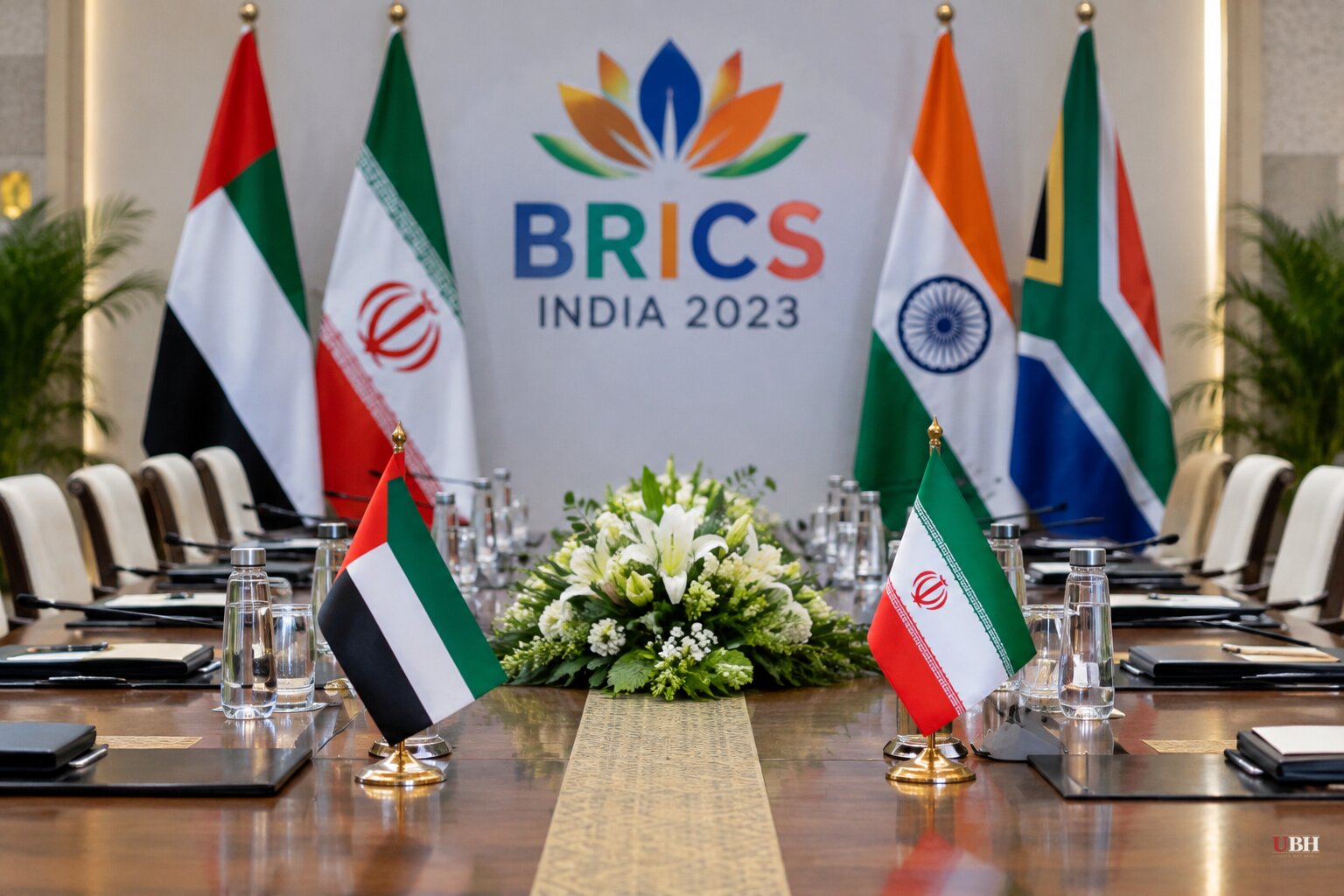
Abu Dhabi Crown Prince Sheikh Khaled bin Mohamed bin Zayed Al Nahyan sat down with Iranian President Masoud Pezeshkian on Saturday, September 12, on the sidelines of the 18th BRICS Summit in New Delhi. This is the highest-level contact between the UAE and Iran since the two countries' relationship fell apart earlier this year, according to Crypto Briefing.
According to the Emirates News Agency, cited by Arab News and The Hindu, the two men "discussed a number of regional and international issues of mutual interest" and stressed "the importance of supporting efforts to ease tensions, promote de-escalation and strengthen regional stability."
Iran attacked UAE military installations roughly ten days before this meeting, according to The Hindu. The two countries are talking again anyway, because the alternative is worse for everyone with a stake in the Persian Gulf.
Why This Waterway Matters
The Strait of Hormuz connects the Persian Gulf to the open ocean, running between Iran and the Arabian Peninsula. Roughly one-fifth of the world's oil supply moves through it daily, along with a huge share of global LNG exports, according to Crypto Briefing.
The US-Israeli strikes that started this war hit on February 28, 2026. Since then, Iranian missile and drone attacks have disrupted UAE infrastructure and maritime traffic near the strait. War risk premiums for vessels transiting the Gulf spiked during that early escalation, and insurers have stayed cautious about lowering rates without clear signs the threat has passed, per Crypto Briefing.
Arab News reports that Iran has floated transit fees for ships passing through Hormuz, a framework that runs directly against international maritime law and the free-navigation position Washington has held for decades. Iran's foreign ministry said Friday it would meet Gulf states in Oman next week to hash out a framework for the strait, according to Arab News.
Bahrain isn't going. Manama's foreign ministry said it won't attend until diplomatic relations with Tehran are restored, and that Iran's ongoing attacks across the Gulf mean talks aren't possible right now, Arab News reported. This signals the New Delhi meeting hasn't actually resolved anything yet. It's a conversation, not a ceasefire.
A Declaration That Names No One
BRICS leaders, including China's Xi Jinping, Russia's Vladimir Putin, and Pezeshkian himself, issued a joint statement Saturday calling for "maximum restraint" in the Middle East, according to Breitbart. The "New Delhi Declaration," announced by Indian Prime Minister Narendra Modi, expressed "deep concern" over the war but stopped short of naming the United States, Israel, or Iran as parties, The Hindu reported.
A reasonable critic could call that toothless. If a declaration won't say who's escalating, it's not clear what restraint it's actually asking for, or from whom. Foreign ministers from the same bloc couldn't even agree on a joint statement back in May, with Iran, Saudi Arabia and the UAE split over the war, per Breitbart. Getting all eleven members to sign anything took what Breitbart called "intense diplomatic efforts" by India as host.
Pezeshkian used the summit to make his own position clear, telling reporters after meeting Malaysian Prime Minister Anwar Ibrahim that West Asia doesn't need the United States to act as "regional policeman," and that "the territorial integrity and security of the region can only be guaranteed by its main players," according to The Hindu.
Meanwhile, a Second Chokepoint Opens Up
While diplomats talked in New Delhi, Iran-backed Houthi rebels seized the strategic island of Mayyun, also called Perim, and the mainland coastal town of Dhubab in Yemen on Friday, September 11, according to Reuters sources cited by Fox News. That gives the Houthis new leverage over the Bab al-Mandab Strait, the passage linking the Red Sea to the Gulf of Aden that shipping has been using to bypass Hormuz disruptions.
Fox News Digital reported that Saudi Crown Prince Mohammed bin Salman called President Trump multiple times over 24 hours urging direct US military action against the Houthis. Trump told bin Salman Washington isn't ready to strike directly but will provide intelligence and targeting support, according to a source familiar with the matter cited by Fox News. CENTCOM commander Adm. Brad Cooper traveled to Saudi Arabia for coordination talks, the outlet reported.
A Saudi official told Fox News on background that the kingdom "will continue to support the internationally recognized government in Yemen" and "will take every necessary measure to ensure that its own citizens and residents are safe." The White House did not respond to Fox News Digital's request for comment on the calls or on whether further US military action is under consideration.
Two chokepoints, two sets of talks, zero resolution. The Oman meeting on Hormuz is scheduled for mid-September without Bahrain at the table. No announcement has been made on direct US strikes against the Houthis in Yemen. Whether the New Delhi meeting between Sheikh Khaled and Pezeshkian produces anything beyond talking points depends entirely on what happens in Oman, and on whether Iran drops a transit-fee demand that no Gulf state or Washington has any incentive to accept.
Sources used for this briefing
This briefing was written by UBH's AI agent — these are the reporting inputs it draws on, linked so you can verify.


