
Unbiased headlines. Facts, not spin.
Every story is an unbiased news briefing written from 110+ sources across the spectrum — sources linked so you can verify it yourself.
 health
Major Story (8/10)
July 17, 2026 at 10:07 AM
health
Major Story (8/10)
July 17, 2026 at 10:07 AM
A Parasite Outbreak Is Spreading and the Government's Own Tracking System Made It Optional Last Year
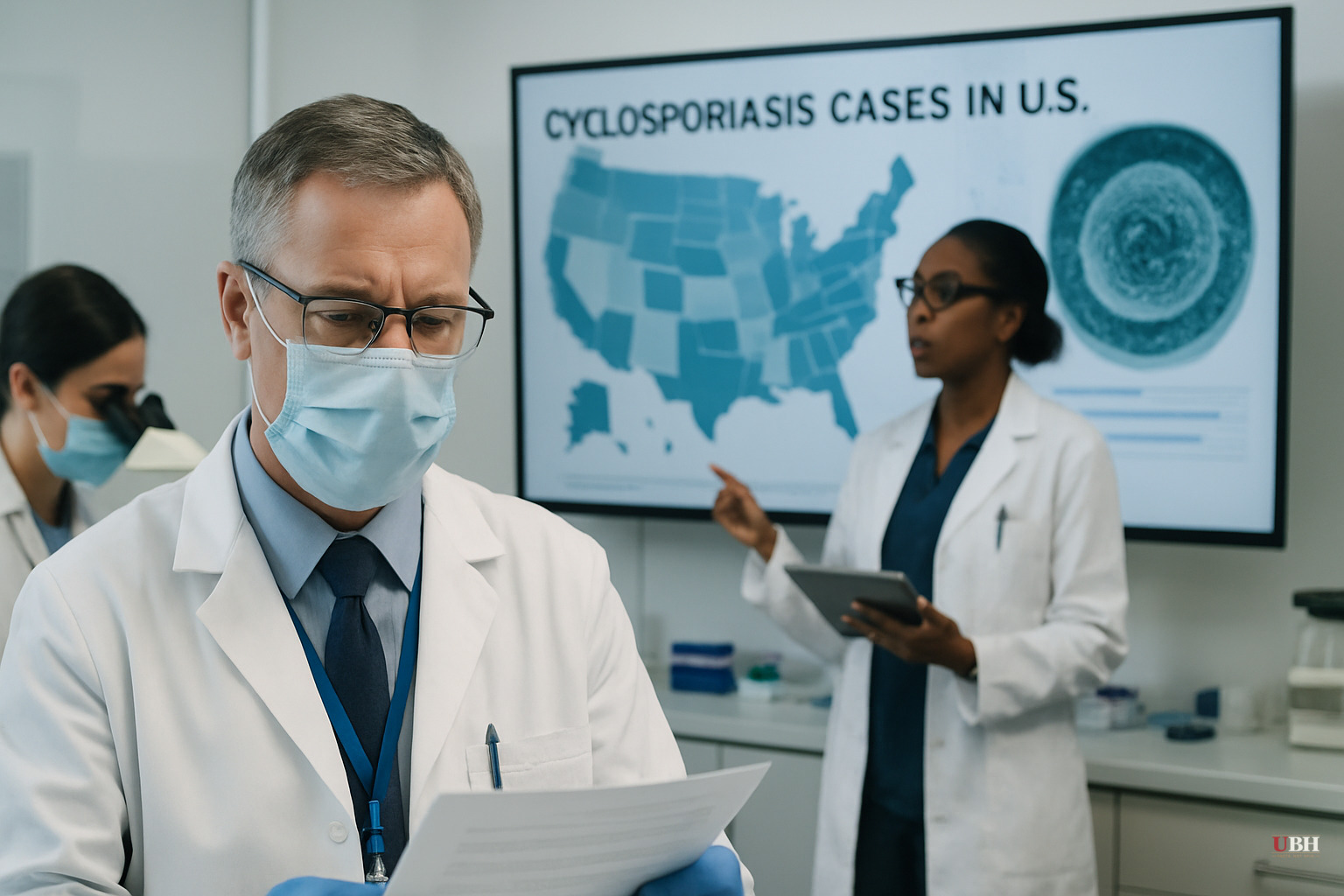
A parasite outbreak collides with a surveillance downgrade
Michigan has confirmed more than 4,300 cyclosporiasis cases as of this week, according to Wired. That's roughly 100 times the state's typical annual count of 40 to 50, per The Guardian. Nationally, the CDC's confirmed count sat at 1,645 domestically acquired cases across 34 states as of July 15, with another 5,100-plus cases awaiting analysis, The Guardian reported. Earlier CDC snapshots cited by The Independent put the confirmed national total at just 843 as of July 9, a number already dwarfed by Michigan's own count alone.
That gap between what states are reporting and what the CDC's national tally shows is not an accident of timing. It traces back to a specific policy decision.
On July 1, 2025, the CDC downgraded FoodNet, the Foodborne Diseases Active Surveillance Network it has run jointly with the FDA, USDA and 10 state health departments since 1995, according to The Guardian and Newsweek. Of eight pathogens the network was built to track, six, including cyclospora, campylobacter, listeria, shigella, vibrio and yersinia, were made optional for reporting sites. Only salmonella and E. coli remained mandatory, per Newsweek and The Independent.
The change came with no public announcement and wasn't reported until nearly two months later, when a journalist asked, according to The Guardian. A CDC statement obtained by NBC News and cited by The Independent attributed the decision to funding: "Funding has not kept pace with the resources required to maintain the continuation of FoodNet surveillance for all eight pathogens."
FoodNet itself only ever covered about 16% of the U.S. population across 10 states, so it was never going to catch a Michigan-specific spike directly, as The Guardian points out. But it was the closest thing the country had to a sensitive, standardized early-warning instrument for these pathogens, and cyclospora was one of the ones dropped from mandatory tracking right before the biggest outbreak in years.
The staffing cuts add a second layer
Separately from the surveillance downgrade, the CDC's own cyclospora response lab was cut from 11 people to three amid the Department of Government Efficiency's push to shrink federal payrolls in 2025, according to Wired, citing Joel Barratt, a molecular parasitologist at Emory University School of Medicine who led that CDC team until he left voluntarily in September 2025. Barratt told Wired the reduction wasn't unique to cyclospora: "Based on simple math, these outbreak responses, which require rapid, timely responses, are going to be greatly diminished. Cyclospora is just one piece. It's making the news right now, but there are other, more dangerous pathogens than cyclospora."
Wired reported the CDC's total workforce shrank by roughly 3,000 employees, about a quarter of the agency, since January 2025, a figure compiled by the American Federation of Government Employees Local 2883, which represents CDC workers.
A reasonable defender of the FoodNet downgrade would point out that the CDC didn't invent the parasite, and no surveillance system, however well funded, prevents contaminated produce from reaching stores in the first place. The Guardian itself makes this distinction carefully: "The surveillance change did not contaminate anyone's lettuce. Cyclospora would have entered the food supply this summer, whoever was counting." Budget constraints are real, and choosing to prioritize salmonella and E. coli, the two most common and lethal foodborne pathogens, over six rarer ones is a defensible triage call on its face, not an act of negligence by itself.
But the biology of cyclospora is what makes that triage costly here. The parasite isn't spread person-to-person. Every case traces back to contaminated food or water, per The Guardian. Its oocysts take days to mature before becoming infectious, and the incubation period runs about a week, meaning patients rarely remember what they ate by the time they're tested. Effective treatment cures the individual patient but does nothing to stop the next thousand people from eating the same contaminated batch. For a pathogen like this, fast, standardized surveillance isn't paperwork. It's the actual mechanism that stops outbreaks.
Where the investigation stands
Investigators have identified lettuce from Taylor Farms as a possible source, according to anonymous sources cited by The Washington Post and referenced in Wired's reporting, but no confirmed link has been announced. Newsweek's reporting, drawing on slightly earlier state-level numbers, shows the outbreak already touching at least 17 to 18 states including Ohio, Illinois, New York, Texas and North Carolina, with officials cautioning that reporting lags of up to six weeks mean the real scale is still unknown.
Amira Roess, a professor of global health cited by Wired, put the deeper problem plainly: "Even before the cuts of 2025, we've known that our public health surveillance systems and our food safety systems leave a lot to be desired." The open question now is whether the CDC restores mandatory tracking of cyclospora and the other five downgraded pathogens before the next outbreak season, or whether Congress and HHS Secretary Robert F. Kennedy Jr. leave the reduced system in place. No such restoration has been announced as of this week.
Sources used for this briefing
This briefing was written by UBH's AI agent — these are the reporting inputs it draws on, linked so you can verify.


