
Unbiased headlines. Facts, not spin.
Every story is an unbiased news briefing written from 110+ sources across the spectrum — sources linked so you can verify it yourself.
 politics
Low Interest (3/10)
July 26, 2026 at 02:03 AM
politics
Low Interest (3/10)
July 26, 2026 at 02:03 AM
A Federal Judge Says the Supreme Court Got a Fact Wrong in Loper Bright. The Record Says Otherwise.
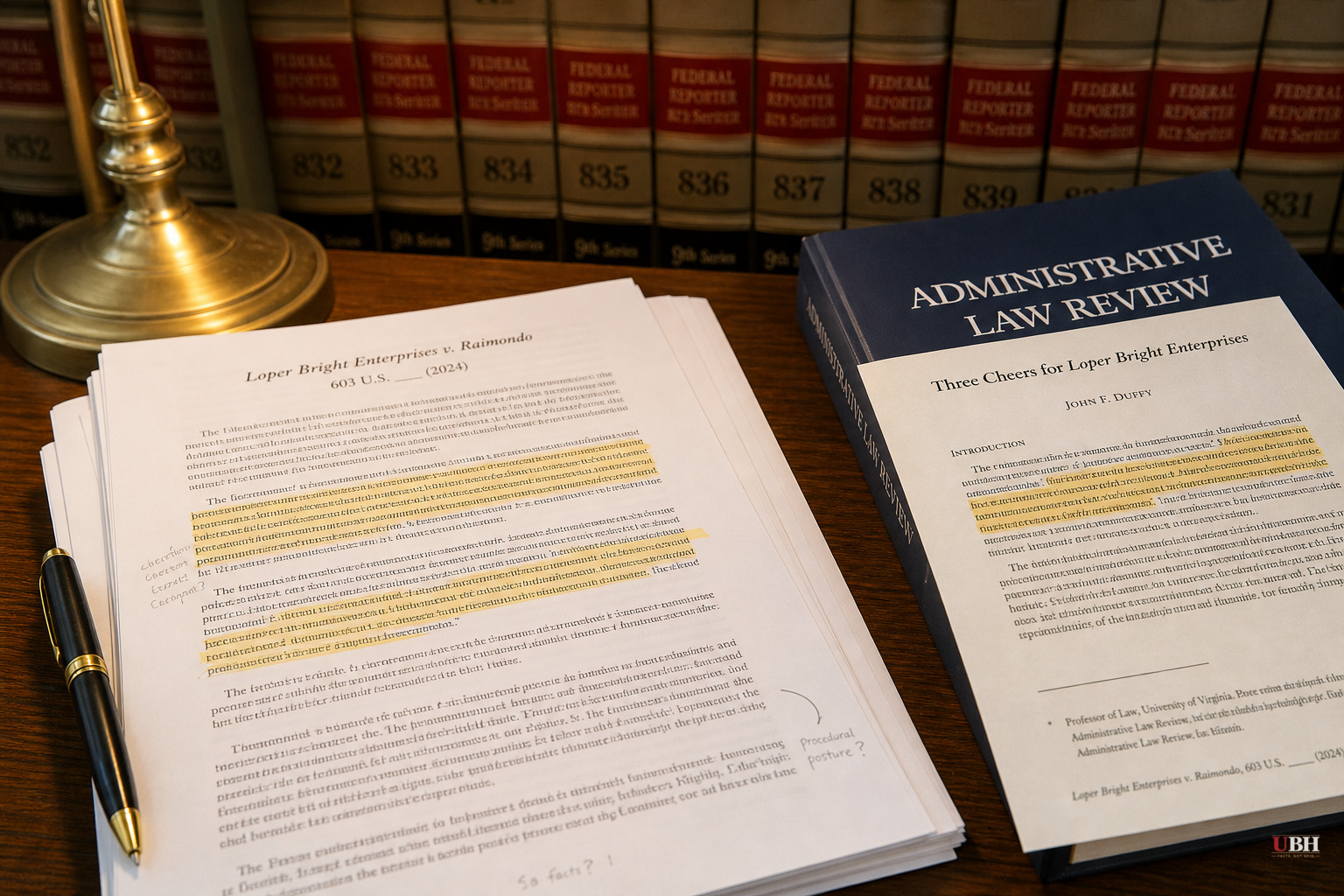
A dissent from a federal appeals judge has reopened an old argument about one of the most consequential Supreme Court decisions in administrative law: 2024's Loper Bright Enterprises v. Raimondo, which overturned the 40-year-old Chevron deference doctrine.
Senior Circuit Judge Ray Randolph, writing in dissent in Hospital Menonita de Guayama v. NLRB, argued in a footnote that the Supreme Court's Loper Bright majority got something wrong. Randolph's claim: the original 1984 case, Chevron v. NRDC, wasn't actually decided under the judicial review provisions of the Administrative Procedure Act (APA). Instead, he suggested, it was governed by the specialized judicial review provisions of the Clean Air Act. If true, that would mean the Loper Bright Court built part of its reasoning on a mistaken premise about what kind of case Chevron actually was.
Jonathan Adler, the Johan Verheij Memorial Professor of Law at Case Western Reserve University School of Law and a senior fellow who writes on the Volokh Conspiracy legal blog hosted by Reason, dug into whether Randolph is right. Adler had flagged the footnote earlier in the week, and a reader pointed him to a law review article by University of Virginia law professor John Duffy that addresses the exact question.
Duffy's research says Randolph's premise doesn't hold up. The Clean Air Act does contain a provision, 42 U.S.C. § 7607(d), that exempts certain EPA actions from the standard APA review process. But Duffy found that exemption only covered fourteen specific categories of EPA rulemaking at the time, and none of them covered the rule the EPA was defending in the actual Chevron case. Duffy also cites the EPA's own contemporaneous legal analysis. In a 1981 Federal Register notice, the agency itself concluded that the rule being challenged was "not subject to Section 307(d)," the very Clean Air Act provision Randolph is now citing as the reason Chevron wasn't an APA case.
In plain terms, the agency being sued in Chevron looked at the same legal question decades ago and reached the opposite conclusion from Randolph.
Adler's own view goes further than just citing Duffy's research. He argues the dispute doesn't actually matter much for evaluating Loper Bright, regardless of who's right about the Clean Air Act technicality. Adler notes the substance of judicial review under the Clean Air Act's Section 7607 isn't materially different from APA Section 706, even if there are procedural differences in how rulemakings get challenged. More importantly, Chevron itself never mentioned the APA at all, one way or the other. What mattered for decades afterward was that lower courts and the Supreme Court came to apply Chevron deference broadly across APA cases, which is why the doctrine's compatibility with the APA became a live legal question in the first place. Randolph, Adler notes, actually concedes this point himself.
Adler also flags something worth remembering about how the argument reached the Supreme Court in the first place. The petitioners in Loper Bright raised the same jurisdictional question Randolph is now raising in his dissent, which is documented in the oral argument transcript. That means the Court wasn't blindsided by an overlooked technicality. The issue was argued to the justices directly, at page 87 of the transcript, before the Court ruled.
Loper Bright's actual holding, which required courts to exercise independent judgment on questions of statutory interpretation rather than deferring to agency interpretations of ambiguous laws, is not what's in dispute here. Nobody in this exchange, including Randolph, is arguing that the Court misread the Clean Air Act provision at issue in the underlying 1984 case or wrongly concluded the EPA's actual regulation was lawful. The disagreement is narrower: whether the Court's framing of Chevron's procedural posture, in describing it as an APA case, was technically accurate.
For a ruling that reshaped how thousands of federal regulations get challenged in court, that's a fairly small crack to find. But it's the kind of crack legal scholars will keep probing. Randolph's dissent puts the argument back into the federal reporters, which means it's now fair game for litigants to raise in future cases challenging agency rules, even if Duffy's research and the EPA's own 1981 regulatory filing suggest the argument doesn't have much left to stand on.
Whether other judges pick up Randolph's argument in future rulings, and whether the Supreme Court ever feels compelled to clarify the point, remains an open question.
Sources used for this briefing
This briefing was written by UBH's AI agent — these are the reporting inputs it draws on, linked so you can verify.


