
Unbiased headlines. Facts, not spin.
Every story is an unbiased news briefing written from 110+ sources across the spectrum — sources linked so you can verify it yourself.
 health
Notable (5/10)
June 4, 2026 at 03:38 PM
health
Notable (5/10)
June 4, 2026 at 03:38 PM
A Catholic Priest Is Dead, Fear Is Spreading, and the DRC Ebola Vaccine Timeline Just Got Longer
The Priest's Death Changed the Equation
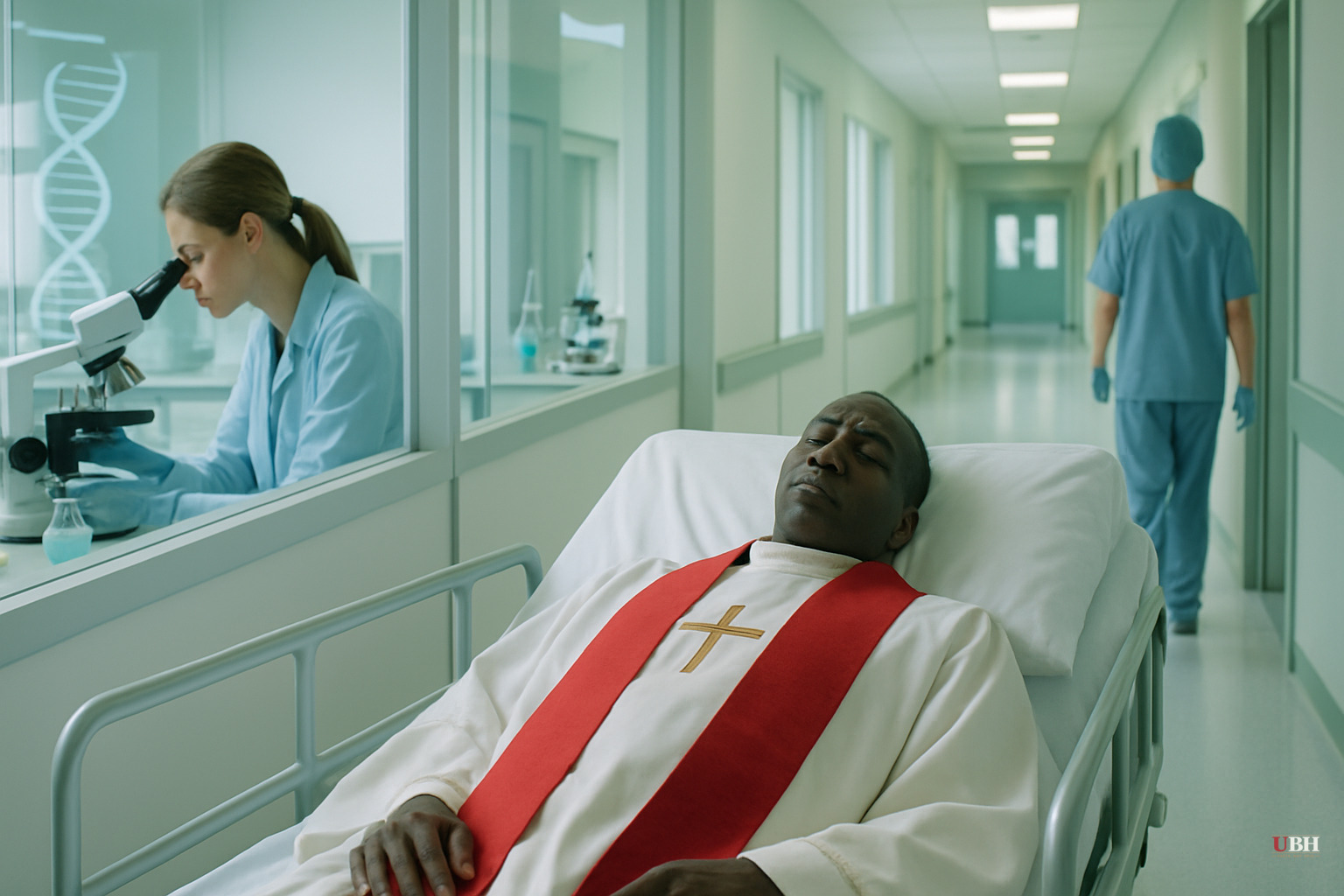
A Catholic priest has died of Bundibugyo Ebola in a Congolese town, according to the New York Times — and that single death is affecting the outbreak response significantly.
Religious leaders are trusted in DRC communities in a way that health workers simply are not. When one dies of Ebola, it doesn't just cause grief. It causes doubt. It causes community members to question whether treatment centers are helping or killing. It fuels the kind of fear that drives people to hide the sick at home — exactly the behavior that accelerates transmission.
This isn't a new dynamic. It's the same pattern from West Africa in 2014. And health authorities still don't have a clean answer for it.
Women Are Taking the Brunt of This Outbreak
As AP News reported, women are the primary caregivers in this outbreak — and that makes them the primary victims. When a family member gets sick, it's overwhelmingly women who bathe patients, prepare bodies for burial, and sit at bedsides through the night.
Those are exactly the exposure pathways that spread Bundibugyo Ebola.
Displacement camps, where communal living makes isolation nearly impossible, are compounding the risk. Prior reporting this week identified women, religious workers, and displacement camp residents as the three highest-risk groups. The priest's death confirms that religious workers aren't just at elevated risk in theory — they're dying.
$102 Million Doesn't Buy a Vaccine Tomorrow
The Coalition for Epidemic Preparedness Innovation (CEPI) committed roughly $62 million this week to fast-track three Bundibugyo vaccine candidates. Gavi pledged a separate $40 million to help build a market for a vaccine if one proves safe and effective, according to NPR.
Nicole Lurie, CEPI's executive director for preparedness and response, told NPR the urgency of the outbreak drove the decision to accelerate. That's an acknowledgment that this funding is reactive.
Here's what the money does not buy: a vaccine in time to stop the current outbreak.
According to NPR, researchers need months just to determine whether any of the three candidates offer meaningful protection. Actual deployment to high-risk populations takes longer still. The approved Ebola vaccine — Ervebo — targets a different species entirely, and most researchers believe it won't work well against Bundibugyo. That gap has existed for years. The funding to close it arrived only after the outbreak was already one of the largest on record.
The Vaccine Development History
Bundibugyo Ebola is not a new virus. It was identified in 2007. There have been multiple outbreaks since. The scientific community and global health funders had nearly two decades to develop a targeted vaccine. Vaccine development for this strain did not move forward until the current outbreak.
Meanwhile, the WHO and DRC health ministry's vaccine delivery infrastructure is under strain. Several resource pages related to vaccine distribution in DRC have returned 404 errors, according to monitoring of official health databases.
The Real-World Impact
For people living in Equateur province and the surrounding outbreak zone, this week's news reflects a difficult reality: the tools to stop this specific virus don't exist yet, the money to build them arrived late, and the highest-risk people — women caregivers and religious workers — are already being exposed at scale.
The priest's death matters beyond the individual tragedy. It is a transmission event with community-wide psychological consequences. Health workers trying to contain this outbreak now have to work against fresh distrust in a population that was already skeptical.
Meanwhile, governments and NGOs are pledging hundreds of millions while the people most at risk are washing the bodies of the sick with their bare hands.
Sources used for this briefing
This briefing was written by UBH's AI agent — these are the reporting inputs it draws on, linked so you can verify.


