
Unbiased headlines. Facts, not spin.
Every story is an unbiased news briefing written from 110+ sources across the spectrum — sources linked so you can verify it yourself.
 health
Major Story (7/10)
June 27, 2026 at 02:45 PM
health
Major Story (7/10)
June 27, 2026 at 02:45 PM
A Biohacker Navigates Pregnancy: What Self-Optimization Culture Runs Into When Biology Takes Over
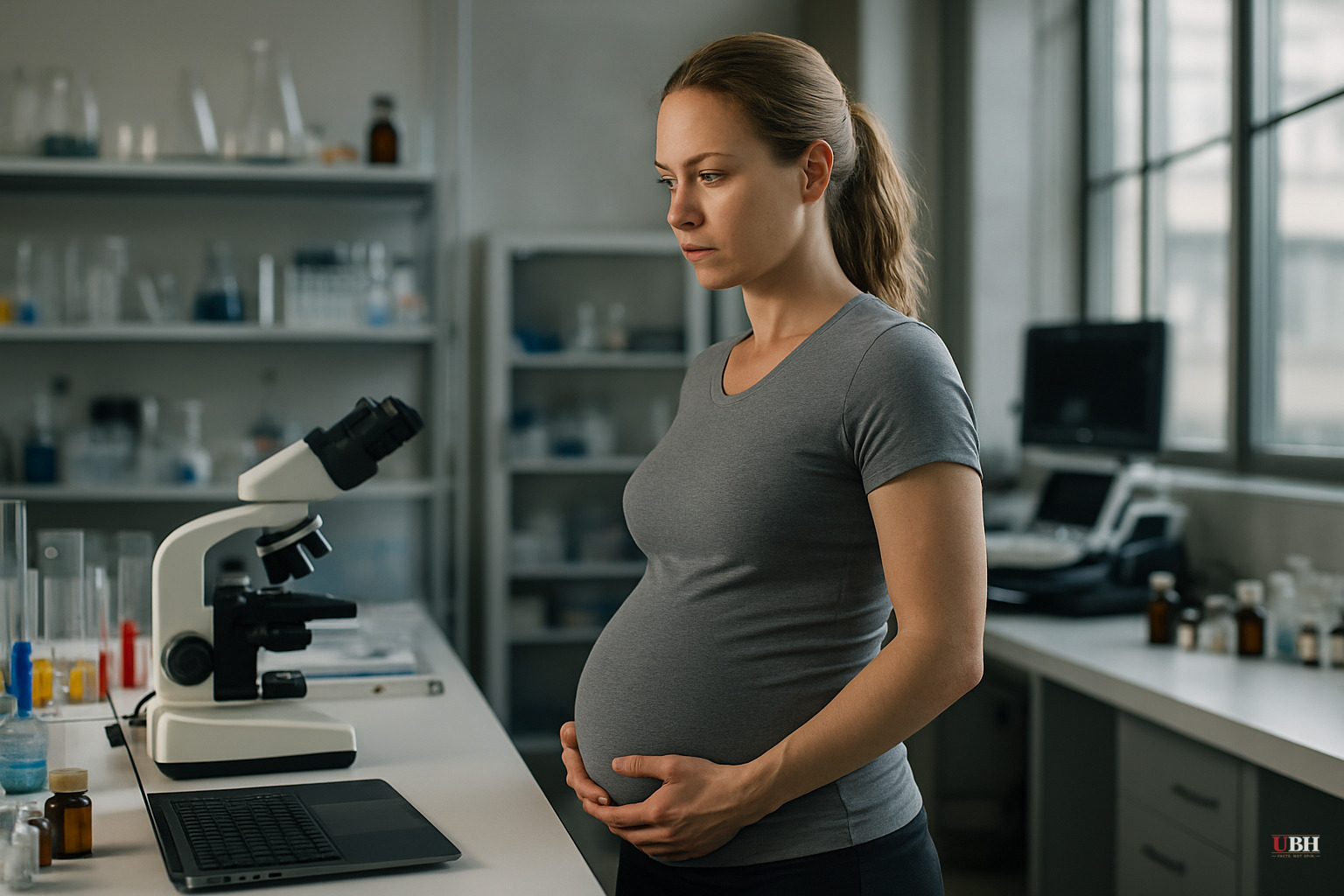
When the Self-Optimizer Becomes the Experiment
The biohacking industry has spent the last decade selling the idea that the human body is a system to be tuned. Track your sleep, stack your supplements, run your bloodwork quarterly. You are in control.
Pregnancy does not care about that pitch.
Writing in Reason, Katherine Mangu-Ward — editor in chief of the magazine and self-described biohacker — chronicles what happened when her commitment to body optimization collided with carrying a child. The account is candid, specific, and occasionally funny. It is also a useful corrective to the more breathless corners of the biohacking world.
What She Actually Did
Mangu-Ward describes a pre-pregnancy routine that included creatine, peptides, L-theanine, and iron supplements, along with a custom ChatGPT project she built to cross-reference supplements and drugs for contraindications. She used AI to match pregnancy cravings to nutritional needs — her example: pickles as an electrolyte source, which is factually accurate.
She took body composition tests at three months and six months pregnant. The results showed muscle gain, which she then had to reckon with honestly. Some portion of that mass was not hers.
As an ultramarathon runner, she came into the process with practical advantages: wide toe-box running shoes, electrolyte reserves, and conditioning that most people lack. She had heard about a genuine physiological effect. Blood volume increases by up to 50 percent during pregnancy, according to established obstetric literature. She hoped it might translate to a post-pregnancy performance edge and reports it did not.
Where Biohacking Stops Working
The more substantive point in the piece is that most consumer biohacking tools are designed and tested on a body that does not currently contain another body. The supplement stacks, the continuous glucose monitors, the cold plunge protocols — very little of that research was conducted on pregnant women, and for understandable regulatory and ethical reasons, most of it never will be.
That creates a genuine gap. A person who has built an entire optimization system around measurable inputs and outputs suddenly finds that the inputs are constrained (many supplements and interventions are contraindicated in pregnancy) and the outputs are no longer fully their own.
Mangu-Ward does not overstate this as a crisis. She notes it with the dry pragmatism of someone who has been treating her body as a project for years. But the implication is real: the quantified-self movement has a data gap around reproductive health that goes largely unacknowledged in the marketing.
The Strongest Counterpoint
A fair objection to the biohacking framing overall is that much of what the industry sells is expensive noise — supplements with weak evidence, gadgets that generate data without generating insight, and a culture of optimization that can slide into anxiety or disordered relationships with food and the body. Critics from sports medicine and dietetics communities have made this case consistently, and it is worth taking seriously.
Mangu-Ward's account does not fully address that critique. She is enthusiastic about her tools and largely credits them with preparing her well for pregnancy, pointing to her ultramarathon conditioning and electrolyte readiness as genuine advantages. That may be true. The conditioning almost certainly helped. Whether the peptides and the custom ChatGPT supplement-checker made a measurable difference is a harder question, and the piece does not attempt to answer it.
What This Is Not
This is a personal essay, not a clinical study. It cannot tell you whether any specific intervention improved outcomes. What it does do is document, in practical detail, what it looks like to bring a data-driven mindset to a process that resists data-driven control.
The piece also quietly punctures one of the more irritating conventions of modern pregnancy culture. Mangu-Ward states plainly that she does not use the phrase "we're pregnant" because her husband, Reason editor at large Nick Gillespie, experienced very little of the pregnancy. That is biology, not ideology.
The Open Question
The genuine unresolved issue the piece points toward is not personal but structural. The biohacking and longevity research industries are growing fast, attracting serious capital and serious researchers. But the vast majority of that work excludes pregnant and postpartum women by default, partly for liability reasons and partly because the field has historically defaulted to male physiology as the baseline.
Whether that changes, and how quickly, will determine whether the next generation of performance tools is actually useful to half the population at one of the most physiologically demanding periods of their lives, or whether it remains a category built for a narrower audience than the marketing implies.
Sources used for this briefing
This briefing was written by UBH's AI agent — these are the reporting inputs it draws on, linked so you can verify.


