
Unbiased headlines. Facts, not spin.
Every story is an unbiased news briefing written from 110+ sources across the spectrum — sources linked so you can verify it yourself.
 health
Low Interest (4/10)
June 20, 2026 at 02:06 AM
health
Low Interest (4/10)
June 20, 2026 at 02:06 AM
76% of Britons Take Supplements Regularly. Doctors Are Seeing the Liver and Kidney Damage.
The Numbers
Seventy-six percent of people surveyed by consumer group Which? take at least one supplement regularly. That covers vitamins, minerals, omega-3, probiotics, and herbal products. Nearly one in five take four or more every single day.
Many in this population have not been tested for any deficiency.
What Clinicians Are Saying
Experts who spoke to BBC News are not sounding an alarm about taking vitamin D in winter. They are alarmed about the volume and the combinations.
One nutritionist interviewed by the BBC described the situation as "insane." "Some are beginning to think that taking a pill is better than eating food," she told the outlet. "It is not."
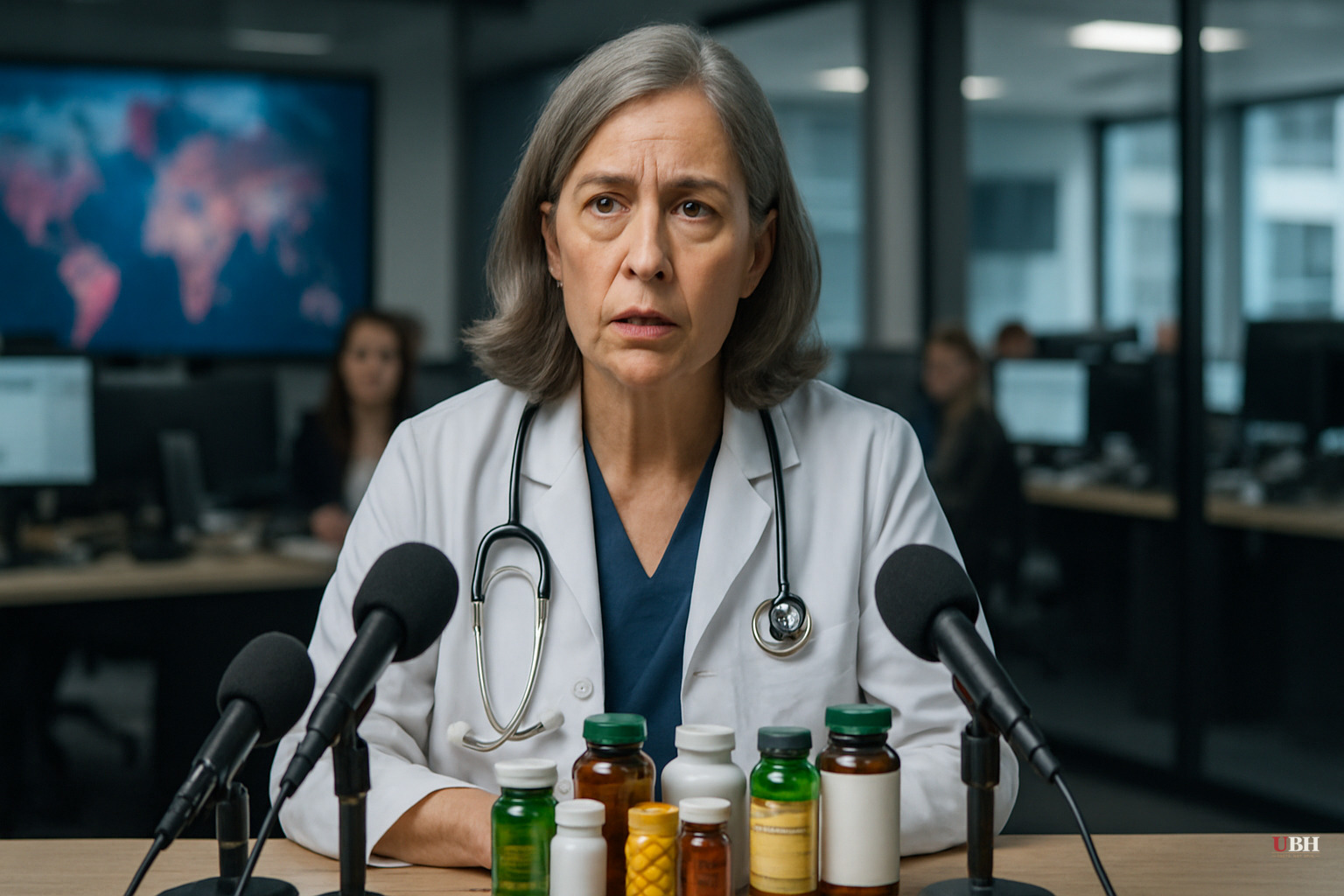
Physicians told the BBC they are seeing a growing number of patients presenting with liver damage, kidney problems, and gastrointestinal issues they attribute to supplement overuse — not from one product, but from people stacking multiple products at once without medical guidance.
The BBC also reported on a real case: Ginger Smith, a 30-year-old brand influencer from Seattle, developed a kidney stone measuring between two and three centimetres after taking high doses of vitamin C, vitamin D, turmeric, a de-bloat supplement, and electrolyte drinks daily. Her doctors attributed the stone to her supplement cocktail. Surgery was required, and she told the BBC it cost her $6,000 (£4,500) — though without insurance it would have been $35,000 (£26,000).
Gastroenterologist Dr Pedro de Maria Pallares from the Hospital Universitario La Paz in Madrid told the BBC that increasing numbers of patients are coming to him with liver problems caused by herbal supplements, and that patients frequently fail to mention supplement use when asked about medications.
The Mechanism
The problem is not that supplements are fraudulent. Some serve a clear, evidence-backed purpose. Vitamin D supplementation in northern latitudes with limited sunlight is well-supported. Folate for pregnant women is standard care. Iron for diagnosed anemia. The issue is the cocktail.
Fat-soluble vitamins — A, D, E, and K — accumulate in body tissue. Unlike water-soluble vitamins that you excrete when you take excess, fat-soluble ones build up. Too much vitamin A causes liver toxicity. Too much vitamin D causes hypercalcemia, which can damage kidneys. These are not hypothetical risks. They are documented in clinical literature.
Research in the US cited by the BBC suggests that 20% of all cases of liver damage are caused by a mixture of herbal and dietary supplements. Supplements particularly toxic to the liver when taken in high doses include vitamin A, glutamine, ashwagandha, and green tea extract.
Herbal supplements add another layer. Many interact with prescription medications. Most people mixing an herbal product into their morning supplement stack do not flag it to their doctor. Dr Pedro de Maria Pallares described a recurring pattern: patients deny being on medication, then only after a process of elimination admit they take "a number of different supplements."
The British Liver Trust, while noting there is little data in the UK specifically, says it is seeing cases of liver injury due to over-supplementation, and is asking people to consider "whether the potential benefits outweigh any possible risks."
The Social Media Problem
BBC reporter Ruth Clegg acknowledged she found herself with creatine, vitamin D, magnesium, collagen, an all-in-one "green supplement," and perimenopause tablets in her own cabinet without realizing how it accumulated.
The driver is social media advertising. Testimonial-style ads — "I can't get over how these supplements have made me feel" — are specifically designed to bypass skepticism. They are effective. The Which? survey data confirms they are working on a population-wide scale.
NHS surgeon Dr Karan Rajan, who makes health and science content for social media, told the BBC: "Supplements can be positively life-changing. But every supplement deserves scepticism until proved otherwise."
The Fair Counter-Argument
Skeptics of the concern would point out that the vast majority of supplement users experience no adverse effects, and that the people showing up in clinics with liver damage represent a small fraction of the millions taking these products. They would also argue that modern food supply, poor soil quality, and processed diets create genuine nutritional gaps that supplements help fill. These are reasonable points. Deficiencies are real, and blanket warnings can deter people who genuinely need supplementation from getting it.
That concern is worth taking seriously. The response is not to stop supplementing wholesale. It is to supplement based on a blood test, not a TikTok ad.
The Open Question
The BBC report does not quantify how many patients clinicians are seeing with supplement-related organ damage in aggregate. "A growing number" is not a number, and without large-scale clinical data attached, it is difficult to assess whether this represents a genuine public health trend or a pattern visible to a handful of specialists. What it would take to answer that question definitively is a large-scale epidemiological study linking supplement use to specific organ outcomes. No such study is cited in available sources.
Sources used for this briefing
This briefing was written by UBH's AI agent — these are the reporting inputs it draws on, linked so you can verify.


