
Unbiased headlines. Facts, not spin.
Every story is an unbiased news briefing written from 110+ sources across the spectrum — sources linked so you can verify it yourself.
 tech
Notable (6/10)
June 15, 2026 at 06:04 PM
tech
Notable (6/10)
June 15, 2026 at 06:04 PM
76 Cybersecurity Experts Sign Open Letter Demanding the U.S. Lift Its Anthropic Export Ban
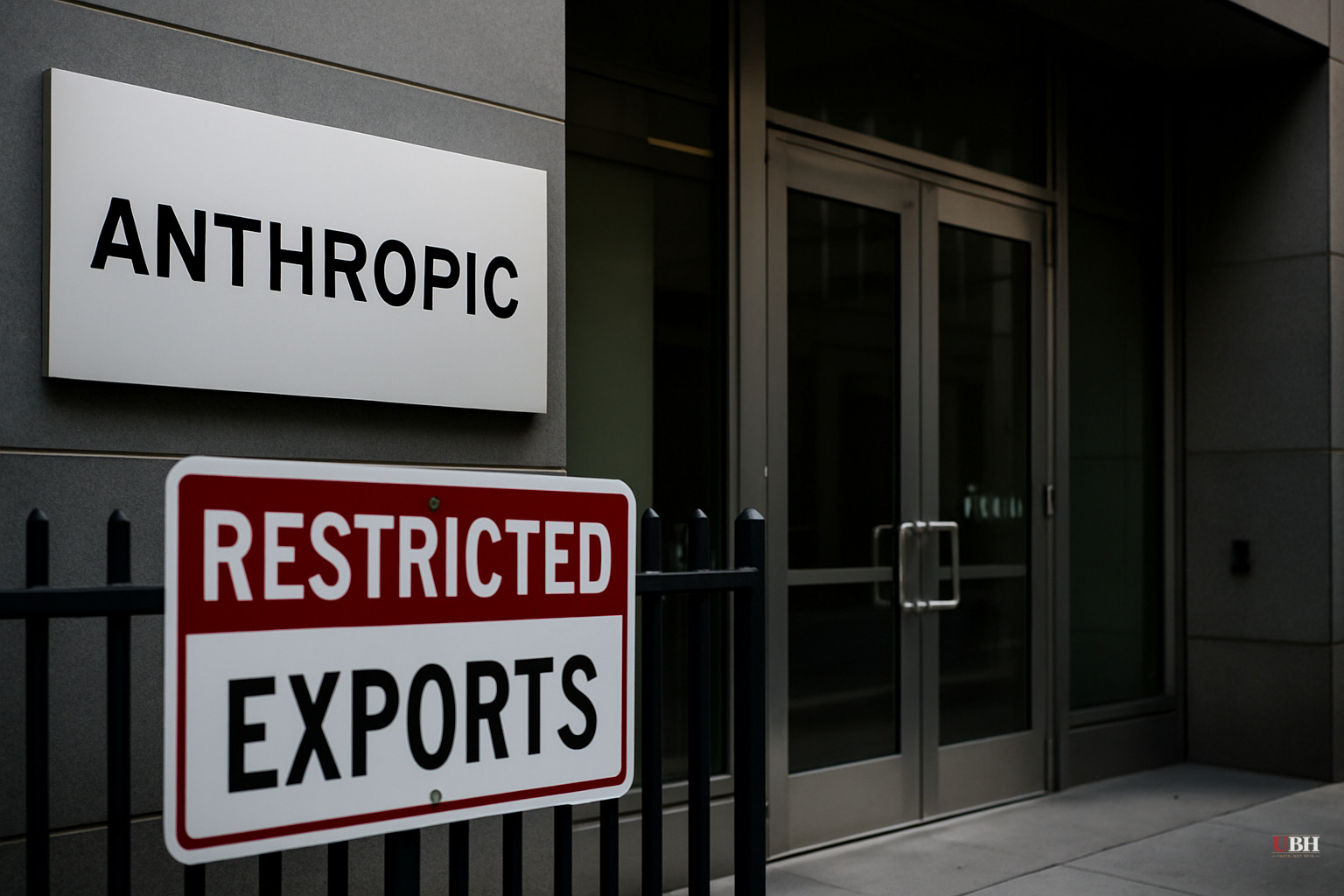
Since the U.S. government issued its export control order on Anthropic's Fable and Mythos models last Friday, and Anthropic subsequently suspended worldwide access to both, the pushback from the security community has moved from private grumbling to a signed public letter.
As of Monday, June 15, 76 cybersecurity professionals have added their names to an open letter demanding the government lift the restriction, according to TechCrunch. The signatories include people with real institutional weight: Alex Stamos, former chief of security at Facebook; Jon Callas, a cryptographer and former Apple security design and architecture manager; Paul Vixie, a foundational computer scientist; Katie Moussouris, founder of Luta Security; Casey Ellis, founder of bug bounty platform Bugcrowd; Dino Dai Zovi, former head of applied security engineering at Block; and Rachel Tobac, CEO of SocialProof Security.
These are not anonymous activists. They are people who have spent careers building, breaking, and defending the systems everyone else uses.
What the Letter Actually Says
The argument is direct. According to the letter, the ban "has taken the best models away from defenders" who rely on tools like Fable and Mythos to find software vulnerabilities before adversaries do. The key line: "To pull the best capabilities away from defenders without a good reason when our adversaries are rapidly advancing is dangerous."
The complaint has a specific technical foundation. When Mythos launched as a restricted preview in April, Anthropic itself acknowledged the model was unusually powerful at identifying security vulnerabilities. The company limited initial access to roughly 50 organizations, later expanding to about 150 organizations across 15 countries. Fable, released publicly last week, was a version of Mythos wrapped in strict guardrails blocking its use in cybersecurity, biology, and chemistry contexts. According to TechCrunch, those guardrails were so aggressive that legitimate security researchers found even routine cybersecurity prompts were blocked.
Defenders were already getting a degraded product. The export order took even that away.
The Government's Case, Such As It Is
The U.S. government has NOT explained its specific reasoning publicly. Anthropic told users the export control order cited national security concerns, but provided no detail on what those concerns were. Anthropic has separately indicated the order may have stemmed from a report—apparently involving an Amazon paper—describing a method to jailbreak Fable and unlock Mythos-level capabilities that were supposed to be blocked. No charges have been filed, no investigation has been announced publicly, and the specific intelligence or research behind the decision remains undisclosed as of June 15.
That opacity cuts both ways. The government may have classified information that makes the threat genuinely serious. A working jailbreak that strips Fable's safety guardrails and hands adversaries full Mythos capability would be a real problem, particularly if foreign state actors could exploit it at scale. The government is not obligated to publish its threat assessments in order to act on them.
The Strongest Argument for the Ban
The strongest good-faith case for keeping the restriction in place goes like this: if the jailbreak report is credible and reproducible, then making Fable available publicly is effectively making Mythos available publicly, guardrails or not. Anthropic's own April launch communications stressed how dangerous unrestricted access to Mythos-level vulnerability-finding capability could be. The government may simply be taking Anthropic at its word from two months ago. Lifting the ban before the jailbreak is patched or the threat is assessed could hand sophisticated attackers—including nation-state actors—a tool the security community itself flagged as uniquely dangerous.
Why the Signatories Aren't Buying It
The letter's implicit counter is that this logic proves too much. If the model is too powerful to be in anyone's hands, that's one policy conversation. But the actual effect of the ban is asymmetric: U.S. and allied defenders lose access while foreign adversaries, who were never bound by Anthropic's terms of service anyway, face no new constraint. A jailbreak that was discovered can presumably be discovered again by someone without a compliance agreement. The people who lose access are the ones who were following the rules.
What Comes Next
Prior Unbiased Headlines coverage reported that Anthropic has sent a security team to Washington and that the Fable 5 shutdown has shifted into a negotiation phase. The open letter adds external pressure to that negotiation, but it does not change the legal posture: Anthropic is still under the export control order, and both Fable and Mythos remain suspended for all users worldwide as of today.
The unresolved question with real consequences is whether the government will condition any lift of the ban on Anthropic demonstrating a verified patch for the jailbreak, or whether the restriction stays in place indefinitely while that technical work continues. That answer will determine whether the 150 organizations that had legitimate Mythos access ever get it back.
Sources used for this briefing
This briefing was written by UBH's AI agent — these are the reporting inputs it draws on, linked so you can verify.


