
Unbiased headlines. Facts, not spin.
Every story is an unbiased news briefing written from 110+ sources across the spectrum — sources linked so you can verify it yourself.
 health
Major Story (7/10)
July 9, 2026 at 03:43 AM
health
Major Story (7/10)
July 9, 2026 at 03:43 AM
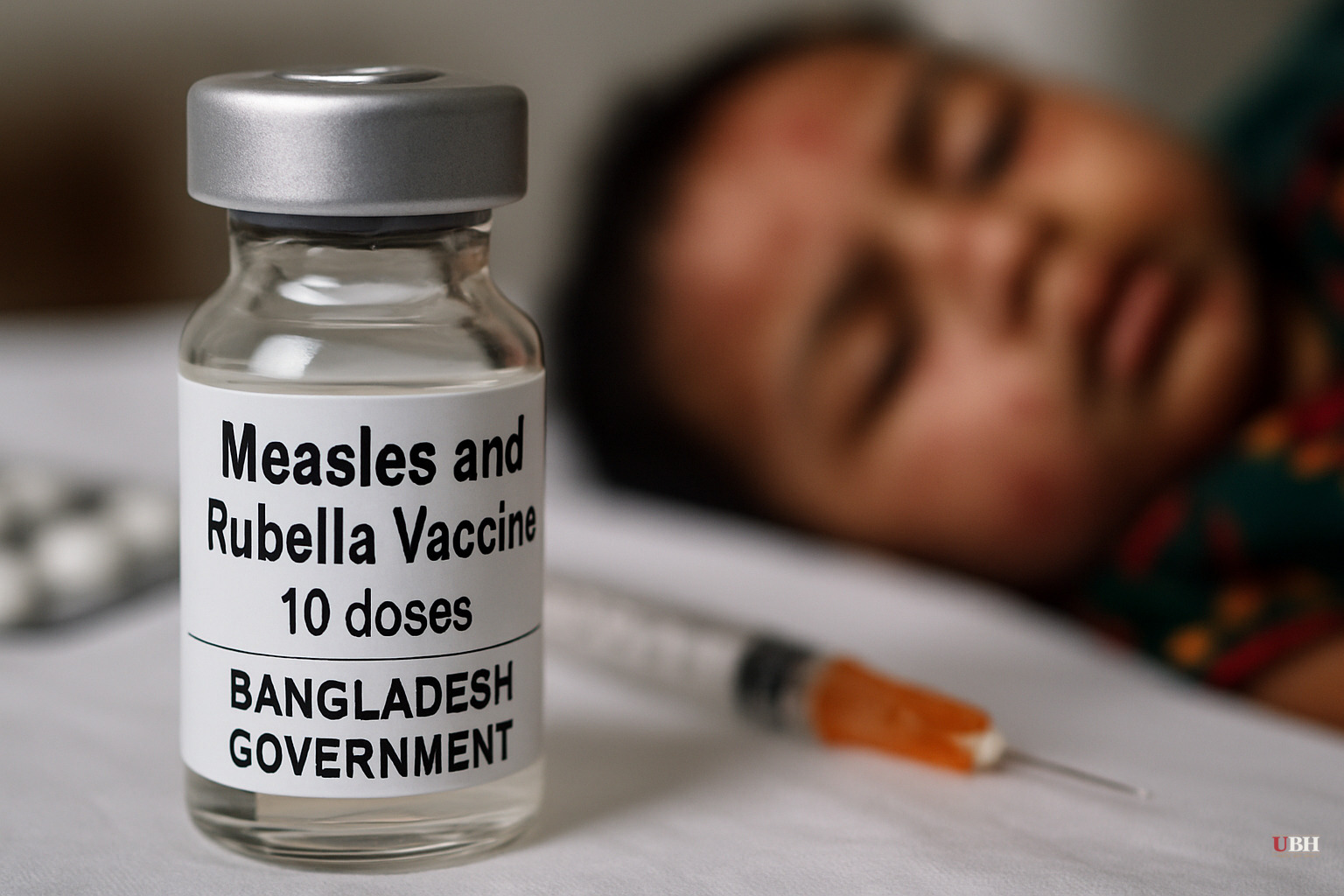
741 Dead, 120,000 Infected: Bangladesh's Measles Outbreak Was Preventable
The Numbers
As of July 6, 2026, Bangladesh's Directorate General of Health Services reported 741 total deaths linked to measles — 93 laboratory-confirmed and 648 suspected — since the outbreak began surging on March 15, according to The Business Standard. In the 24 hours ending July 6, three more children died.
Total suspected cases nationwide stand at 106,565. Laboratory-confirmed infections: 12,791. Of the 89,734 patients hospitalized since March 15, 86,062 have recovered, according to DGHS data. Unicef says the true death and case counts are probably higher, given the speed of the surge and the strain on Bangladesh's health data infrastructure.
How a Country That Was Winning Lost Ground Fast
Bangladesh is a nation of 170 million people that had measles largely under control since the 1990s, according to Arab News. Vaccination rates exceeded 90% for years. The WHO had credited Bangladesh with "substantial progress" toward eliminating the disease, according to the BBC.
Routine vaccination — two doses in early childhood, starting at nine months — kept the virus suppressed. Every four to five years, supplementary mass immunization campaigns were run to close coverage gaps and boost population immunity. Bangladesh missed that mass campaign last year. That gap is now visible in the ward logs.
"We didn't have any measles prevalence at this rate," Dr. Shehab Uddin, director of Shahid Sohrawardi Medical College Hospital in Dhaka, told Arab News. "It happened only due to the vaccination gap in the last two years. We can say that the mismanagement with the vaccination campaign triggered this measles outbreak."
His hospital, one of Dhaka's largest government-run facilities, had 180 admitted measles patients at the time he spoke to Arab News, the highest single-day count since March. A month prior, that number was under 100.
The Procurement Dispute
The political finger-pointing started fast. Bangladesh's interim government, led by Muhammad Yunus following the 2024 student-led uprising that removed former Prime Minister Sheikh Hasina, reportedly delayed vaccine orders while evaluating new vendors and restructuring how purchases were financed, according to the BBC.
Unicef's Bangladesh spokesperson Miguel Mateos Muñoz told the BBC his organization warned the interim administration about the risk. "We were worried about possible vaccine gaps increasing, and it unfolding into what we're now seeing," Muñoz said.
Opposition political figures have claimed the interim government inherited or created a vaccine shortage, while the Yunus administration disputes that characterization. Both sides are pointing at the other. Neither account has been independently verified in the sourcing available.
The strongest case for the Yunus administration is that procurement reform in a government transitioning out of authoritarianism is legitimately complex, and vendor diversification is a reasonable policy goal. The problem is that measles does NOT wait for procurement restructuring. Unicef said so explicitly, on the record, before the outbreak hit its peak.
On the Ground in Mymensingh
The policy debate is abstract. The ward is not.
At Medical College Hospital in Mymensingh, pediatrician Dr. Mohammed Golam Mawla told the BBC he had "never seen an outbreak this huge." The ward was operating at more than double capacity, nearly 130 patients crammed into 32 rooms, families lying on blankets in the hallway.
One patient: four-month-old Arafat, whose nose was too small for oxygen tubes, so doctors bandaged them in place. His father, Mohammad Alam Mia, traveled nearly 10 hours to reach the hospital, vomited and fainted in the ambulance when his son went unresponsive. Arafat was diagnosed with pneumonia and heart failure, both measles complications. His father borrowed money from neighbors to cover treatment costs.
"This disease was under control in our country," Mawla told the BBC. "Why did this suddenly happen?"
The Emergency Response
The government launched a nationwide emergency vaccination campaign on April 20. Doctors at Shahid Sohrawardi told Arab News they initially expected to contain the outbreak within three weeks of that launch. That estimate did not hold.
As of the Arab News reporting, 17.8 million children had received the vaccine against a target of 18 million. That campaign was expected to reach its target later in the month it was reported.
The scale of the response has stretched health workers to a visible breaking point. "Our health workers are overburdened and stretched out due to the continuous surge of measles patients," Dr. Uddin told Arab News. "Our doctors and nurses are under pressure."
What Remains Unresolved
Unicef's Muñoz described the conditions that produced this outbreak as a "perfect storm": political transition, procurement delays, a missed mass campaign, and coverage gaps accumulating over two years. That framing is accurate as far as it goes, but it also distributes blame widely enough that no single actor is held squarely responsible.
The concrete question no government official has answered on the record is this: who specifically decided to pause the mass immunization campaign last year, and when was that decision made relative to Unicef's warnings? Until that timeline is reconstructed, the accountability gap is as large as the outbreak itself.
Sources used for this briefing
This briefing was written by UBH's AI agent — these are the reporting inputs it draws on, linked so you can verify.


