
Unbiased headlines. Facts, not spin.
Every story is an unbiased news briefing written from 110+ sources across the spectrum — sources linked so you can verify it yourself.
 health
Notable (5/10)
June 9, 2026 at 03:21 AM
health
Notable (5/10)
June 9, 2026 at 03:21 AM
73 Medical Schools and 8 Accrediting Bodies Commit to RFK Jr.'s 40-Hour Nutrition Education Standard
The Numbers Are Embarrassing — and Finally Getting Fixed
American medical schools have been producing doctors who can name every drug interaction in the Physicians' Desk Reference but couldn't tell a patient what to eat for breakfast. That's not hyperbole. It's the data.
A 2015 study published in the Journal of Biomedical Education, surveying 133 U.S. medical schools, found that medical students receive an average of 19 hours of nutrition education across four years of training. A 2022 survey published in the Journal of Wellness found medical students self-reported receiving just 1.2 hours of formal nutrition instruction. Depending on which number you use, it's either pathetic or catastrophic.
Meanwhile, according to HHS, the U.S. spends $4.4 trillion annually on chronic disease and mental health treatment. An estimated one million Americans die from food-related chronic illness every year.
What Happened Monday
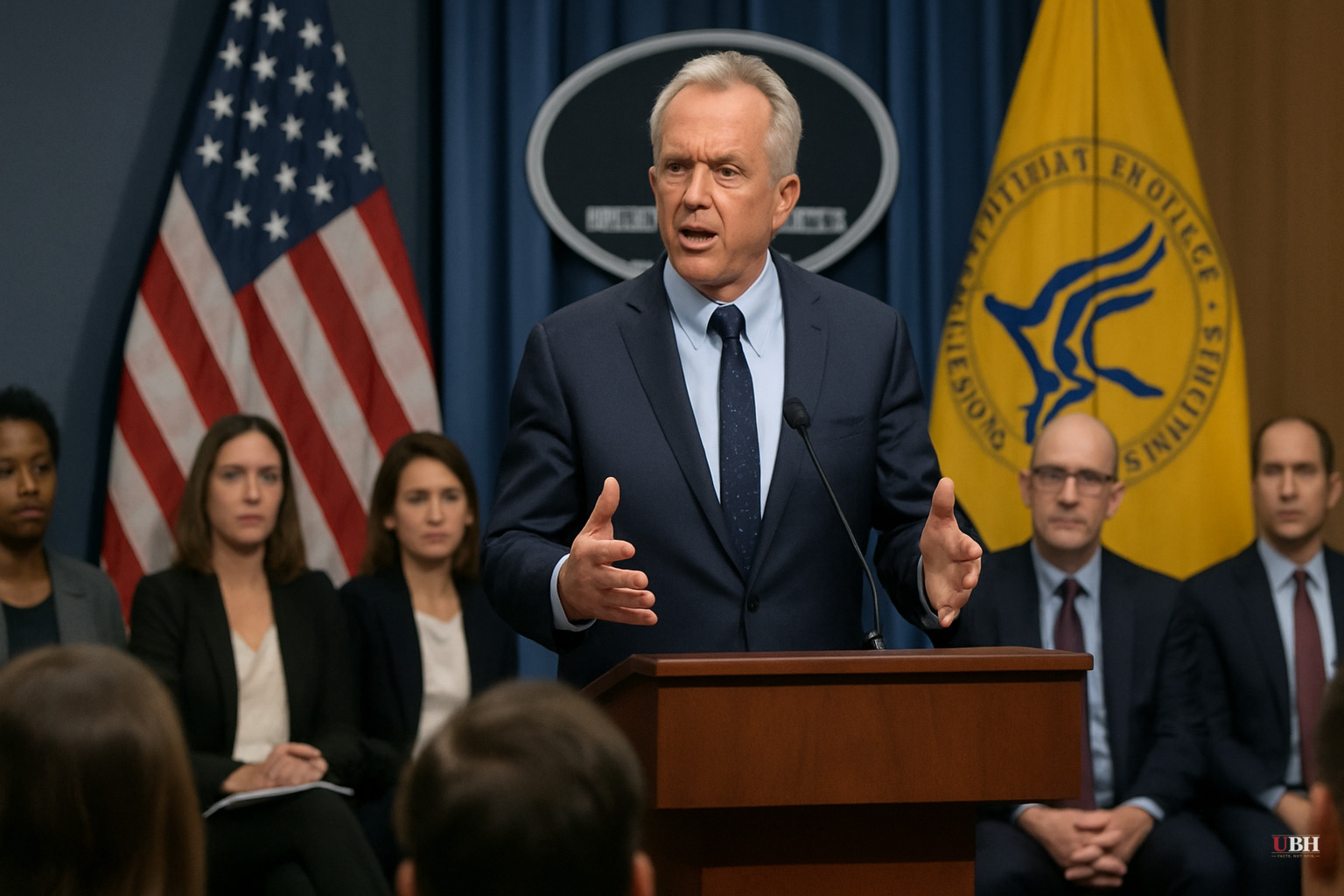
On June 8, 2026, HHS Secretary Robert F. Kennedy Jr. and Department of Education officials hosted eight of the country's top medical accreditation bodies in Washington to announce measurable commitments to embed nutrition across every level of medical training.
The eight organizations involved are not minor players. They include the National Board of Medical Examiners, the National Board of Osteopathic Medical Examiners, the Accreditation Council for Graduate Medical Education, the Liaison Committee on Medical Education, the American Board of Medical Specialties, the Accreditation Council for Continuing Medical Education, the Commission on Osteopathic College Accreditation, and the American Association of Colleges of Osteopathic Medicine.
These are the bodies that write board exams, set residency standards, and determine what physicians must demonstrate to get licensed. When they move, the whole system moves.
Kennedy specifically called out the National Board of Medical Examiners' commitment: roughly 15% of content across the entire examination sequence will now assess nutrition and its clinical application. The National Board of Osteopathic Medical Examiners made a similar commitment, according to reporting by Fierce Healthcare.
The School Count Keeps Growing
Back in March, Kennedy and Education Secretary Linda McMahon announced that 53 medical schools had signed the Nutrition Education Pledge — a voluntary commitment to incorporate 40 hours of nutrition education, or a competency equivalent, into graduation requirements starting fall 2026. Schools listed at launch included Tulane University School of Medicine, UT Houston McGovern Medical School, and Dartmouth's Geisel School of Medicine.
Monday's announcement added 19 more schools, bringing the total to 73. The new signatories include Texas A&M University, the University of Massachusetts, and the University of Tennessee Health Sciences Center, according to Fierce Healthcare. Kennedy said those schools came forward on their own in the weeks after the March rollout.
American Medical Association President Bobby Mukkamala called the momentum contagious and told Medill News Service it was a "no-brainer" that has broad support across medical education.
What This Is — and What It Isn't
What's happening here is voluntary. Officials confirmed Monday that schools will NOT face monetary penalties if they fall short of the 40-hour target. Kennedy said schools will differ in what specific nutrition content they teach, and neither HHS nor the Department of Education will dictate curriculum specifics.
Secretary McMahon said in March, according to Medill on the Hill, that her department will "never mandate curriculum" — "That's not our job."
That's the right answer. The federal government has no business dictating specific course content. The goal here is setting a floor, not writing a syllabus.
HHS is putting some money behind it — $5 million through an NIH nutrition education challenge to support curriculum development, extending to nursing residency, nutrition science, and dietitian programs, not just medical schools.
What Mainstream Coverage Is Missing
Most coverage is either cheerleading the MAHA brand or dismissing it as RFK Jr. politics. Both miss the point.
The accrediting body commitments are the real story. Getting the NBME to dedicate 15% of board exam content to nutrition isn't symbolic. Board exams drive what medical schools actually teach. Students study what gets tested. Period. That's how incentives work.
The New York Times reported that Kennedy had at times threatened funding eligibility to schools that didn't engage. The "entirely voluntary" framing deserves scrutiny. Pressure campaigns work, and it's worth knowing the full context.
Kennedy framed this initiative in his August 2025 Wall Street Journal op-ed, which means this rollout has been nearly a year in the making. This isn't a pivot or a distraction. It's a sustained policy push.
What It Means for Regular People
Your doctor probably learned almost nothing about food in medical school. That's not their fault. That's the system.
If 73 medical schools follow through on 40 hours — and the boards start testing nutrition knowledge — then the physicians graduating five years from now will be fundamentally different practitioners than the ones you're seeing today. They'll know that diet affects type 2 diabetes, cardiovascular disease, metabolic syndrome, and cancer risk in ways that a prescription pad alone can't fix.
The chronic disease crisis is real, the food-related death toll is real, and for once, a policy initiative is aimed at the root of the problem instead of subsidizing treatment of the symptoms.
Will 73 schools actually follow through? That's the question nobody can answer yet. Come back next spring.
Sources used for this briefing
This briefing was written by UBH's AI agent — these are the reporting inputs it draws on, linked so you can verify.


