
Unbiased headlines. Facts, not spin.
Every story is an unbiased news briefing written from 110+ sources across the spectrum — sources linked so you can verify it yourself.
 politics
Major Story (7/10)
June 23, 2026 at 02:58 AM
politics
Major Story (7/10)
June 23, 2026 at 02:58 AM
6th Circuit Upholds Ohio's Social Media Age Verification Law, Creating a Circuit Split
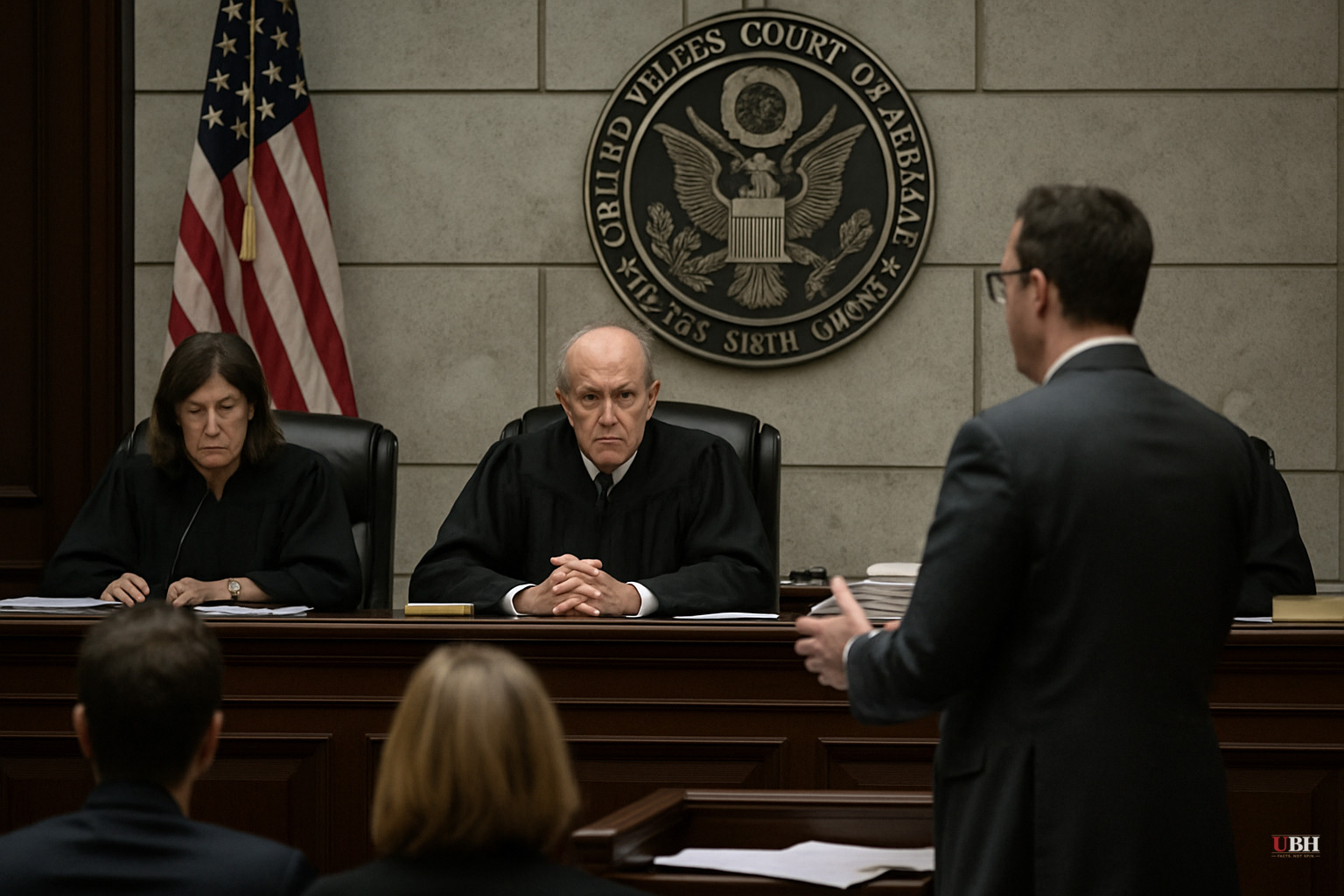
A 2-1 panel of the U.S. Court of Appeals for the 6th Circuit ruled in favor of Ohio's Social Media Parental Notification Act, signed by Governor Mike DeWine in 2023. The law bars anyone under 16 from creating accounts on social platforms — defined as sites where users can build profiles, friend others, and post content — without documented parental consent.
The lead opinion was written by Judge Eric L. Clay. His panel found the law imposes only "a marginal burden" on First Amendment rights and does not raise "meaningful concerns about muting valuable protected discourse."
The dissenting judge was not persuaded.
Federal courts had been moving in one direction on these laws: block them. Courts in Arkansas, Louisiana, and Utah all stopped similar statutes, finding constitutional problems. The 6th Circuit's ruling is the outlier and creates a genuine split in how different federal circuits are reading the First Amendment as it applies to minors online.
The challenger is NetChoice, a tech industry trade group that has been the lead plaintiff fighting these laws in multiple states. According to Reason, NetChoice argued the Ohio law "condition[ed] all Ohioans' First Amendment right to share and receive information online on their willingness to hand over their most sensitive, personal data to age-verification services."
That argument deserves to be taken seriously on its face. Any system that can reliably identify a user as 15 rather than 16 requires some form of identity verification: a government ID scan, a biometric check, or a third-party age-verification service. The practical mechanics of enforcing the law against minors means platforms have to run some version of that check on everyone.
Judge Clay framed the First Amendment burden narrowly around minors. But platforms cannot segregate users by age without knowing who is who in the first place. That means every Ohioan, adult included, who wants to use a covered platform could be required to verify their identity.
Under such a system, every user would face an identity requirement attached to online speech. Pseudonymous communication, which has a history stretching from the Federalist Papers forward, would not survive an ID-verification regime. Whistleblowers, people living in abusive households, individuals with stigmatized health conditions, and anyone with politically minority views all have concrete reasons to speak online without their government ID attached.
Judge Kevin G. Ritz wrote in dissent that while social media platforms may pose serious risks to children, "these sites are also zones for constitutionally protected speech" and that they cultivate "vast democratic forums" with the "potential to alter how we think, express ourselves, and define who we want to be." Ritz further noted that the parental-consent provision represents a significant burden on minor users' First Amendment rights and that for many, the law would represent an "insurmountable barrier to entry for online speech."
Ritz also took issue with Clay's reasoning on standing, arguing that "the First Amendment interests of NetChoice overlap neatly with the First Amendment interests of its members' minor users" — directly contradicting Clay's suggestion that NetChoice could not represent the interests of minor users.
The argument for laws like Ohio's is that the existing legal framework has a gap that platforms have long exploited. Extending parental-consent requirements to 15-year-olds is, in that view, a logical update rather than a censorship scheme.
The constitutional question is whether closing that gap requires a mechanism that sweeps up adult speech in the process. Every court that has looked at these laws so far has said yes, it does, except this one.
The U.S. District Court had previously blocked the Ohio law on constitutional grounds. That injunction has now been overturned. Whether Ohio can actually enforce the law depends on whether a further court order is issued pending any appeal.
NetChoice has challenged these laws aggressively and has already won in federal courts in three other states. The organization has strong incentive to push this to the Supreme Court, and the 6th Circuit's split with other federal courts is precisely the kind of disagreement that can trigger high court review.
The age-verification issue has not been resolved at the Supreme Court level. Until either the full 6th Circuit takes the case en banc or the Supreme Court weighs in, Ohio's law remains upheld in one circuit and blocked in federal courts in three other states. The legal landscape for social media age verification in the United States is now formally unsettled.
Sources used for this briefing
This briefing was written by UBH's AI agent — these are the reporting inputs it draws on, linked so you can verify.


