
Unbiased headlines. Facts, not spin.
Every story is an unbiased news briefing written from 110+ sources across the spectrum — sources linked so you can verify it yourself.
 health
Low Interest (4/10)
July 27, 2026 at 03:57 PM
health
Low Interest (4/10)
July 27, 2026 at 03:57 PM
600,000 Lab-Bred Mosquitoes Are Being Released in Washington DC to Kill Off Wild Populations
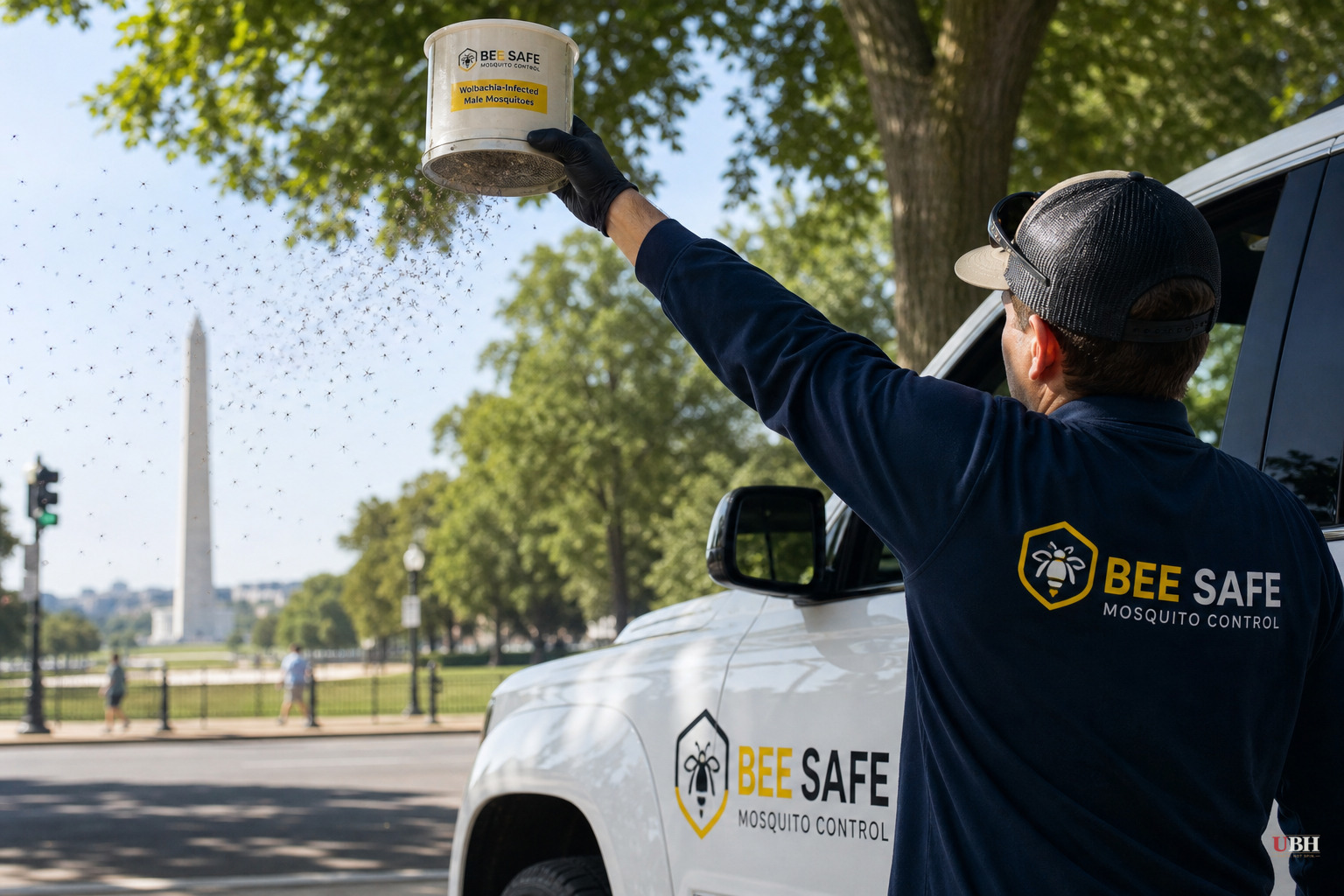
About 600,000 mosquitoes are being released across the Washington DC area this summer. It's the plan.
Bee Safe Mosquito Control, a private pest control business, says it's the first company in the US to offer this method directly to residents, according to the BBC. Until now, releasing lab-altered mosquitoes has mostly been the job of government mosquito control districts, public health agencies, or research partnerships, not a company you can hire off a website.
The mosquitoes released are all male, and they're infected with a naturally occurring bacteria called Wolbachia. Male mosquitoes don't bite people. Only females do, because they need a blood meal to produce eggs.
When these infected males mate with wild females, the eggs that result don't hatch. No new mosquitoes. Do that enough times in one area and the local population craters.
Why This Method and Why Now
This isn't some fringe experiment. Alphabet, Google's parent company, is seeking approval to release up to 64 million Wolbachia-infected mosquitoes across California and Florida, the BBC reported. That represents a scale jump from 600,000 to tens of millions, and it tells you where this technology is headed.
The push is tied to climate change creating more favorable conditions for mosquitoes to survive and reproduce, according to the BBC. Warmer temperatures and longer breeding seasons mean more mosquitoes, and more mosquitoes means more risk of diseases these insects carry, like West Nile virus and dengue.
Mosquito-borne illness isn't a partisan issue. It's biology.
What's Actually Proven Here
The Wolbachia method itself isn't new or experimental in the sense of being untested. It's been deployed by public health agencies and researchers for years as a way to suppress mosquito populations without broad chemical spraying. What's new is a private company selling it directly to homeowners in the DC area rather than it being run exclusively through government programs.
That distinction matters for anyone asking questions about oversight. When a public health agency deploys something like this, there's a regulatory and accountability structure behind it. When a private business does it and homeowners are paying customers, the incentive structure changes. A company selling a pest control service has a financial interest in the product working and being seen as safe, the same as any pest control company selling chemical spraying today.
No source here alleges fraud or safety problems with Bee Safe Mosquito Control's operation. But it's a fair question to ask whether the same rules and disclosures that would apply to a government-run Wolbachia release program apply equally to a private company charging residents for the service. Nothing in this reporting suggests they don't. It's simply a newer arrangement worth watching.
The Bigger Picture
Alphabet's push for approval to release up to 64 million mosquitoes in two of the country's biggest states is the real scale test. California and Florida both have mosquito-borne disease pressure, from West Nile in California to dengue concerns in Florida, and both have the population density where a large-scale trial could show whether this actually works at scale or just in small pilot programs.
If Alphabet gets approval and the releases proceed as planned, that will be the next milestone to watch. No timeline for that approval decision was available in this reporting. Whether regulators in either state have signed off, and under what conditions, remains an open question worth tracking as the summer continues.
Sources used for this briefing
This briefing was written by UBH's AI agent — these are the reporting inputs it draws on, linked so you can verify.


