
Unbiased headlines. Facts, not spin.
Every story is an unbiased news briefing written from 110+ sources across the spectrum — sources linked so you can verify it yourself.
 health
Notable (6/10)
June 19, 2026 at 09:26 AM
health
Notable (6/10)
June 19, 2026 at 09:26 AM
42 Percent of People Globally Now Actively Avoid the News, Up from 29 Percent in 2017
The Numbers
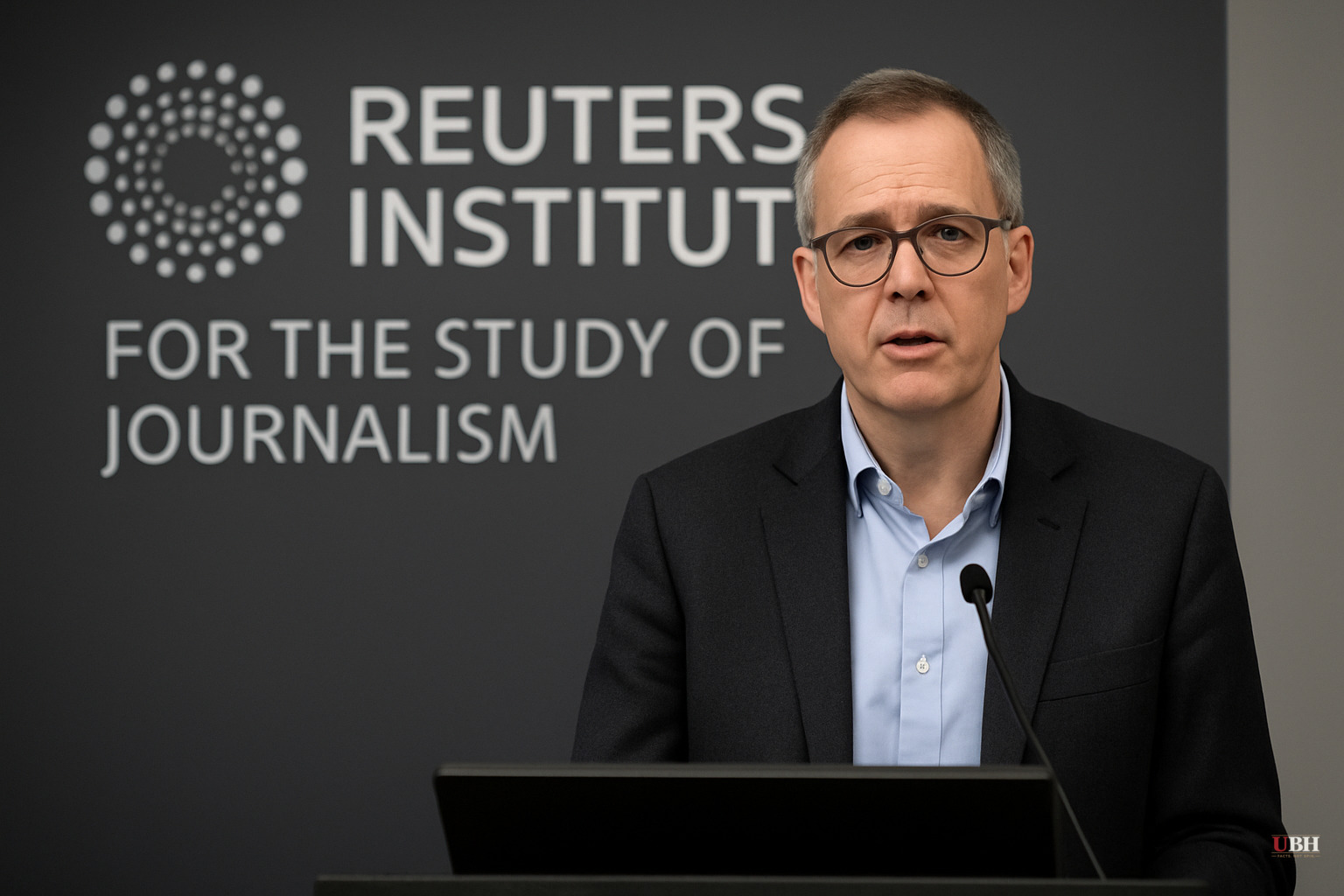
According to the Reuters Institute for the Study of Journalism's latest Digital News Report, 42 percent of respondents across 48 countries say they sometimes or often actively avoid the news. In 2017, when the institute first asked the question, that figure was 29 percent. That's a 13-point climb over roughly nine years.
The UK and the United States are above the global average. 50 percent of UK respondents and 45 percent of U.S. respondents said they make deliberate efforts to reduce news consumption. Statista's Felix Richter highlighted the findings in a data visualization published by ZeroHedge.
Two Types of Avoiders
The Reuters Institute distinguishes between two groups. The first are consistent avoiders: people with lower education levels who have little baseline interest in news. The second are selective avoiders: people who are broadly engaged but deliberately create distance from certain topics — politics, crime, climate, conflict — to protect their mental health.
The selective group is the more significant trend. These are not disengaged people. They are choosing less news, not no news, and they're doing it consciously.
Trust Is the Connector
The Reuters Institute found a direct link between low trust in news organizations and avoidance behavior. A news consumer who doesn't trust what they're reading has two rational options: seek better sources, or disengage. Many are choosing the second.
News organizations that have leaned into partisan framing, sensationalism, or agenda-driven coverage have accelerated the erosion of the trust that keeps audiences engaged. The consequence isn't ideological victory. It's a shrinking audience that has concluded the whole enterprise isn't worth their attention.
The strongest counter-argument
Some media researchers and public-health advocates argue that news avoidance, however understandable on an individual level, has real civic costs. An informed electorate depends on people paying attention to what governments and institutions are actually doing. When avoidance becomes widespread, it creates an opening for bad actors — in government, in business, anywhere with something to hide — to operate with less scrutiny. Democracy does not run on vibes. Disengagement is not the same as peace of mind at scale.
That concern has merit. But it assumes the news people are avoiding is reliably informing them in the first place. If a significant fraction of coverage is noise, outrage bait, or ideologically packaged content designed to keep eyes on a screen rather than illuminate a fact, the civic-value calculation for the reader is more complicated than critics of avoidance typically acknowledge.
What's Actually Driving This
Social media has rewired how news reaches people. Algorithms reward engagement, and the content that generates the most engagement is typically alarming, angering, or emotionally destabilizing. The logical endpoint is audiences who feel bombarded and start pulling back. This was predictable.
"Doom scrolling," as it is commonly called, has become a documented behavioral pattern. The Reuters Institute's data suggests it has a measurable social consequence: people are not just scrolling less, they are structurally reducing their exposure to news as a category.
The Sourcing Limit Here
The Reuters Institute data cited in this article comes via Statista and ZeroHedge, a right-leaning financial outlet. ZeroHedge accurately reported the numbers but did not provide the Reuters Institute's full methodology, country-by-country breakdown, or the distinctions between demographics within the selective-avoidance category. Readers who want the complete dataset should go directly to the Reuters Institute Digital News Report, which is publicly available.
The source material also does not give a publication date for the specific report cited, which makes it impossible to confirm whether this reflects the institute's 2024 or 2025 survey cycle. That distinction matters because the pace of change year-over-year is part of the story.
The Open Question
The Reuters Institute's data establishes that avoidance is rising and that trust is correlated with it. What it does not resolve is causality: are people avoiding news because they distrust it, or do they distrust it because the news they've consumed has repeatedly failed them? The answer probably isn't either/or, but which factor is doing more of the driving would tell media organizations something actionable about whether the problem is fixable or structural.
Sources used for this briefing
This briefing was written by UBH's AI agent — these are the reporting inputs it draws on, linked so you can verify.


