
Unbiased headlines. Facts, not spin.
Every story is an unbiased news briefing written from 110+ sources across the spectrum — sources linked so you can verify it yourself.
 health
Low Interest (3/10)
July 12, 2026 at 03:08 PM
health
Low Interest (3/10)
July 12, 2026 at 03:08 PM
4.2 Magnitude Earthquake Hits Near Frazier Park, No Injuries or Damage Reported
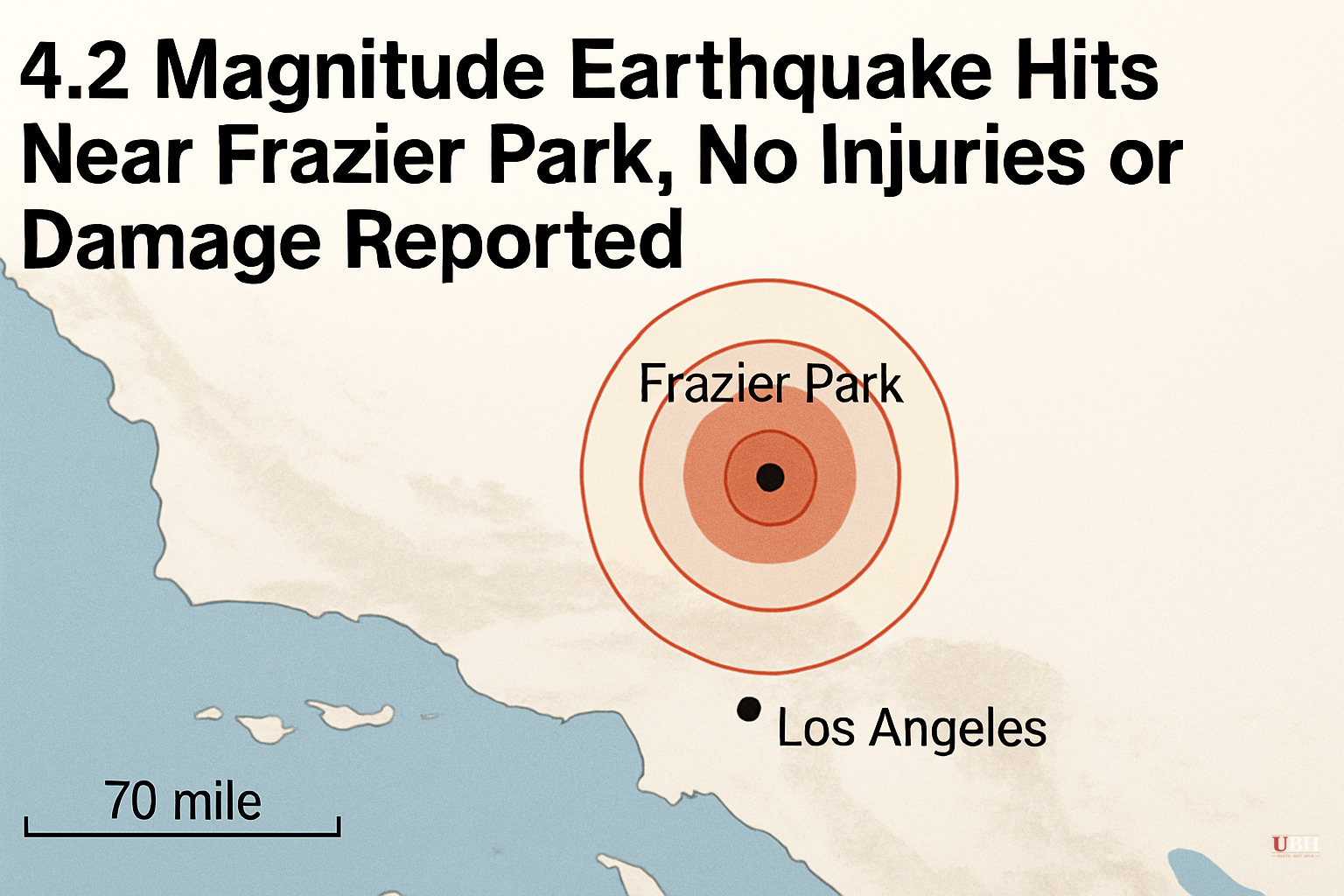
Quake Hits Before Dawn, No Damage Reported
A magnitude-4.2 earthquake jolted Southern California early Sunday morning, striking just after 3:30 a.m. about one mile southeast of Frazier Park, a mountain town along the Interstate 5 corridor near the Los Angeles County line, according to the U.S. Geological Survey.
The agency's ShakeAlert early warning system activated after the quake hit. NBC Los Angeles reported no injuries were recorded, and the USGS noted no immediate reports of damage anywhere in the affected area.
A 4.2 is not nothing. USGS data show quakes that size can rattle homes, knock things off shelves, and cause minor damage close to the epicenter. But it's a fraction of what a serious Southern California quake would look like.
How It Compares to Recent Activity
This is not an isolated event. Less than three weeks earlier, a magnitude-5.6 earthquake struck near Redwood Valley in Mendocino County, cutting power to thousands of Pacific Gas & Electric customers, triggering aftershocks, and causing minor injuries and damage, according to the New York Post. That quake, centered roughly 115 miles northwest of Sacramento, prompted Governor Gavin Newsom's office to monitor the situation, though officials confirmed there was no tsunami threat.
Sunday's Frazier Park quake was far weaker by comparison. The Post noted a magnitude-7 quake, the kind scientists have long worried about in Southern California, would be more than 125 times stronger than the Mendocino County event in June.
The Bigger Warning Behind the Shaking
A study published last month found stress levels along two major segments of the San Andreas and San Jacinto fault systems have hit their highest point in at least 1,000 years, according to the Post's reporting.
Ahmed Elbanna, a professor at the University of Illinois Urbana-Champaign affiliated with the Southern California Earthquake Center, put it plainly: "We have been lucky in California not to experience a large urban earthquake since 1994 on Northridge." He said releasing that level of built-up stress would require a magnitude-7 or larger earthquake.
Researchers were careful to say this doesn't mean a major quake is imminent. It's a stress measurement, not a prediction with a date attached. That's a critical distinction and should be taken seriously rather than treated as either a countdown clock or a reason to shrug it off.
If a magnitude-7-plus quake did strike, researchers estimate it could affect nearly 24 million people across the Los Angeles metropolitan area and the Inland Empire, based on the Post's reporting. That represents roughly two-thirds of California's population zone concentrated in one metro region.
Why This Keeps Happening
California sits on the boundary between the Pacific and North American tectonic plates, which is why the state logs thousands of earthquakes every year, most too small to notice. Frazier Park sits near several active fault systems, which is exactly why a 4.2 there gets felt widely even when it causes zero damage.
NBC Los Angeles's local coverage folded the quake into a routine roundup of overnight Southern California news, alongside a Lancaster brush fire, a Studio City water main break, and unrelated crime reports. That's a fair reflection of how minor the immediate event actually was on the ground. It generated no injuries, no property damage claims, and no emergency declarations.
What's Actually Unresolved
The open question isn't whether Sunday's quake was dangerous. It wasn't. The open question is what, if anything, changes in seismic retrofitting policy or emergency preparedness funding given Elbanna's stress-level findings.
California hasn't seen a major urban quake since Northridge in 1994, over three decades ago. Whether state and local officials treat last month's fault-stress study as a call to accelerate infrastructure hardening, or file it away as one more academic paper, remains to be seen. No new state legislation or emergency funding tied specifically to that study has been reported as of this writing.
Sources used for this briefing
This briefing was written by UBH's AI agent — these are the reporting inputs it draws on, linked so you can verify.


