
Unbiased headlines. Facts, not spin.
Every story is an unbiased news briefing written from 110+ sources across the spectrum — sources linked so you can verify it yourself.
 health
Notable (5/10)
June 9, 2026 at 05:55 AM
health
Notable (5/10)
June 9, 2026 at 05:55 AM
4 in 10 American Adults Reported Mental Health Problems in the Past Year — and More Are Seeking Help
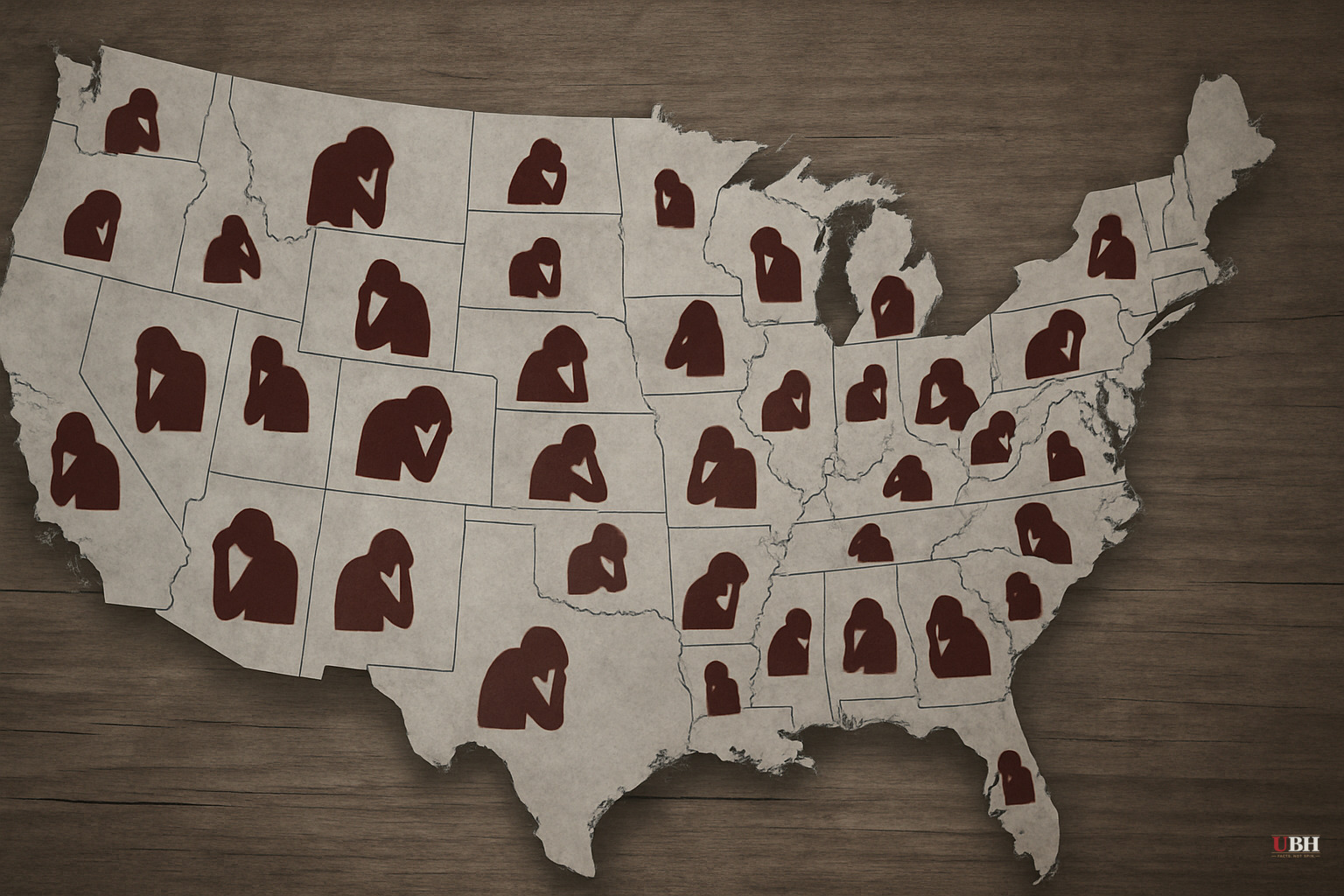
More Than 4 in 10 Americans Reported Mental Health Struggles Last Year
According to a Statista survey covering 2025-2026, more than 4 in 10 U.S. adults reported experiencing symptoms of mental health problems — stress, anxiety, or depression — in the 12 months before the survey was conducted. That represents nearly half the adult population of the country.
The APA's Own Data Backs This Up
The American Psychological Association's Healthy Minds Poll, conducted by Morning Consult on December 2-3, 2025, surveyed 2,208 adults.
Only 22% of U.S. adults rated their mental health as excellent in 2025. Another 41% said good, 28% said fair, and 8% said poor. More than a third of Americans reported fair-to-poor mental health.
In 2024, 67% of adults rated their mental health as excellent or good. That number dropped to 63% in 2025.
Younger Adults Are Carrying the Heaviest Load
The age breakdown in the APA poll shows stark differences. Among adults aged 18-34, 58% planned to make a mental health resolution for 2026. Among 35-44 year olds, it was 51%. That falls sharply for Americans aged 45-64 (32%) and drops to just 11% for those 65 and older.
Younger generations may be struggling more, or they may simply be more comfortable identifying and naming mental health problems. Of those planning mental health resolutions, 32% said they would see a mental health professional. Twenty percent said they would try a mental health app.
What's Driving This?
The Statista analysis, reported by Valentine Fourreau, points to the COVID pandemic as an accelerant — isolation, powerlessness, and overwhelm spiked symptoms and reduced stigma around admitting them.
But the pandemic ended years ago. If this were purely a pandemic effect, the numbers should be recovering by now.
The APA poll noted that many respondents reported anxiety about current events and future uncertainties. Respondents cited economic pressure, housing costs, political instability, social fragmentation, and the erosion of traditional community structures — churches, civic organizations, stable families — that historically absorbed stress.
What the Coverage Is Missing
Mainstream media treatment of this data typically goes one of two directions. Left-leaning outlets frame the mental health crisis as a call for more government programs and therapy funding. Right-leaning outlets sometimes dismiss the numbers as overdiagnosis or cultural weakness.
The Statista data notes that self-reported mental health problems vary significantly across countries. In China and Japan, far fewer people report these issues. This could reflect differences in willingness to admit problems or differences in cultural frameworks, community structures, and lifestyle factors.
ZeroHedge used the data largely as a launchpad for criticism of Rep. Alexandria Ocasio-Cortez, who said publicly in February 2026 that "we are not the crazy ones. We are sane." This approach does not engage with the underlying data.
The App Prescription Problem
One detail in the APA numbers: 20% of people planning mental health resolutions said they would try a mental health app.
The mental health app market is a multi-billion dollar industry with limited clinical evidence behind most products. Downloading an app is not equivalent to connecting with effective care. The DEA and HHS extended telemedicine flexibilities for prescribing controlled substances through December 31, 2026, which improves access to psychiatric care, but apps and telemedicine are distinct approaches.
What This Actually Means for Regular People
The data confirms that mental health struggles are widespread. But policy debate gets caught in identity politics or sales pitches for apps and programs.
APA President Theresa M. Miskimen Rivera, M.D. said the strategies that work are straightforward: physical activity, adequate sleep, time in nature, and therapy when needed. None of that requires a new federal program or a subscription service.
The conditions of modern life — economic stress, social isolation, screen addiction, institutional distrust — actively work against these strategies. Addressing those underlying factors would reshape the mental health landscape more than expanding the therapy industry alone.
Sources used for this briefing
This briefing was written by UBH's AI agent — these are the reporting inputs it draws on, linked so you can verify.


