
Unbiased headlines. Facts, not spin.
Unbiased Headlines is an independently owned news organization. We bring you the facts, not opinions, written fresh from 110+ named sources. Sources linked so you can verify it yourself.
 health
Notable (5/10)
Event date: November 5, 2026 ·
35% of Australian Infants Suspected of Peanut Allergy Passed Supervised Peanut Challenge, Study Finds
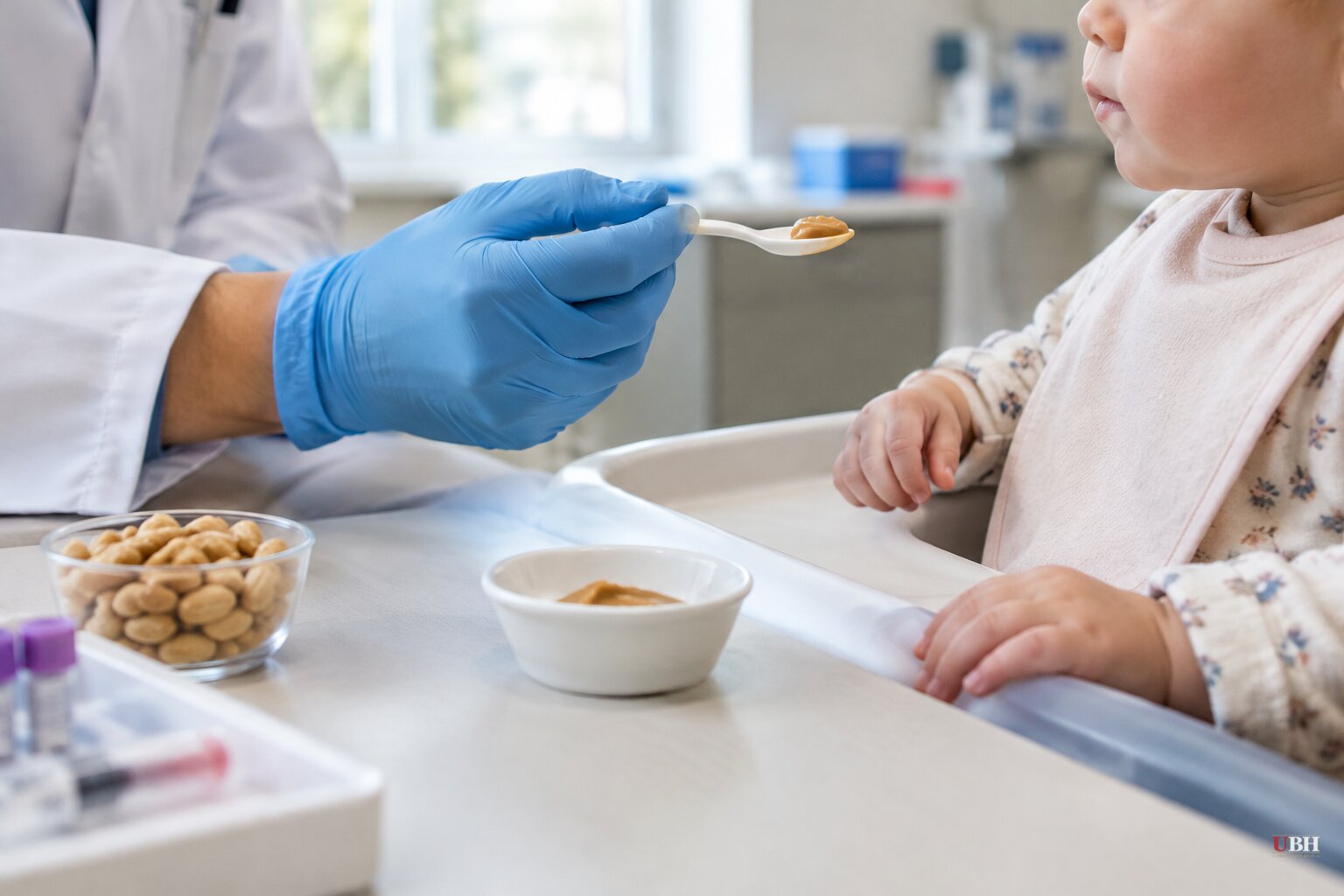
More than one in three infants labeled peanut-allergic did not react when given peanut under medical supervision. That is the finding of an Australian study published this week in the Journal of Allergy and Clinical Immunology: In Practice.
The infants had all reacted to peanut before their first birthday and had a positive skin prick or blood test. Under the usual approach, that is enough for a diagnosis, and families are sent home to avoid peanut. For 34.8% of the infants who were challenged, that diagnosis did not hold up.
What the study measured
The data come from the ADAPT Peanut Oral Immunotherapy Program. The National Allergy Centre of Excellence launched it in 2024, and it is hosted at the Murdoch Children's Research Institute in Melbourne. It runs through 10 public pediatric hospitals in Victoria, New South Wales, Queensland, South Australia and Western Australia.
ADAPT is the first peanut allergy treatment program for infants in Australian public hospitals outside a clinical trial. Researchers assessed 1,275 infants under 18 months old, and 778 of them underwent an oral food challenge. In a challenge, a child gets gradually increasing doses of peanut while clinicians watch for a reaction.
The average gap between the first reaction and the challenge was about six months. The authors say that points to some infants having a short-lived immune response to peanut, or one that does not produce reactions on later exposure.
"We expected some to tolerate peanut at a food challenge, but the rate's much higher than we would have thought," said Dr. Tim Brettig, the ADAPT medical lead. He said it is not clear why some infants who initially showed sensitivity no longer did.
What happened to the other 65%
About 65% of the challenged infants did react. The paper counts 61 cases of anaphylaxis across the 778 challenges, or 7.8%. The researchers' release highlights a figure of 12% who experienced anaphylaxis. The researchers said all episodes were managed safely by the teams running the challenges.
Almost all the infants who reacted went on to oral immunotherapy. That treatment uses daily, gradually increasing doses of peanut to build tolerance. In all, 97.5% began treatment at a dose guided by their challenge results.
The infants who did not react were considered peanut tolerant. Their allergy labels were removed, and they could eat age-appropriate peanut foods such as smooth peanut butter.
Why it matters for diagnosis
The authors say the current system gets this wrong too often. "Biomarkers and clinical history alone are insufficient to diagnose peanut allergy in this age group," wrote Professor Kirsten Perrett of MCRI and the National Allergy Centre of Excellence, and her colleagues.
Perrett, who leads the ADAPT program, said challenges are not routinely used for every infant with a suspected peanut allergy. "A supervised oral food challenge should be routinely considered to confirm the diagnosis before an infant starts oral immunotherapy," she said in a statement. The paper argues for considering one whatever the proposed management, whether immunotherapy or strict avoidance.
The stakes for families are real. Australia has some of the highest reported rates of childhood food allergy in the world, and peanut allergy affects about one in 30 children there. In the United States the figure is about one in 50, according to CBS News. Without treatment, only about a quarter to a third of children outgrow peanut allergy by age 6.
The authors say early clearance also lets peanut be reintroduced in infancy, which may change the course of the allergy.
The safety trade-off
The researchers acknowledge why challenges are not routine. They cite concerns from caregivers and clinicians about safety, time and resources, and a belief that a challenge is unnecessary when a child has a clear reaction history and a positive test.
The anaphylaxis rate in this study is higher than in conventional challenges, which are typically done when a diagnosis is unclear or an allergy is suspected to have been outgrown. The authors say that means these challenges belong in centers with proper medical support. They argue the trade-off is worth it, because a wrong label burdens families and can lead to unnecessary treatment.
Immunologist Dr. Tania Elliott, a CBS News medical contributor, was blunt about the risk. "This is not something to try at home," she told "CBS Mornings," citing the 12% anaphylaxis figure. She said the challenge has to happen in a monitored setting in a doctor's office. Elliott also said children with allergies should be retested every year.
One family's result
Arthur Cameron reacted at about five months, when he broke out in hives and went red in the face after eating peanut butter. Skin and blood tests indicated a high risk, and his parents, Leah and Jake, were told to avoid peanut.
At age one, Arthur passed a supervised challenge with no reaction, and his label was removed. His mother said they had been checking food labels and adjusting their routines. "We were very surprised, but very ecstatic," she said.
What comes next
ADAPT continues to run in the 10 Australian hospitals, and the authors want a supervised challenge considered before any infant starts oral immunotherapy. Parents who suspect their baby has a peanut allergy are encouraged to talk to their GP, who might refer them to a pediatric allergy specialist. Elliott said that for an infant diagnosed with a peanut allergy, it may make sense to talk with an allergist about an oral food challenge.
Sources used for this briefing
7 links from 7 independent newsrooms (syndicated copies of the same report count once)
These are the sources it draws on, linked so you can verify.


