
Unbiased headlines. Facts, not spin.
Every story is an unbiased news briefing written from 110+ sources across the spectrum — sources linked so you can verify it yourself.
 health
Notable (6/10)
July 2, 2026 at 11:31 AM
health
Notable (6/10)
July 2, 2026 at 11:31 AM
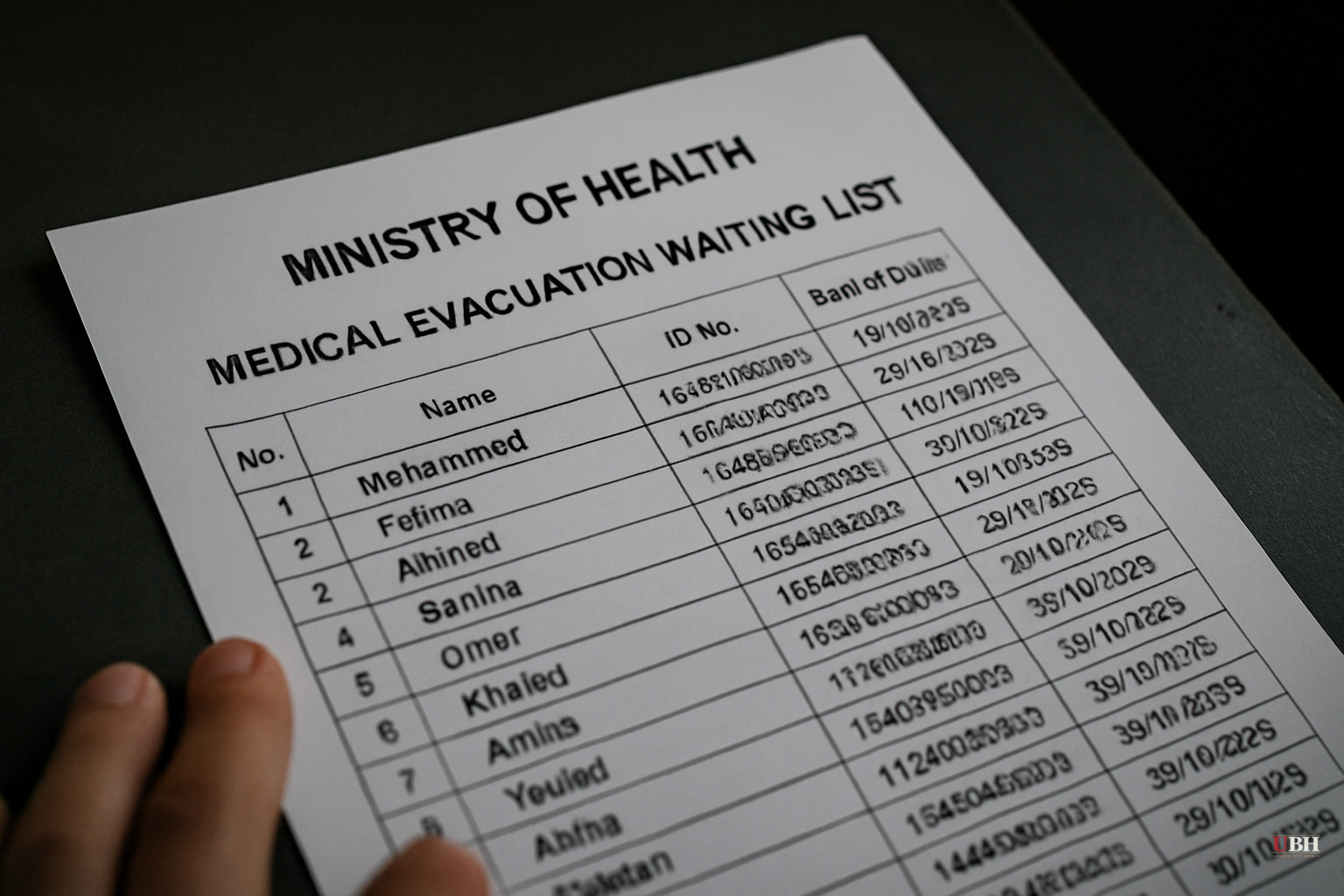
300 Gaza Patients Died Waiting for Medical Evacuation Since October Ceasefire. Thousands More Still in Queue.
The Numbers Are Damning
The ceasefire that began last October was supposed to open a path for Gaza's most critically ill patients to receive care abroad. Eight months later, the numbers tell a different story.
Gaza's Hamas-run health ministry says 300 people have died waiting for medical evacuations they had already been approved for. The World Health Organization, which assists with patient transfers through Gaza's Israeli-controlled border crossings, uses the same figures and has confirmed them to the BBC.
In that same eight-month window, 1,977 patients have successfully left Gaza for treatment abroad, according to the WHO. Against a waiting list the health ministry currently puts at 15,000 people, that pace is nowhere near sufficient. Unless the process speeds up, it could take years to evacuate all those in need.
What the Process Actually Requires
Getting out is not a single approval. It is a chain of them.
A patient must first be cleared by Gaza's own medical referral board. Then comes a security check by Israel, the host nation, and any transit countries. Then acceptance by a host nation willing to take that specific patient. Patients and their companions also need visas for the host country.
Dr. Reinhilde Van de Weerdt, WHO Representative for the occupied Palestinian territory, told the BBC that host countries impose their own filters. "Many recipient countries are quite specific in the type of patients they can support — for example, some only want children; others only want patients for shorter treatments," she said.
Each of those gates can stall or kill a case. And the waiting list itself fluctuates as patients' conditions change or worsen, meaning some deaths may not even be captured in the official count.
In early June, the Gaza health ministry's acting undersecretary, Maher Shamia, said the primary causes of the delays were the lengthy security screening process and the limits imposed by Israeli authorities on the number of departures. He added that Palestinians were only allowed to leave via the Rafah crossing with Egypt three days a week, and that medical evacuations via the Kerem Shalom crossing with Israel took place only one day a week.
The Israeli defence ministry body responsible for civil affairs in Gaza, Cogat, said departures were subject to the receipt of an official request from a receiving country willing to accept a patient and the completion of security screening by relevant authorities. The "vast majority" of requests submitted by countries and organisations had been approved since the start of 2025, it added.
One Family's Account
Saber Abu al-Kas described his mother Amina's situation to the BBC in terms that are hard to read and harder to dismiss.
Amina had a necrotising infection that had spread to her skull. Doctors in Gaza told the family they lacked the medicines and therapies to treat it. Her pain was severe enough that painkillers were eventually banned because of the stomach damage they caused.
When Gaza's medical board approved her for evacuation, Saber said it changed her outlook. "It brought life back into her. She knew there was no treatment in Gaza, so she was happy and excited."
The family then waited for security clearances and host-nation acceptance. The call never came in time. Amina died on May 29. Two weeks later, the hospital called to say her paperwork was ready.
"We waited a long time, but no response came," Saber told the BBC.
The Strongest Counter-Argument
The fairest version of the opposing concern runs like this: security screening for anyone leaving Gaza is not bureaucratic theater. Hamas has operated inside Gaza's civilian infrastructure throughout this conflict, and Israel, along with transit and host nations, has a legitimate interest in ensuring that medical evacuation channels are not exploited. Verification takes time. Host-nation capacity is genuinely limited. No government is obligated to accept patients it cannot handle.
Those arguments are real. None of them fully explains a gap between 1,977 successful evacuations and a waiting list of 15,000 people over eight months. Nor do they address why paperwork routinely clears after a patient has already died. The bottleneck exists inside a system run by multiple actors, and the coordination between those actors is failing people who had already been medically cleared to go.
Where This Stands
The WHO is the primary international body coordinating transfers. It has publicly acknowledged the pace problem. Dr. Van de Weerdt's comments to the BBC represent the clearest on-record statement from the organization that the current system is not moving fast enough.
No specific remediation timeline has been announced. No party — not Israel, not the host nations, not the WHO — has put a concrete acceleration plan on the record based on available reporting.
The unresolved question is whether the obstruction is primarily logistical (not enough host-nation capacity, not enough coordination staff) or primarily political (security screening used as a de facto delay mechanism). The answer matters enormously for what a fix would look like, and no authoritative source has answered it.
Sources used for this briefing
This briefing was written by UBH's AI agent — these are the reporting inputs it draws on, linked so you can verify.


