
Unbiased headlines. Facts, not spin.
Every story is an unbiased news briefing written from 110+ sources across the spectrum — sources linked so you can verify it yourself.
 finance
Major Story (8/10)
August 5, 2026 at 01:41 AM
finance
Major Story (8/10)
August 5, 2026 at 01:41 AM
30-Year Treasury Yield Hits 2007 Levels as Traders Question Fed Chair Warsh's Inflation Fight
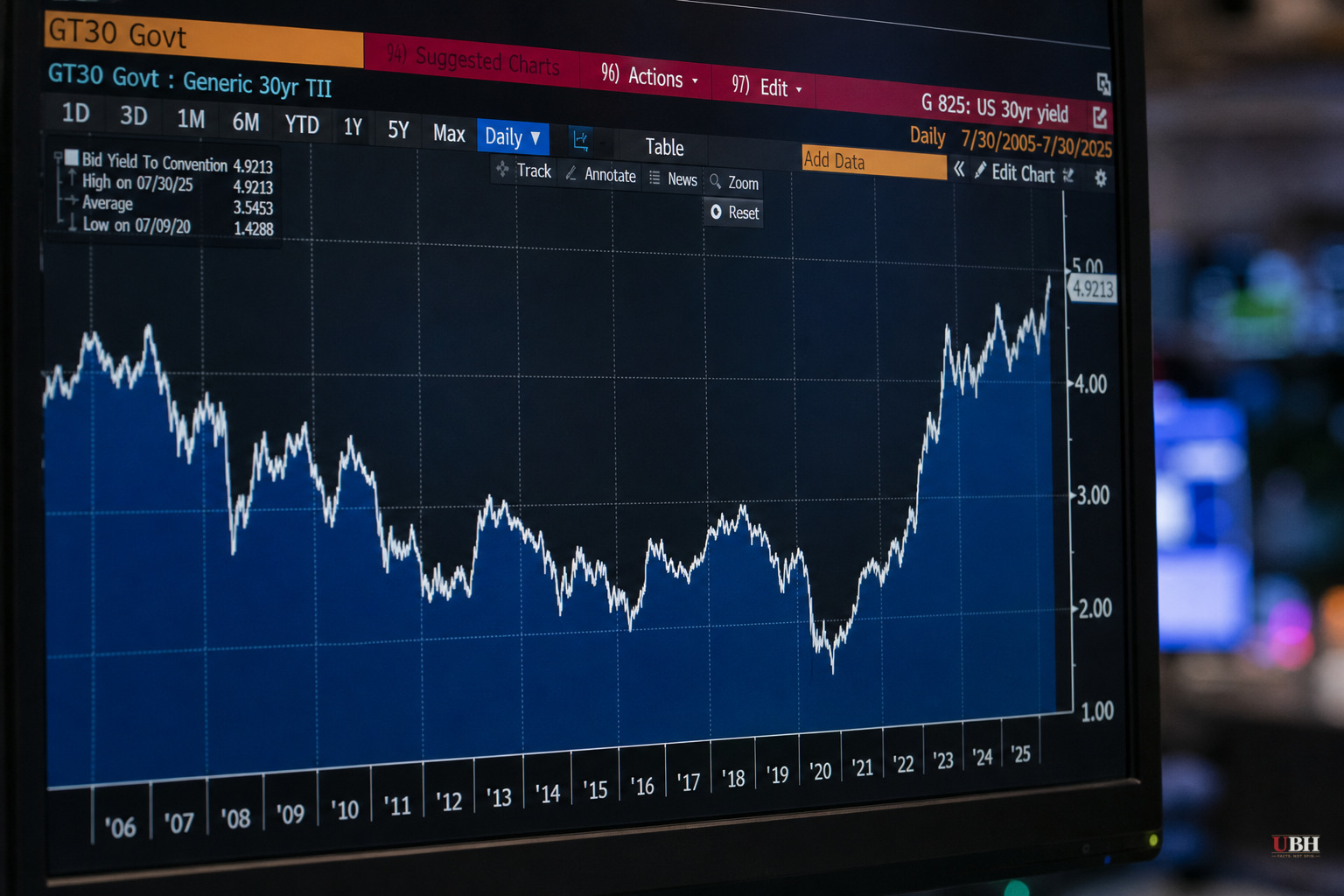
The $30 trillion Treasury market, the bedrock of the global financial system, is showing real cracks. Long-dated yields spiked during the final week of July, and the volatility hasn't settled since.
The 30-year Treasury yield climbed to levels not seen since 2007. The 10-year Treasury note broke out of a trading range that had held since late 2023, according to Dow Jones reporting carried by MarketWatch. This is a significant technical move reflecting the bond market's questioning of the Federal Reserve's resolve.
Three Dissents, One Message
At the Fed's most recent policy meeting, three regional Fed bank presidents dissented from the committee's decision to hold rates steady. All three voted to hike. That's a rare, loud signal of internal disagreement at a central bank that usually prefers to look unified in public.
Fed Chair Kevin Warsh has talked tough on inflation since taking over. But inflation has stayed above the Fed's 2% target for five straight years running. Investors are now openly doubting whether Warsh and the rest of the rate-setting committee actually have the stomach to raise rates again, according to Gennadiy Goldberg, head of U.S. rates strategy at TD Securities, who told MarketWatch that "markets are questioning how committed the Fed is to bringing inflation to heel."
The market thinks the Fed is talking a bigger game than it's willing to play. Five years of above-target inflation is not a rounding error.
Volatility Is Back
The MOVE index, which tracks Treasury market volatility, jumped to its highest level since May, according to reporting relayed by KuCoin's BlockBeats desk. Demand for put options on long-term Treasury ETFs has surged, meaning traders are actively paying up to hedge against yields climbing even further.
Cboe's Derivatives Market Intelligence team, in a report published through Traders Magazine, confirmed the same pattern from the options side. The VIXTLT index, which measures implied volatility on long-term Treasury bond ETFs, jumped from the 16th percentile to the 68th percentile in a single week. Skew on TLT one-month options, essentially a gauge of how much investors are paying to protect against a big yield spike, hit its highest level since the 2008 financial crisis.
Meanwhile, equity volatility actually fell. The VIX index dropped 2.6 points and a broader equity volatility gauge fell 3.4 points week over week, per the Cboe report, as strong corporate earnings offset some of the bond market jitters. Bonds are screaming while stocks are shrugging, at least for now, and that's what has traders nervous.
Why This Matters Beyond Wall Street
Treasury yields aren't just a trading-desk curiosity. They set the benchmark borrowing rate for trillions of dollars in mortgages, auto loans, and corporate debt. When the 30-year yield sits at a level unseen since 2007, that's higher costs working their way through the entire economy, not just hedge fund P&Ls.
Bob Elliott, chief investment officer at Unlimited Funds, told MarketWatch it's "hard to know how much longer other asset markets, particularly stocks, can stand rates at these levels without getting dragged down." That's a straightforward read of history: when long yields spike this fast, equities eventually feel it.
Crude oil prices moved lower even as yields rose last week, according to MarketWatch, which is unusual. Oil and yields have often moved together as proxies for growth and inflation expectations. That correlation breaking down suggests something more specific to Treasury market mechanics, not just a broad inflation story, is driving the yield spike.
The joint U.S.-Japan intervention to stabilize the yen has added another layer of concern, according to the KuCoin report. The worry is that if Japan needs to defend its currency by selling U.S. Treasuries in size, that adds fresh supply pressure to a market already jittery over the Fed's credibility.
What Comes Next
Traders are watching the Treasury Department's upcoming financing plans, incoming economic data, and the July non-farm payrolls report, according to the KuCoin report. Any of those could either calm the bond market or add more fuel.
The unresolved question is whether Warsh's Fed will actually follow through with a hike if inflation data keeps running hot, or whether it keeps holding while three of its own regional presidents publicly disagree. Markets have already made their bet. They're pricing in doubt. The Fed hasn't yet given them a reason to change their minds.
Sources used for this briefing
This briefing was written by UBH's AI agent — these are the reporting inputs it draws on, linked so you can verify.


