
Unbiased headlines. Facts, not spin.
Unbiased Headlines is an independently owned news organization. We bring you the facts, not opinions, written fresh from 110+ named sources. Sources linked so you can verify it yourself.
 finance
Major Story (7/10)
Event date: August 25, 2026 ·
finance
Major Story (7/10)
Event date: August 25, 2026 ·
30-Year Treasury Yield Hits 19-Year High as Treasury's Bond Buybacks Fail to Hold Down Rates
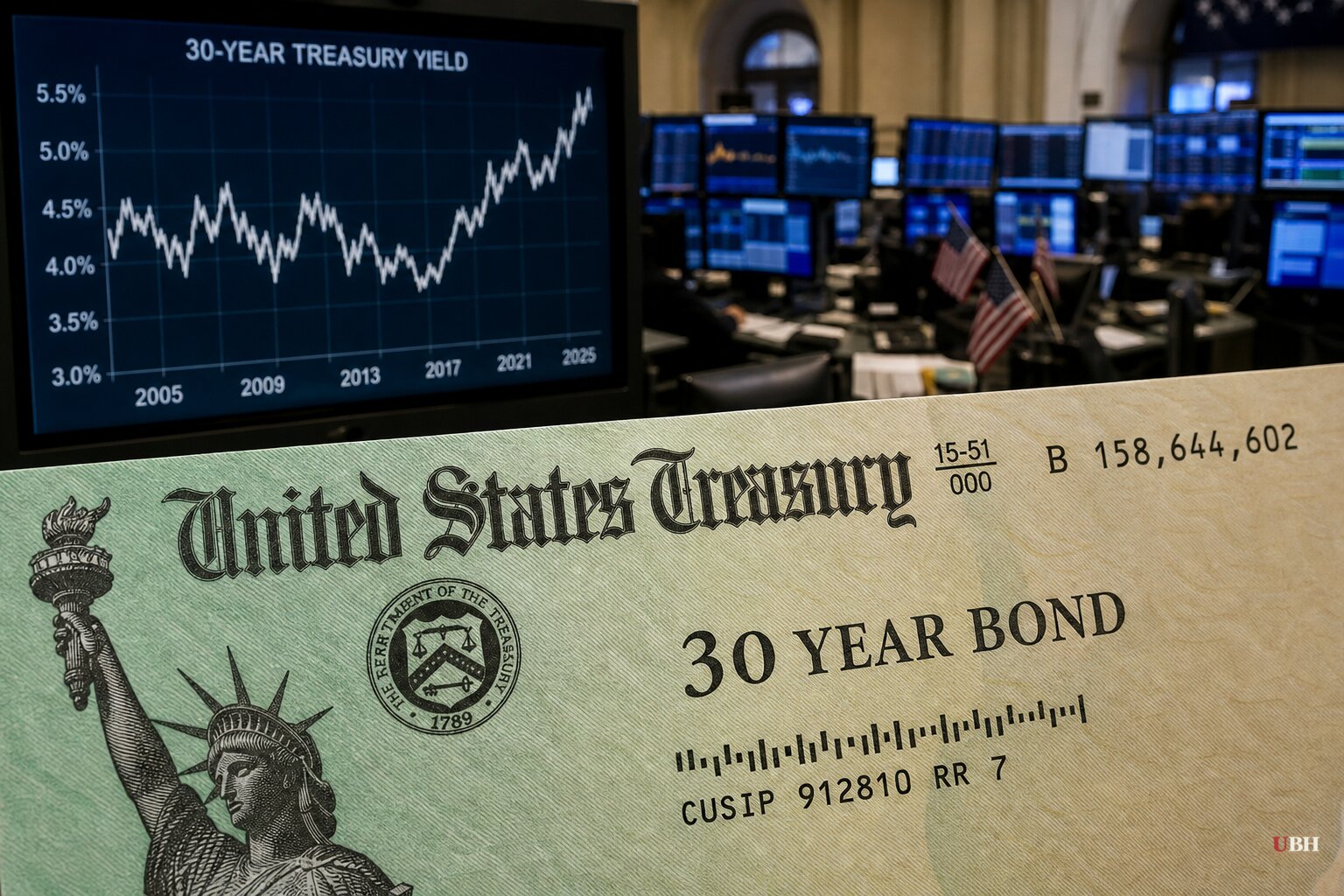
The 30-year Treasury yield climbed to 5.31% in late August, its highest level since June 2007, according to Andrew Moran's report for the Epoch Times. The 10-year yield hit a 14-month high of 4.77% the same week. By September 7, CNBC reported the 30-year had eased slightly to around 5.23%, still near multi-decade highs, according to Deutsche Bank data cited in that report.
The Treasury Department tried to get ahead of it. On August 20, Treasury Secretary Scott Bessent told CNBC the government would raise its buyback of 10-, 20-, and 30-year bonds from $2 billion to $4 billion per reverse auction, and said the number could climb further depending on conditions. As of today, that program has reportedly grown to $40 billion, according to Gate News, with inflation data due this week expected to factor into the Federal Reserve's next rate decision.
The relief didn't last
NPR's Scott Horsley reported that the initial buyback announcement pushed yields down midweek, but they "reaccelerated" by Thursday's session, with stocks selling off alongside bonds. Bessent told CNBC he believes the bond market is "overreacting," arguing "the underlying economy... is very strong" and that inflation pressure is coming mainly from energy, which he called "temporary." NPR noted that framing comes amid continued elevated gasoline prices tied to ongoing tensions in the Middle East.
Carl Tannenbaum, chief economist at Northern Trust, told NPR three forces are pushing yields up: a large and growing national debt, inflation running hotter than the Fed wants, and heavy long-term borrowing tied to the AI data center buildout, which competes with the government for lenders. Government interest costs have jumped about 15% this year to more than $1 trillion annually, per NPR's reporting.
UBS strategists, in an August 19 note cited by the Epoch Times, said the buybacks "may discourage aggressive curve-steepening trades and reduce near-term market stress, but they do not address the forces supporting higher term premia, including persistent deficits, elevated capital demand, and a shift in Treasury ownership toward more price-sensitive private investors." Lawrence Gillum of LPL Financial offered a different read, telling the Epoch Times the yield backup is "a necessary normalization, not a crisis," pointing out the same repricing is happening in Japanese, German, French, and British government bonds. Gillum called it "a global term premium story, not a verdict on U.S. creditworthiness."
A fight over what the buyback actually means
Stanley Druckenmiller argued in a Wall Street Journal column that the buyback expansion amounts to "price management" by Treasury, not routine liquidity management, calling it "a mistake far larger than $4 billion suggests." Breitbart's Business Digest pushed back, pointing out that the 30-year yield fell after the announcement and then returned to roughly where it started, with no evidence Treasury defended a specific price target or promised unlimited purchases. Breitbart argued that round trip is what liquidity management for illiquid, off-the-run bonds looks like, not an attempt to cap rates. Both sides agree on the facts of the price move. They disagree on what it means, and nothing in these reports settles that dispute.
Foreign investors show mixed signals
The picture on foreign demand is mixed. CNBC reported, per a Deutsche Bank note covered by mk.co.kr, that foreign holdings of U.S. government bonds have fallen to roughly 30% of foreign portfolios from more than 50% previously, while foreign stock holdings hit an all-time high near $600 billion in the past year. Norway's sovereign wealth fund, the world's largest, is reportedly considering cutting its U.S. Treasury allocation from 34.1% to 21.9%. China's holdings were reported down to roughly $633 billion in June from about $731 billion a year earlier.
But the latest biweekly Treasury data tell a different story at the short end. Gate News reported foreign investors bought $9.838 billion in 2-year notes, $8.749 billion in 5-year notes (up 31% from the prior month), and $6.786 billion in 7-year notes (up nearly 30%) in the most recent reporting period. The retreat appears concentrated in long-duration paper and among large strategic allocators like sovereign wealth funds and central banks, not a broad foreign exodus from Treasuries.
The reallocation is showing up elsewhere too. India saw foreign investors turn net sellers of government bonds in August after two months of buying, according to the Economic Times, which cited rising global yields, Bloomberg's decision to defer India's inclusion in a local debt index, and a narrowing yield gap between Indian and developed-market rates. Market participants told the outlet they expect flows to stay largely neutral in the near term.
The bigger argument
Stephen Soukup's opinion piece for the Daily Signal frames the current yield pressure as "bond vigilantes" reasserting themselves, drawing a parallel to January 1993, when Robert Rubin, Laura Tyson, and Alan Blinder warned incoming President Bill Clinton that unchecked deficits could tank his agenda through the bond market. Whether today's episode forces similar fiscal discipline in Washington, under a Republican administration this time, remains an open question. The next test comes with this week's inflation data and whatever the Fed decides in response, alongside whatever number Treasury settles on for its buyback program beyond the $40 billion already reported.
Sources used for this briefing
7 links from 7 independent newsrooms (syndicated copies of the same report count once)
These are the sources it draws on, linked so you can verify.


