
Unbiased headlines. Facts, not spin.
Every story is an unbiased news briefing written from 110+ sources across the spectrum — sources linked so you can verify it yourself.
 finance
Notable (6/10)
August 6, 2026 at 01:47 AM
finance
Notable (6/10)
August 6, 2026 at 01:47 AM
24-Year-Old AI Fund Manager Loses $35 Billion in a Week, Gets Married Anyway
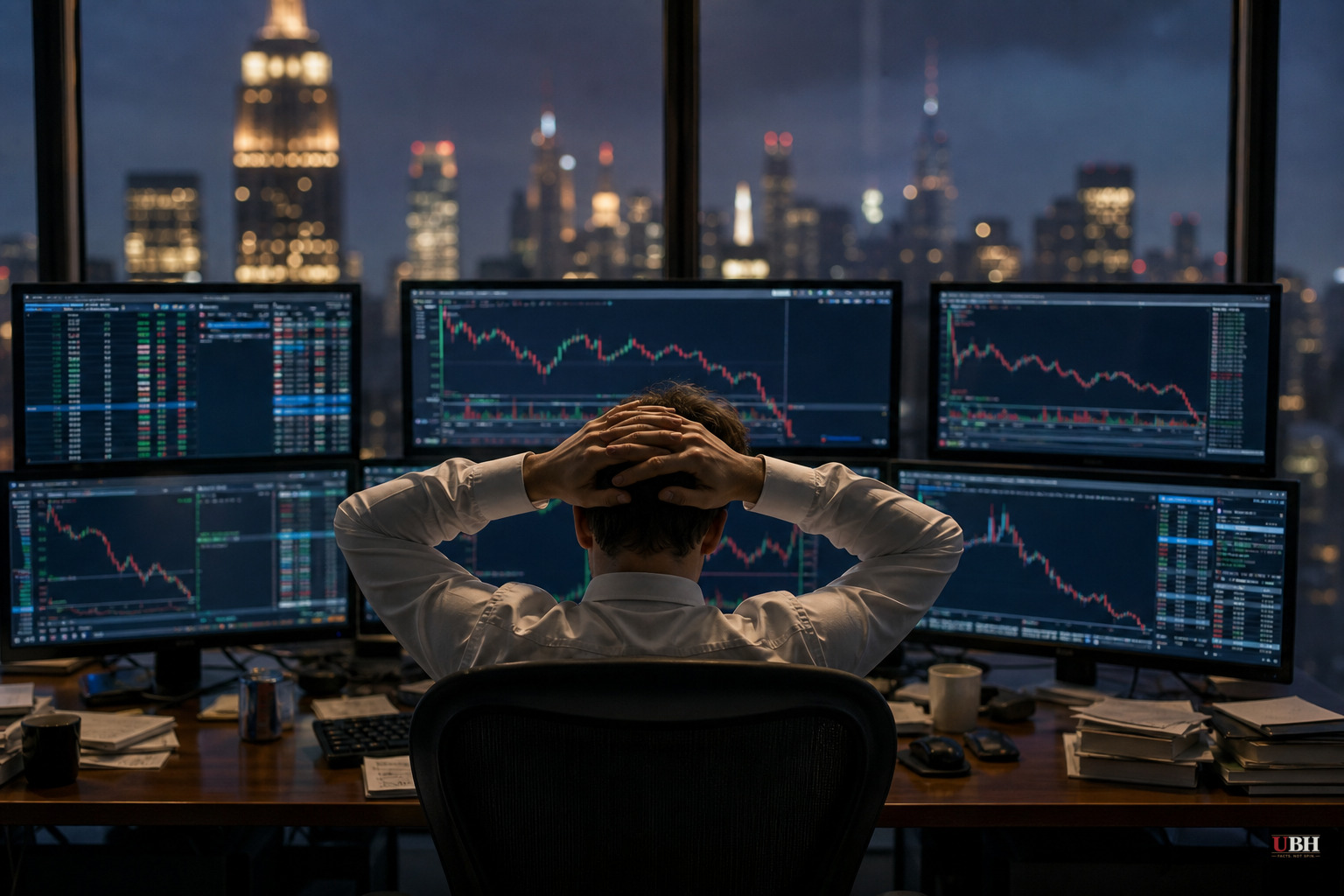
Leopold Aschenbrenner spent two years being called the Nostradamus of AI. Then he spent one week finding out what happens when leverage meets a falling market, days before he was set to marry Avital Balwit, chief of staff to Anthropic CEO Dario Amodei.
Aschenbrenner is 24. He graduated Columbia as valedictorian at 19, worked briefly at Sam Bankman-Fried's FTX, then landed at OpenAI. In June 2024 he published a 165-page manifesto called Situational Awareness, arguing the real AI money wouldn't come from chatbots but from the chips, data centers, and power infrastructure underneath them. He turned that thesis into a hedge fund carrying the same name, and it raised $100 million that November, according to the New York Times.
For a while, he looked like a genius. The fund posted gains north of 1,000% since inception, according to the Wall Street Journal, and attracted a cult following on Wall Street that copied his trades off quarterly filings. By this month, the fund had swelled to $45 billion in assets.
Then the bet blew up.
Leverage Did What Leverage Does
Aschenbrenner ran the fund with three to four times leverage, according to the Journal, borrowing $3 to $4 for every dollar of his own capital. That works great on the way up. It's brutal on the way down.
Traders grew nervous that AI infrastructure spending wasn't producing clear returns. Memory chip and data center names like SK Hynix, SanDisk, and CoreWeave dropped roughly 30%, and the semiconductor sector had its worst month since 2002, per Fortune. Rival traders figured out what Aschenbrenner owned, according to the Journal, and shorted those same names, betting he'd be forced to sell.
He was. Banks demanded more collateral. He sold stock to raise cash, which pushed prices down further, which triggered more margin calls. Aschenbrenner described it to investors in a letter, first reported by Reuters, as a bank run: "vulnerability begetting more vulnerability."
By midweek he was scrambling for buyers. Bloomberg reported he approached Sequoia and Greenoaks about offloading a $3.5 billion slice of his private Anthropic stake to avoid a margin call. That deal fell apart. Stripe founders Patrick and John Collison, early backers of the fund, reportedly spent hours at his offices past midnight while he negotiated with Citadel and Millennium, according to the Journal.
Citadel won. Before Thursday's market open, Ken Griffin's firm bought the bulk of Situational Awareness's public equity portfolio at more than 10% below market value, per the Journal. Aschenbrenner used that cash to pay off lenders. The fund survived, but at a fraction of its former size: roughly $10 billion, down from $45 billion, according to people familiar with the matter cited by CNBC.
"I Take Full Responsibility"
In a letter to investors written the same day his wedding guests started arriving in Carmel-by-the-Sea, Aschenbrenner said the fund was down 67% for the month but still up 80% for the year, according to Fortune. He wasn't liquidated. The fund wasn't shutting down. He kept the Anthropic stake intact. "I take full responsibility for these events," he wrote, and offered investors one-on-one calls the following week, the same week he was supposedly on his honeymoon.
He didn't hide the losses, he didn't blow up the whole fund, and he apparently negotiated a deal that kept his largest private holding, the Anthropic stake, intact. A fund still up 80% for the year, even after a brutal month, is not evidence of fraud or incompetence on its face. Betting big on AI infrastructure was, and largely still is, a widely shared thesis in Silicon Valley. The risk was the leverage, not the underlying idea.
The Wedding Went On
The wedding itself, described by Vanity Fair sources and reported by the New York Post, drew 80 to 100 Silicon Valley figures to a Tuscan-style villa in Carmel, many of them Situational Awareness investors. Networking sessions originally planned around AI investment trends were quietly rewritten as discussions about "life and philosophy," a detail that tells you everything about the mood in the room. Dario Amodei reportedly skipped it.
"It wasn't like Aschenbrenner went broke and couldn't pay for the venue or the caterer," one person familiar with the wedding told Vanity Fair. True enough. Guests drank Napa wine, a DJ played a Berghain-style set, and the party wrapped by 11 p.m.
Jerry Diao, who runs a Wall Street coaching firm, told CNBC the collapse wasn't shocking given the reported leverage: "A lot of people saw this blow-up as a matter of not if, but when." Critics have also noted Aschenbrenner had zero prior experience managing money before launching the fund in July 2024, a fact that matters less when you're up 1,000% and matters enormously when you're down 67% in a month.
Aschenbrenner's fund didn't collapse. It shrank by roughly $35 billion in assets under management in a matter of days, a reduction his own investor letters attribute to forced deleveraging rather than a wipeout of every dollar invested. What happens to the fund's remaining $10 billion, and whether investors who rode the 1,000% run up stick around for the next chapter, is the open question now sitting on Aschenbrenner's desk when he gets back from his honeymoon.
Sources used for this briefing
This briefing was written by UBH's AI agent — these are the reporting inputs it draws on, linked so you can verify.


