
Original briefings. Zero spin.
Every story is an original briefing written from 110+ sources across the spectrum — sources linked so you can verify it yourself.
 economy
Major Story (8/10)
Event date: September 8, 2026
economy
Major Story (8/10)
Event date: September 8, 2026
18 Maritime Nations Warn Global Shipping Rules Are Breaking Down as Shadow Fleet Hits 20% of Tankers
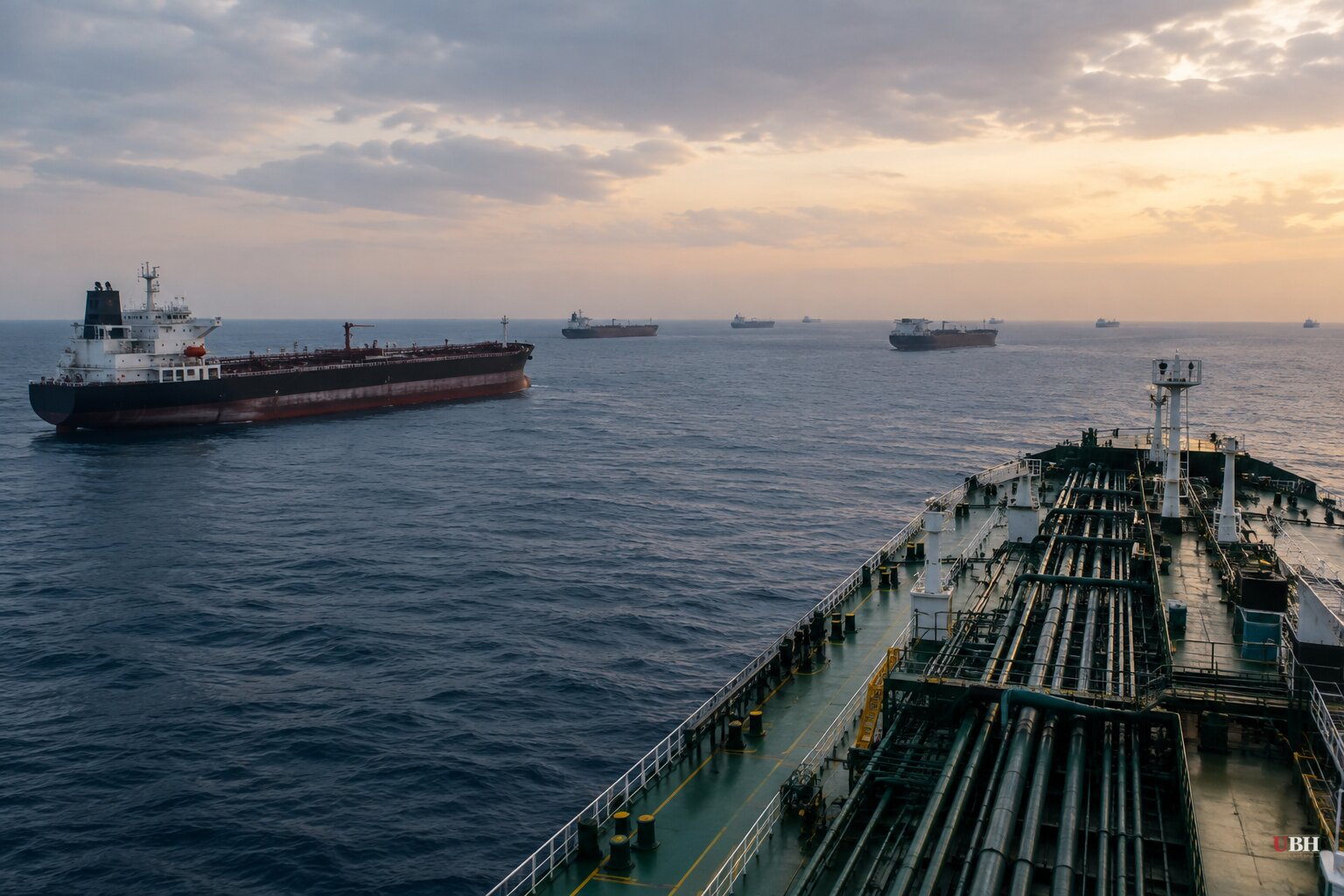
The Consultative Shipping Group, an alliance of maritime authorities from 18 nations including the UK, Germany, Denmark, Canada, Japan, South Korea, Greece, Singapore and the Netherlands, broke more than six decades of public silence this week. On Tuesday, September 8, the group issued its first joint statement since it was founded, warning that the legal foundations of global shipping are eroding.
"Without maritime trade, supply chains would fragment and the global economy as we know it would come to a sudden halt," the CSG said, according to the statement cited by Fortune, Turkiye Today and the SL Guardian. More than 80% of world trade by volume moves by sea, according to UN Trade and Development, and the industry underpins roughly 30% of global GDP, an estimated $35 trillion, per Fortune.
Brian Wessel, director-general of the Danish Maritime Authority and chairman of the CSG, told the Financial Times, as reported by Turkiye Today and the SL Guardian, that the group acted now because assumptions the industry has relied on for decades no longer hold. "For decades, we have built global trade on the assumption that ships can move freely across borders. That assumption is now under pressure," Wessel said. He added that the International Maritime Organization's global regulatory framework has been "taken for granted."
The Shadow Fleet Problem
The CSG's core warning is about a growing "two-tier" system, legitimate shipping governed by IMO rules, and a parallel network of vessels that isn't. According to data from TankerTrackers.com cited by upday, this shadow fleet now exceeds 1,500 ships and makes up close to 20% of the global tanker fleet.
These vessels frequently operate without recognized insurance, falsify their flag registration, or avoid registering with any flag state at all. The SL Guardian and multiple other sources note the fleet expanded specifically in response to sanctions imposed by the U.S., EU and UK on Russia and Iran. Aggressive sanctions regimes created the financial incentive for this opaque shipping network to exist in the first place. Sanctions remain a legitimate national security tool against hostile states, but the CSG's own statement acknowledges the tradeoff. Uninsured vessels create real risk for coastal states that end up absorbing cleanup costs when something goes wrong.
One example: the Caroline Bezengi, a sanctioned tanker linked to Russia's shadow fleet carrying roughly 800,000 barrels of crude, suffered an explosion in June and began leaking oil off the coast of Oman in July, according to Fortune. Because shadow fleet vessels typically lack standard insurance, local authorities are often left covering the environmental cleanup.
Hormuz and Suez Under Pressure
The warning lands amid a broader collapse in traffic through the world's key maritime chokepoints. International Finance reported that only seven commodity vessels passed through the Strait of Hormuz on a recent Monday, citing Kpler data via Reuters, a decline from pre-conflict levels tied to the ongoing U.S.-Iran confrontation. Some of that data may understate real traffic since certain vessels have switched off their automatic identification systems, Reuters noted.
Fox News reported that Strait of Hormuz traffic remains below normal as U.S. sanctions continue pressuring Iran, even as Iranian officials have signaled openness to renewed diplomacy with Washington. Separately, the SL Guardian reported Tehran said Monday it was close to finalizing a deal with Oman to manage shipping through the strait, potentially involving a fee-paying regime, though no agreement has been confirmed as signed.
The Red Sea crisis compounds the problem. UNCTAD's latest maritime transport review found tonnage through the Suez Canal remained roughly 70% below 2023 levels as of May 2025, according to International Finance, as ships reroute around the Cape of Good Hope, adding weeks of travel time, fuel costs, and emissions.
What's Next
UNCTAD has separately warned that developing economies with limited fiscal room are most exposed to the resulting spikes in freight rates, insurance premiums, and food and fertilizer costs, per International Finance. Neither the IMO nor any national government has announced formal reforms in response to the CSG's statement.
The key question is whether the Iran-Oman arrangement over Hormuz materializes and whether it stabilizes traffic or simply formalizes a new toll system in one of the world's most contested waterways. Wessel's group says the clock is running. Fragmentation in rules, in its words, "leads directly to fragmentation in markets and ultimately to higher costs for businesses and consumers."
Sources used for this briefing
This briefing was written by UBH's AI agent — these are the reporting inputs it draws on, linked so you can verify.


