
Unbiased headlines. Facts, not spin.
Every story is an unbiased news briefing written from 110+ sources across the spectrum — sources linked so you can verify it yourself.
 health
Notable (6/10)
June 18, 2026 at 07:29 PM
health
Notable (6/10)
June 18, 2026 at 07:29 PM
159 Air Force Recruits Sick with Flu at Joint Base San Antonio After Hegseth Makes Vaccine Optional
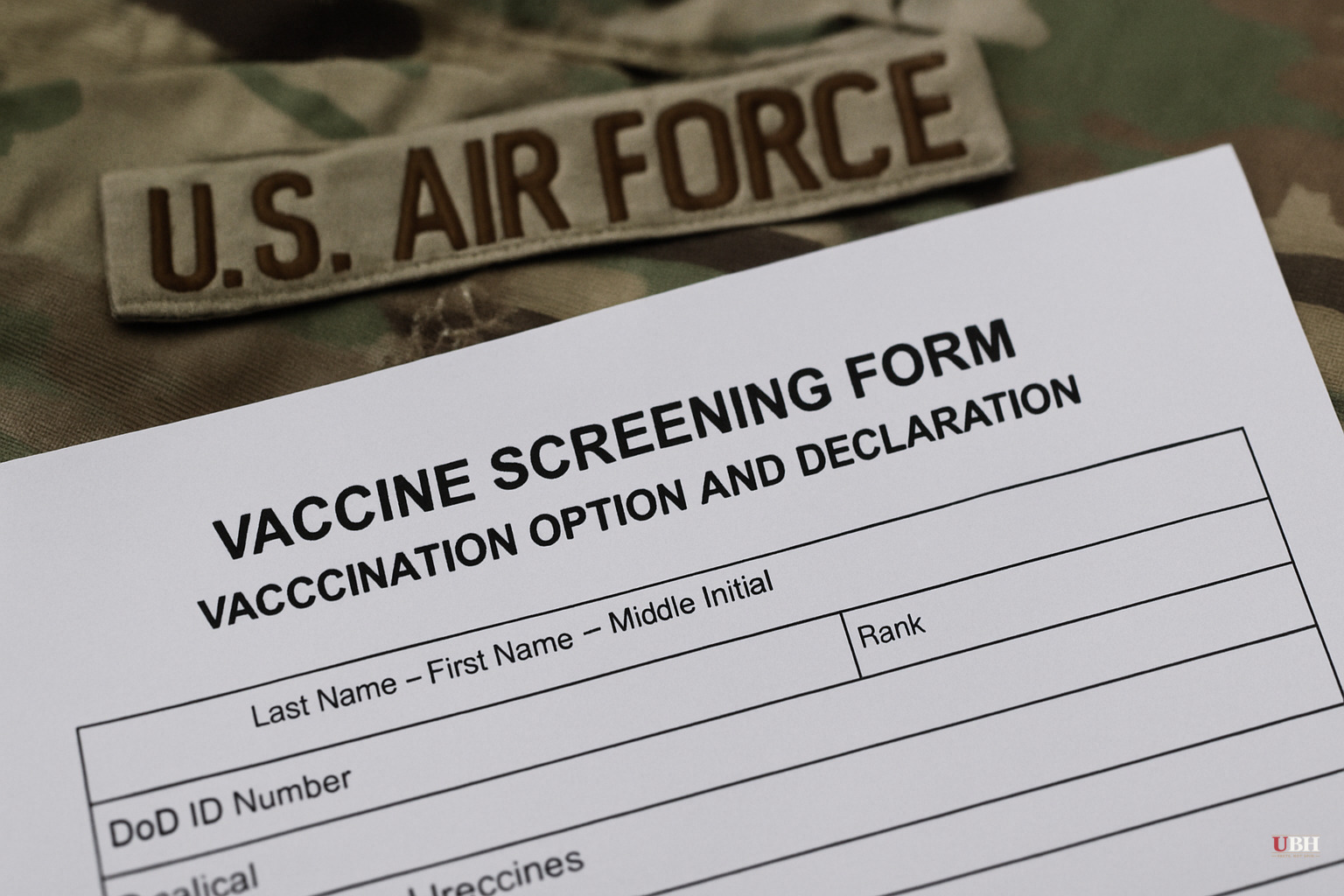
What Happened
Since at least early June, Joint Base San Antonio — the Air Force's sole basic military training facility — has been managing a localized influenza outbreak among recruits. As of Wednesday, June 17, at least 159 cases and two hospitalizations had been confirmed, according to two sources familiar with the situation who spoke to ABC News. One of those sources told ABC News the actual numbers may be higher.
An Air Force spokesperson confirmed the outbreak and said in a statement that medical professionals and public health officials have implemented mitigation measures to isolate and treat symptomatic trainees. Sick recruits are receiving antiviral medications including Tamiflu and will return to training once cleared by medical professionals, per the statement.
The Policy That Preceded It
In April 2026, Defense Secretary Pete Hegseth announced that the annual flu vaccine would be optional for all U.S. military personnel, active and reserve alike. The mandate had been in place for years, with a 100% vaccination rate at basic training facilities.
Hegseth framed the change as a matter of personal liberty. "If you, an American warrior entrusted to defend this nation, believe that the flu vaccine is in your best interest, then you are free to take it; you should. But we will not force you," he said at the time, describing the previous requirement as "overly broad and not rational."
Since the mandate lifted, the flu vaccination rate among recruits at the San Antonio base has dropped to 40%, according to ABC News sources.
The Pentagon's Response
Chief Pentagon spokesman Sean Parnell confirmed to ABC News that the Defense Department has since granted exceptions to the optional policy for the Army, Navy, Air Force, National Security Agency, and Defense Health Agency, through the Under Secretary of Defense for Personnel and Readiness. Parnell said those decisions were based on "thorough risk assessments" designed to maximize military readiness.
The exceptions were granted after the policy change, and the San Antonio outbreak developed in the weeks following the mandate's removal.
The Readiness Argument
Critics of Hegseth's decision raise a straightforward concern: basic military training is exactly the kind of high-density, high-stress environment where infectious disease spreads fast. Recruits sleep in close quarters, share facilities, and cannot simply go home sick. The flu vaccine mandate existed specifically because commanders recognized that an outbreak in this setting degrades readiness. It was an operational reality, not a political statement.
Senator Roger Wicker of Mississippi, the Republican chairman of the Armed Services Committee and an Air Force veteran, made this point when Hegseth announced the policy in April. "The reason it was mandatory was to enhance readiness," Wicker told reporters. "You know, you do give up certain rights when you take the oath. It's just part of it."
A 60-point drop in vaccination rate in a confined training environment, followed weeks later by 159 sick recruits, is a measurable consequence.
The Other Side
Hegseth's position rests on a debatable premise. Military personnel are vaccinated for a large number of diseases, and reasonable people can debate where to draw the line between individual medical autonomy and institutional requirements. The flu vaccine's efficacy varies year to year. The Pentagon's decision to grant service-branch exceptions suggests the department did not intend a blanket rollback of readiness measures. It built a mechanism for commands to reinstate requirements when justified.
The criticism that Hegseth is "unfit to lead" posted in the Drudge Retort thread is a forum comment and should be treated as such, not a sourced analytical claim.
What the Record Shows
The Drudge Retort framed this as happening at "Lackland Air Force Base," which is technically the former name of what is now Joint Base San Antonio-Lackland. That's a minor imprecision, not a substantive error. ABC News, which broke the story and sourced it to named officials and defense spokespeople, is the primary source here.
Neither source addresses what strain of influenza is circulating, how the current outbreak compares in severity to flu seasons at the same facility in prior years when vaccination was mandatory, or what percentage of the 159 sick recruits were vaccinated versus not. Those gaps matter for drawing clean causal conclusions.
What Happens Next
The Pentagon's service-branch exceptions framework means the Air Force technically now has the authority to require the flu vaccine at basic training. Whether Air Force leadership will formally reinstate that requirement, given that an exception mechanism already exists and an outbreak is actively being managed, remains unclear. The Air Force's statement as of June 17 described ongoing monitoring and treatment but made no mention of a policy change.
Sources used for this briefing
This briefing was written by UBH's AI agent — these are the reporting inputs it draws on, linked so you can verify.


