
Original briefings. Zero spin.
Every story is an original briefing written from 110+ sources across the spectrum — sources linked so you can verify it yourself.
 finance
Major Story (8/10)
Event date: September 9, 2026
finance
Major Story (8/10)
Event date: September 9, 2026
10-Year Treasury Yield Hits 4.92%, Matching Post-Pandemic Highs, as Japan Sells Bonds and Oil Tops $107
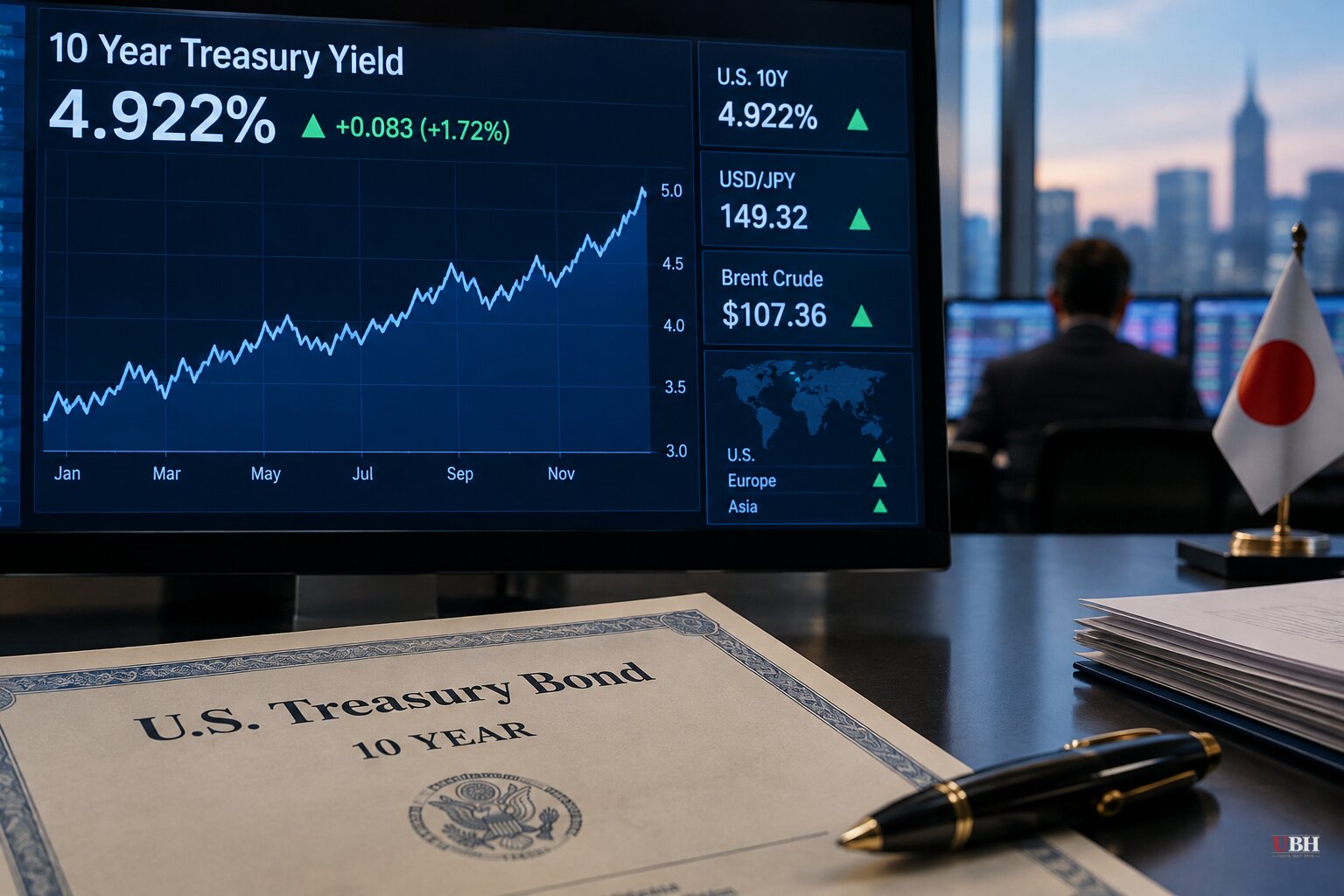
U.S. government borrowing costs are climbing fast, and three separate forces are colliding to push them there: Japan's currency defense, a possible pension-fund shift out of Treasuries, and a Middle East oil shock.
Yields Climb to Multiyear Highs
The 10-year Treasury yield rose 5 basis points to 4.85% on Sept. 9, its highest level since October 2023, according to the Epoch Times. By Thursday, Sept. 10, it had climbed further to 4.922%, matching post-pandemic peaks, according to Breitbart. The 2-year yield jumped 11.4 basis points to 4.541% the same day. Yields on German, U.K., French and Japanese government bonds rose in tandem, Breitbart reported. Nine of the S&P 500's eleven sectors fell Thursday, with only consumer staples in the green.
Japan's Pension Giant in the Spotlight
Japan's Government Pension Investment Fund, a $2 trillion investor, could sell as much as $62 billion of U.S. Treasuries without even needing a formal change to its asset-allocation policy, according to analysts at Banco Santander cited by Bloomberg. The speculation followed a meeting of GPIF's management team last month that fueled chatter the fund is reconsidering its foreign-bond exposure in favor of Japanese debt.
Japanese health minister Kenichiro Ueno, who oversees the fund, said Tuesday, Sept. 8, that officials are still deciding whether a formal allocation review is even needed, according to Bloomberg. No decision has been announced. The $62 billion figure is Santander's estimate of what GPIF could sell under its existing rules, not a confirmed plan.
Separately, Japan's Finance Ministry disclosed that the country's foreign securities holdings, an estimated 70% of which are U.S. Treasurys, fell $87.8 billion in August, according to the Japan Times. That decline lines up closely with Japan's record yen intervention: authorities spent ¥15.4 trillion, or $98.6 billion, defending the currency through Aug. 26, the largest monthly intervention on record, part of it conducted jointly with the United States.
The concern from bond investors is straightforward. If Japan's biggest holders of U.S. debt, its pension fund and its central bank, are both selling Treasuries at the same time, whether to fund yen defense or to chase higher yields at home, that adds real supply pressure just as the U.S. government needs buyers for its own growing debt load. That's a legitimate worry for anyone tracking who finances U.S. deficits.
The yen has strengthened almost 4% against the dollar over the past month, trading near 153, which suggests the intervention worked, at least so far, and reduces the urgency for further emergency sales.
The Treasury's Buyback Bet
Treasury Secretary Scott Bessent's department has been quietly working the other side of this. On Sept. 9 the Treasury bought back $6 billion in 10- and 20-year bonds, triple the normal amount and 50% more than the prior month's plan, according to the Epoch Times. That followed a $12.5 billion buyback unveiled Sept. 3 and a $4 billion buyback executed Aug. 25. The strategy: repurchase long-dated bonds and replace them with shorter maturities, one to 24 months, to try to hold down long-term rates.
Bessent, speaking at Southern Methodist University, said he has "asymmetric information" on the yen intervention that effectively makes him "the house," telling the audience, "you can bet against me if you want," per the Epoch Times. It's a bold claim from the man overseeing the buyback program, and one that puts his own credibility on the line if the yen or Treasury market moves against him.
Oil, Iran and the Fed
Layered on top is an energy shock. Brent crude crossed $107 a barrel and WTI neared $102, the highest levels since May, on renewed fighting in the Persian Gulf and fears the conflict tied to Iran will drag on, according to Breitbart. Iran's foreign minister told his Japanese counterpart that "significant progress" has been made on keeping the Strait of Hormuz shipping route open, according to Newsquawk, a notable de-escalation signal even as broader fighting continues.
Higher oil prices feed inflation expectations, which is part of why fed funds futures now price a 69.6% chance of a Federal Reserve rate hike at next week's meeting, per Breitbart. The Bank of Japan is separately expected to raise its own rate by a quarter point to 1.25% when its two-day meeting concludes Sept. 18, according to Kyodo News via Newsquawk, which would be Japan's highest policy rate in more than three decades.
CIFC Asset Management's Natalia Lojevsky told the Epoch Times that rising yields could become a "painful experience" for stocks: "Eventually, it starts to catch up, and I think that's what's happening."
Whether GPIF actually follows through on a Treasury sell-down remains an open question. Minister Ueno has committed to nothing publicly, and the fund's next formal update on its asset allocation has not been scheduled. The Fed's rate decision next week, and whether the Treasury's buybacks can hold the 10-year below 5%, are the more immediate tests.
Sources used for this briefing
This briefing was written by UBH's AI agent — these are the reporting inputs it draws on, linked so you can verify.


