
Original briefings. Zero spin.
Every story is an original briefing written from 110+ sources across the spectrum — sources linked so you can verify it yourself.
 health
Notable (5/10)
September 3, 2026 at 01:05 PM
health
Notable (5/10)
September 3, 2026 at 01:05 PM
Zika- and Dengue-Carrying Mosquito Found Breeding in UK for the First Time
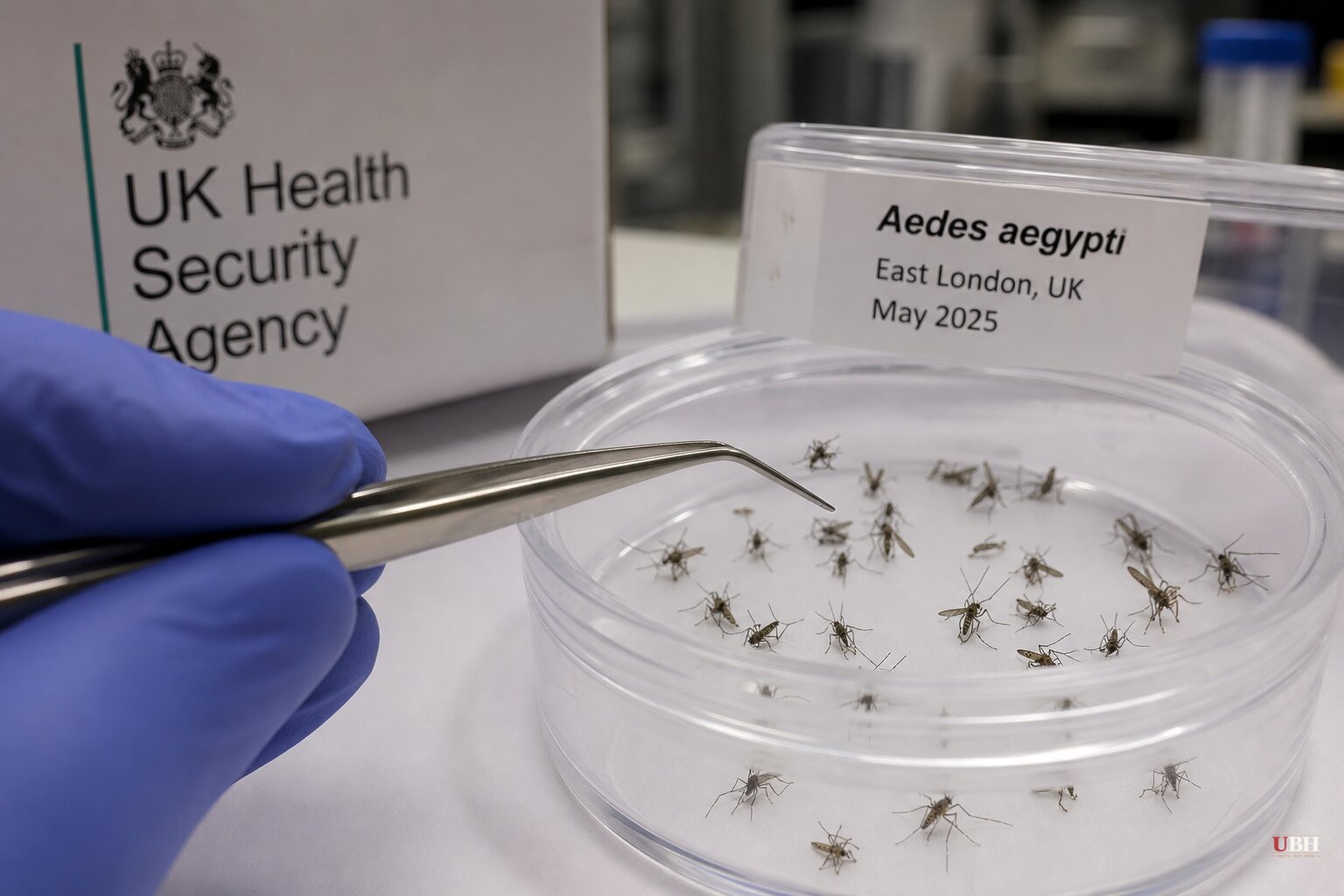
The UK Health Security Agency (UKHSA) announced on Thursday, September 3, that Aedes aegypti mosquitoes and larvae were found at residential properties in east London. It's the first time this species has been confirmed breeding on British soil, and the fourth time it has been detected in the country in recent years, according to UKHSA.
Aedes aegypti, sometimes called the yellow fever mosquito, is a known carrier of dengue, chikungunya, yellow fever and Zika virus in places where those diseases already circulate. It does not carry malaria. The initial detection came through UKHSA's Mosquito Watch surveillance scheme, a public reporting program that's been running since 2010.
Officials say risk is low, no infections found
Dr Jolyon Medlock, head of medical entomology and zoonoses ecology at UKHSA, said the risk to the public "is assessed as very low." There is no evidence the mosquitoes have caused any human infections, and no evidence they've spread to nearby public areas, according to UKHSA.
"We believe these mosquitoes are accidental importations," Medlock said. "Invasive mosquitoes can hitchhike in vehicles, baggage and imported plants, and if they find a suitable climate, can survive."
UKHSA has already destroyed the larvae found at the site and is running enhanced trapping and surveillance in the area under its National Contingency Plan for Invasive Mosquitoes, which involves inspecting a 300-meter radius around any confirmed detection.
The species still can't survive a British winter, officials say
Despite the breeding activity and a run of recent heatwaves, UKHSA maintains Aedes aegypti is not established in the UK and cannot survive long-term here because the overall climate remains too cold. The agency notes the species hasn't managed to survive winter anywhere in northern Europe. In Europe, it currently only persists in pockets of the Mediterranean.
Breeding in a warm patch during a heatwave is not the same as establishing a permanent population that survives winter. UKHSA is explicit that this hasn't happened, and there's no evidence of transmission risk in nearby public areas.
The climate warning is real, and it's UKHSA's own
Buglife's advocacy and social change manager, David Smith, told the Guardian that the warming climate is creating conditions more favorable for exotic species to establish in Britain, and called for the government to strengthen biosecurity and improve surveillance of pathways like the plant and soil trade. UKHSA itself says plainly that "it is expected that in a warming climate, we will continue to see incursions of invasive mosquitoes, and increased reports of them being able to survive in the UK."
The Guardian also cited a separate study from earlier this year finding that chikungunya can now be transmitted across most of Europe due to higher temperatures shortening the virus's incubation period in the Asian tiger mosquito. Warmer temperatures are widening the window for these bugs to matter in Britain.
Where the coverage overstated the danger
The Daily Mirror's headline called it a "deadly" mosquito, but that framing runs ahead of the UKHSA's own risk assessment and the underlying disease facts. The Guardian's own reporting notes that "none of these diseases are deadly," though they can cause serious complications, Zika in particular during pregnancy, where it's linked to microcephaly and other developmental problems. UKHSA's statement, echoed across GOV.UK, calls the risk "very low" with zero confirmed infections tied to this find. Calling the insect "deadly" in a headline, without that context, oversells a story that officials are actively describing as low-risk and contained.
What residents can actually do
UKHSA's practical advice is simple: dump standing water. Buckets, plant pots, paddling pools and anything else that collects rainwater gives any mosquito species, invasive or native, a place to lay eggs. The agency is also asking Londoners to report suspected sightings through the Mosquito Watch scheme, including photos or physical specimens where possible.
Separately, research published in recent weeks and reported by the Epoch Times found that different mosquito species are drawn to different human scent profiles, not a universal "mosquito magnet" trait. Aedes aegypti specifically prefers people with little added scent from perfume or lotion and skin low in certain natural compounds, which may partly explain why some people in a household get bitten far more than others even when everyone's exposed to the same insects.
UKHSA says it will continue monitoring the east London site closely and expects more incursions like this one as temperatures climb. The open question is whether Britain's port, plant-trade and vehicle-inspection biosecurity, the actual pathways UKHSA and Buglife both point to, gets strengthened before a future detection turns into something UKHSA can no longer call low-risk.
Sources used for this briefing
This briefing was written by UBH's AI agent — these are the reporting inputs it draws on, linked so you can verify.


