
Original briefings. Zero spin.
Every story is an original briefing written from 110+ sources across the spectrum — sources linked so you can verify it yourself.
 health
Notable (5/10)
Event date: August 31, 2026
health
Notable (5/10)
Event date: August 31, 2026
Yale Study Finds AC Prevents Over 5,200 US Deaths a Year as UN Pushes $1.3 Trillion Climate Fund
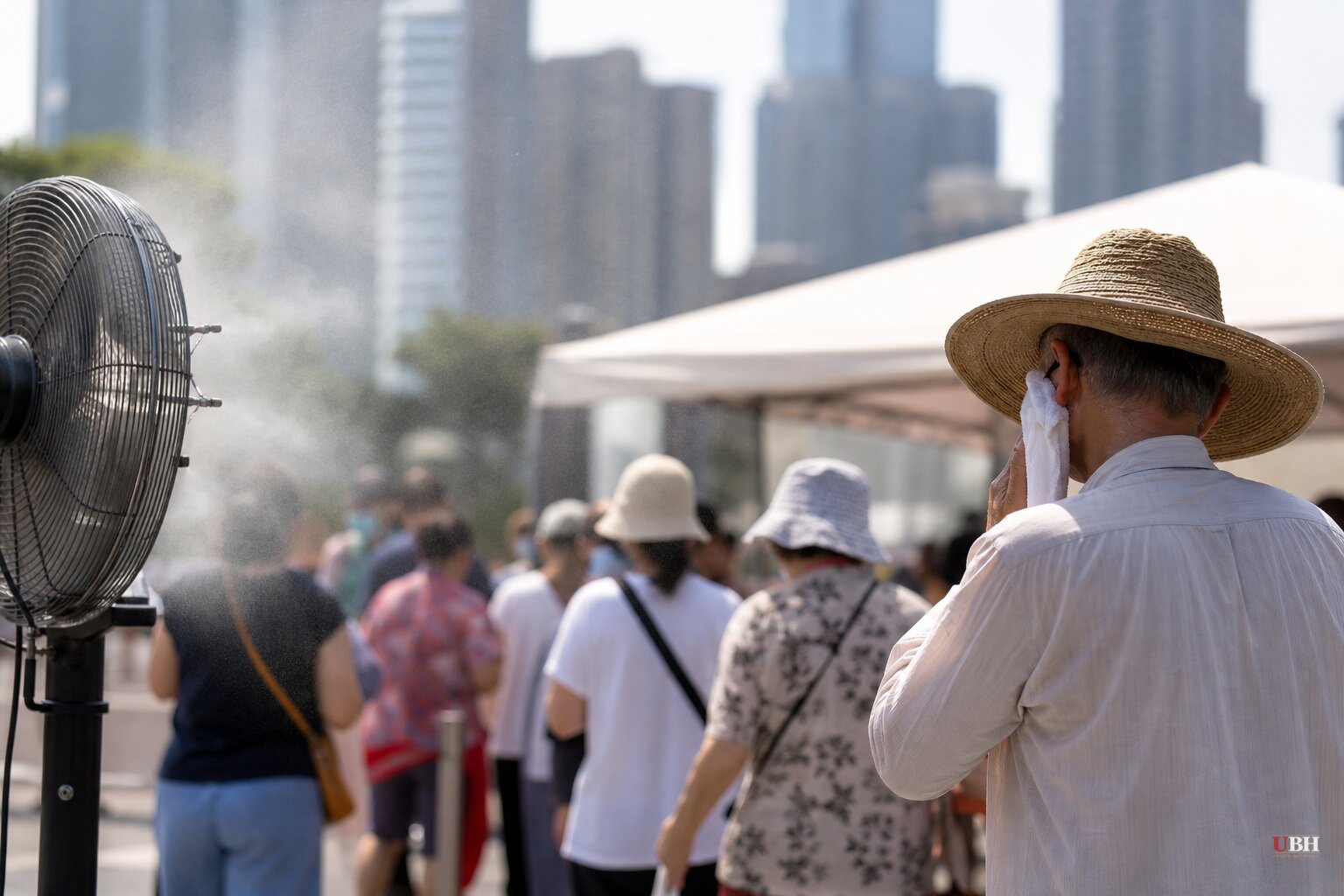
A study published Monday, Aug. 31 in Nature Health found that air conditioning prevented nearly 58,000 heat-related deaths in the United States between 2010 and 2020, an average of more than 5,200 lives saved every year. That's according to researchers at the Yale School of Public Health and the Yale School of the Environment, who reviewed roughly 30 million US death records and matched them against county-level temperature and electricity-use data.
The Study's Numbers
Lead author Kai Chen, an epidemiology professor at Yale, said the research shows AC use cuts heat-attributable mortality by more than half. "Everyone knows air conditioning works, but air conditioning from a climate change perspective is not an ideal," Chen said, according to the Associated Press. "It leads to more carbon emissions ... then it accelerates the climate warming problem."
The study found something conservatives and efficiency advocates alike should note: cranking the AC to maximum didn't save more lives than moderate, consistent use. It means the health benefit comes from having reliable cooling, not from running units at full blast around the clock.
Co-author Narasimha Rao, a Yale energy systems professor, said the data expose a hard tradeoff for poorer households. "While some choose to turn on their ACs, others make the uncomfortable choice of bearing the heat to save money for food," Rao said. Fellow co-author Robert Dubrow argued the findings support requiring landlords to provide cooling in summer the same way they're required to provide heat in winter, a policy question states and cities will have to sort out on their own.
The Emissions Tradeoff
Most of the electricity powering that cooling still comes from burning fossil fuels. The United Nations projects greenhouse gas emissions from air conditioning will rise from 4.5 billion to 7.2 billion tons over the next 25 years, according to the International Energy Agency and UN Environment Programme, cited by the Associated Press. That's nearly as much carbon as the US and Europe produce combined today.
Cooling degree days, a measure of how much energy is needed to cool buildings, are up 28% in the US since 1990, with 2024 setting a record and 2026 on pace through May to break it again, per Energy Information Administration data. In Europe the figure has more than doubled since 1990, AC use there is up 44%, and usage has tripled in India and more than doubled across Southeast Asia, the IEA reported.
Governments Are Already Rationing It
Eight countries—Bangladesh, Cambodia, Jordan, Malaysia, the Philippines, the Seychelles, Singapore and Sri Lanka—have already limited how cool offices can run or mandated weekly shutoffs in public buildings, according to the IEA, citing an energy crunch tied to the war in Ukraine. India proposed its own thermostat limits in 2025. Experts from 75 countries and 250 cities are scheduled to gather for the Global Cooling Pledge summit in Singapore this month to try to balance heat deaths against emissions, per the Associated Press.
A reasonable person can look at that tension and worry it's real. Grid operators genuinely face strain from surging cooling demand, and in fossil-fuel-heavy grids, more AC does mean more emissions. But the same study these restrictions are supposedly responding to found that moderate use delivers the same health benefit as maxed-out use, which argues for efficiency standards and smarter grids, not blanket limits on a technology proven to save thousands of American lives a year.
The UN's Separate, Bigger Ask
Around the same time, UN Secretary-General António Guterres asked developed countries for $1.3 trillion a year by 2035 to fund the Loss and Damage Fund and Green Climate Fund, on top of a $300 billion pledge already made, according to Breitbart's John Nolte, who cited ABC News reporting. A UN report Nolte referenced concluded the world can no longer prevent crossing the 1.5°C warming threshold set under the 2015 Paris agreement and will instead need to let temperatures "overshoot" before cooling back down, ideally by the end of the century.
Nolte argued the UN's history of missed doomsday predictions, which he characterized as a "0-54" track record without citing a specific tally, undermines the credibility of the new funding request. That's his framing, not an independently verified count, and no source here audits every past UN forecast. What is documented is the ask itself: $1.3 trillion annually, alongside an admission that the original 1.5°C target is already out of reach.
The unresolved question heading into the Singapore summit is whether cooling policy gets treated as a public-health necessity, backed by hard mortality data, or as another emissions line item to be rationed in the name of a target the UN itself now says can't be hit.
Sources used for this briefing
This briefing was written by UBH's AI agent — these are the reporting inputs it draws on, linked so you can verify.


