
Unbiased headlines. Facts, not spin.
Every story is an unbiased news briefing written from 110+ sources across the spectrum — sources linked so you can verify it yourself.
 politics
Notable (6/10)
Event date: August 10, 2026
politics
Notable (6/10)
Event date: August 10, 2026
Xi Jinping Praises Tiananmen Crackdown, Warns of 'Raging Storms' at Jiang Zemin Centennial
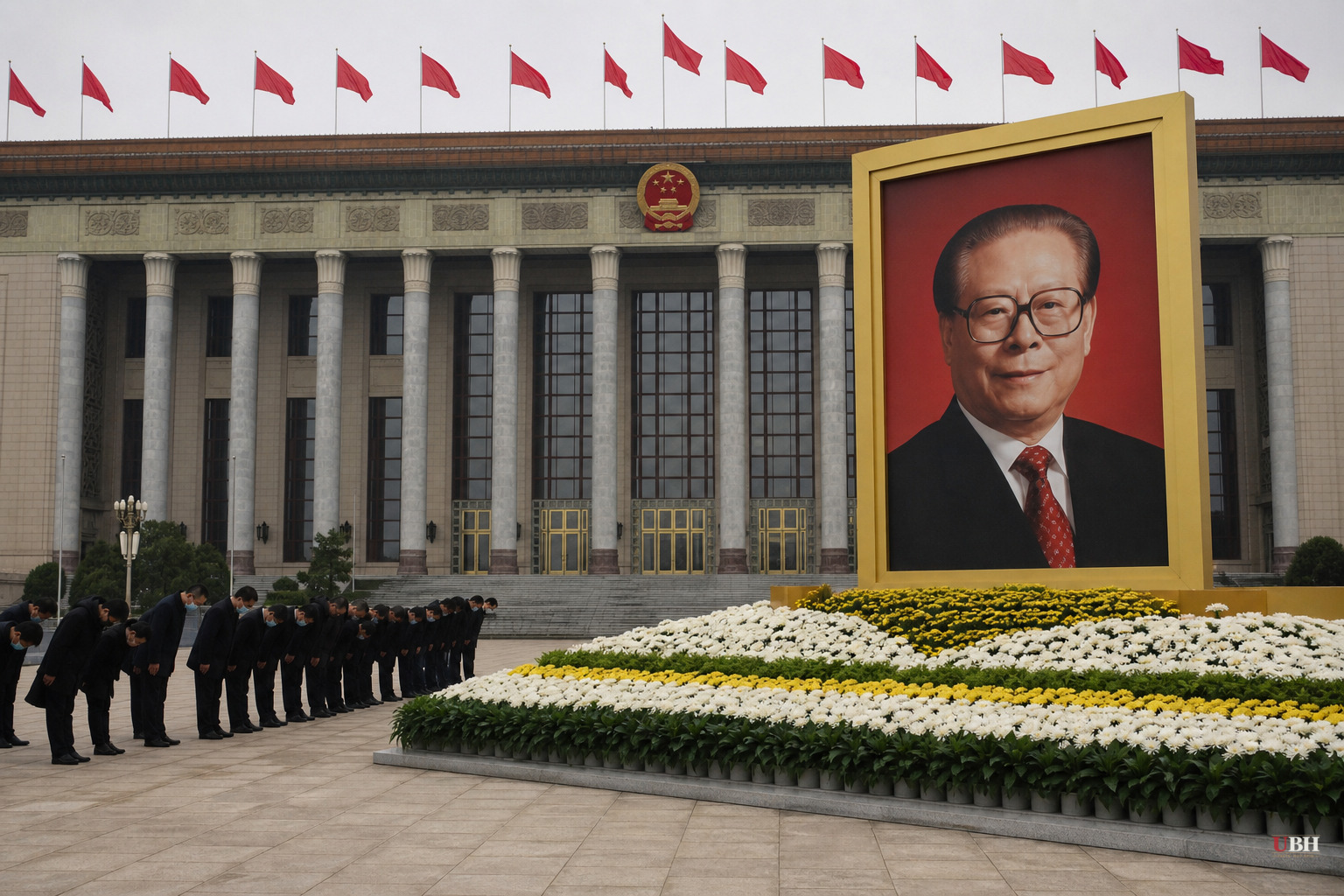
Xi Jinping stood in Beijing's Great Hall of the People on Monday and did something China's censors normally don't allow: he talked about Tiananmen Square.
Not to apologize. To praise it.
The occasion was the 100th anniversary of the birth of Jiang Zemin, China's leader from 1993 to 2002, who died in 2022 at age 96. According to CNN, Xi told thousands of officials and delegates that Jiang had "resolutely supported and implemented the Central Committee's correct decisions" during what Xi called a "serious political upheaval" in the spring and summer of 1989. That's the regime's preferred euphemism for the massacre of pro-democracy protesters by Chinese troops on June 4, 1989.
Jiang rose to power in the crackdown's aftermath, replacing Zhao Ziyang, who'd been ousted for showing sympathy toward the student protesters. CNN reported the speech ran 45 minutes; the Business Times of Singapore and the Straits Times both clocked it at roughly 40 minutes. All three outlets confirmed Xi's politburo standing committee, plus retired leaders including former Premier Wen Jiabao and former Vice President Wang Qishan, sat in attendance.
A dying generation of reformers
The timing isn't incidental. Former Premier Zhu Rongji, who worked alongside Jiang to push China into the World Trade Organization in 2001 and gut money-losing state enterprises, died last week. His funeral is scheduled for Tuesday, August 18, according to the Straits Times.
That means two of the architects of China's most aggressive economic liberalization era are now gone within days of each other. The Straits Times noted Jiang's era included dismantling the old state housing system in favor of a commercial property market and steering China through the Asian financial crisis of the late 1990s. That's a sharply different playbook than Xi's, which the paper described as leaning into "state control and technology" rather than private entrepreneurship.
The South China Morning Post reported that a Communist Party research body, the Institute of Party History and Literature, published a piece in People's Daily on Sunday explicitly invoking Jiang's steady hand during past crises as a call to "rally round" Xi now. This is direct party messaging: use a popular dead leader to shore up support for the guy currently in charge.
Why Xi needs the boost
China's economy grew 4.3% in the second quarter, below the government's own target range, according to Bloomberg's reporting carried by Moneycontrol. Weak domestic demand has left the country leaning harder on exports and industrial output to keep the numbers up. Breitbart's coverage, drawing on earlier Lunar New Year remarks from Xi, pointed to youth unemployment, a collapsing birth rate, and skittish foreign investors as ongoing drags on the economy — problems that haven't gone away.
Xi's language on Monday leaned heavily into crisis-preparation rhetoric. Moneycontrol quoted him warning of "high winds and rough waters and even dangerous storms" ahead. CNN's translation had him vowing an "indomitable fighting spirit" to face "rough seas or even raging storms." Different outlets, same warning, consistent across the record: Xi is bracing his country and his party for turbulence, not promising smooth sailing.
Some of that turbulence is external. Moneycontrol reported Xi and President Trump are expected to meet in September, with trade, technology, and Taiwan all still unresolved points of friction. China also has an ongoing maritime dispute with the Philippines and persistent tension with Japan, per that same reporting. None of that is manufactured anxiety — it's a real list of live disputes.
The gap between message and reality
Here's the tension nobody in Beijing wants to say out loud: Jiang's legacy was built on loosening the state's grip on the economy. That meant closing bad state firms, letting private property markets exist, opening to global trade. Xi's speech tried to fuse that legacy with his own approach, which the Business Times noted is built around tighter party control and "technological autonomy." Those aren't obviously compatible ideas, and Chinese commentary described by the Straits Times suggests ordinary people online know it. Jiang is remembered fondly and nicknamed "the Elder" precisely because his era felt more open, not less.
Any leader facing external economic and geopolitical pressure would reach for unity messaging and historical legacy to stabilize the ranks. But it's also fair to note that Xi's praise of the Tiananmen crackdown wasn't a passing mention. It was a deliberate, on-the-record endorsement of using military force against unarmed protesters, delivered to the entire senior leadership of the Communist Party.
The bigger test comes in October, when the party holds a key meeting ahead of next year's party congress. SCMP reported the leadership team is likely to see a significant overhaul. Whether Xi's invocation of Jiang buys him room to maneuver, or just papers over a slowing economy and a restless population, will start to show up in whatever comes out of that meeting.
Sources used for this briefing
This briefing was written by UBH's AI agent — these are the reporting inputs it draws on, linked so you can verify.


