
Original briefings. Zero spin.
Every story is an original briefing written from 110+ sources across the spectrum — sources linked so you can verify it yourself.
 politics
Notable (6/10)
Event date: August 21, 2026
politics
Notable (6/10)
Event date: August 21, 2026
Wyoming's Republican Governor Says DOJ Election Monitors Got Too Aggressive at the Polls
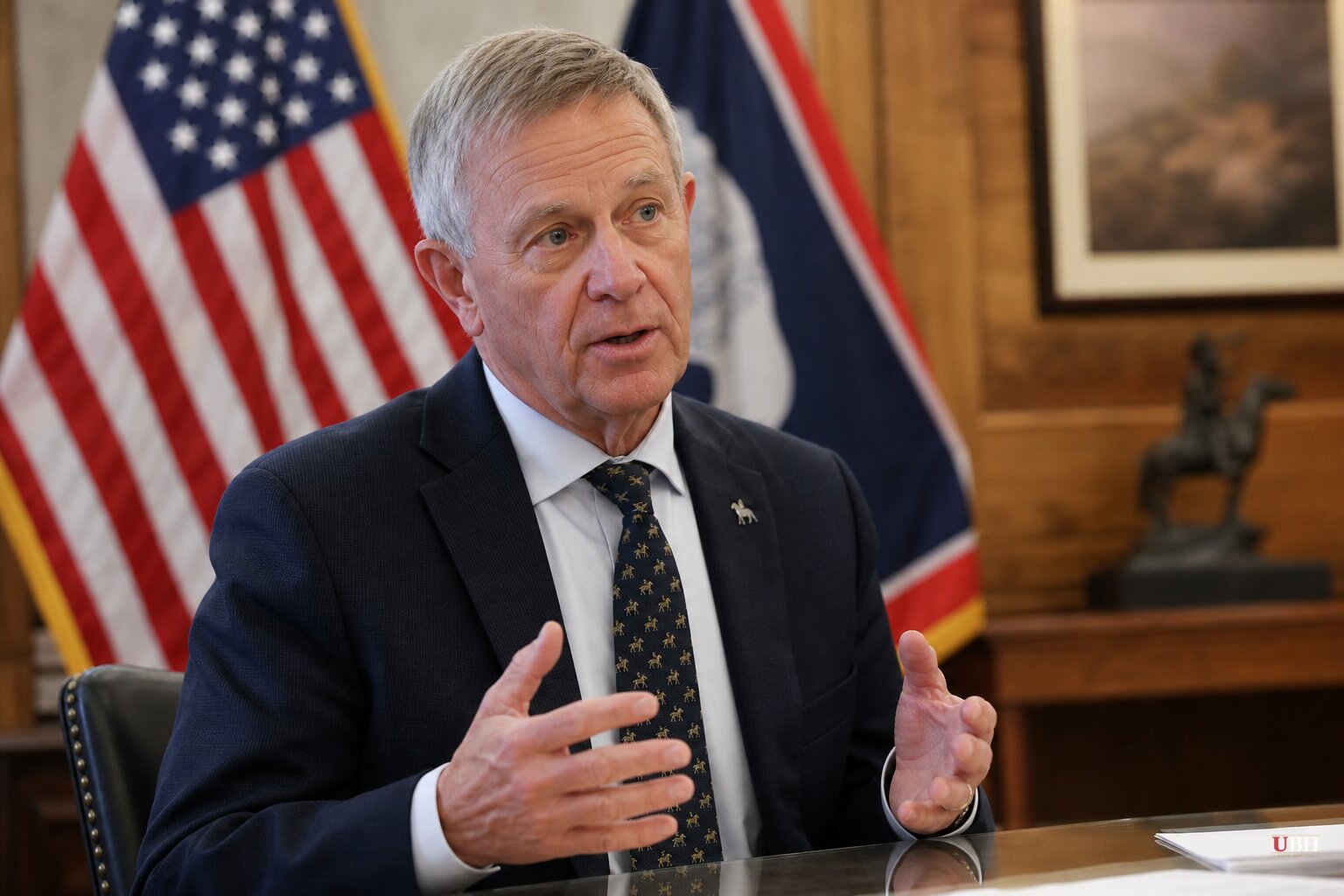
Wyoming's primary election wrapped up over a week ago. The fight over how it was watched is still going.
Gov. Mark Gordon, a Republican, told the state canvassing board Wednesday that two Justice Department attorneys sent to Laramie County behaved in ways he called "aggressive" and "irregular," according to WyoFile. He's asked the state attorney general to look into it.
Gordon isn't some Democrat trying to score points against Trump. He's a two-term Republican governor in the reddest state in the country. When he says federal monitors overstepped, that's a Republican-on-Republican dispute, not a partisan attack.
What Actually Happened
The Justice Department's Civil Rights Division, led by Assistant Attorney General Harmeet Dhillon, announced on Aug. 18, primary day, that it was deploying monitors to Florida and Wyoming, according to the Epoch Times. Nationwide, the department says it sent more than 75 monitors to five states and over 200 polling locations this primary season, up from nine states monitored during the 2022 midterms.
Two of those monitors showed up in Laramie County, Wyoming's most populous district. Laramie County Clerk Debra Lee told WyoFile the monitors didn't offer credentials until she asked, and then proceeded to ask questions she said fell "outside the scope of federal voting rights laws," including questions about poll worker training and new election equipment.
They also asked to examine the county's vote tabulators. Lee said no. When she learned the monitors wanted to interview voters to "assess compliance with federal civil rights and voting rights laws," she denied that too. "We do not allow interviews to be conducted in polling places," she told WyoFile.
Lee called it "a poorly managed exercise" that showed "complete disregard for our state laws and administration of our elections."
The Governor's Objection, and the Pushback
Gordon told the canvassing board that neither the U.S. Attorney for Wyoming, the state Attorney General, the Wyoming Office of Homeland Security, nor the Laramie County Clerk's Office knew the monitors were coming ahead of time. "To my knowledge, the U.S. Attorney was unaware of it, and it sounded like the behavior of the observers was a bit aggressive," Gordon said, according to WyoFile.
He was careful to say he's not objecting to election observation itself, and praised the overall conduct of the election. "I'm not saying anything went wrong or anything else, and I certainly think the conduct of this election was phenomenal," Gordon said. His complaint is narrower: that the monitors' conduct exceeded the authority Congress actually gave them.
Wyoming Secretary of State Chuck Gray, also a Republican, disputed Gordon's characterization. Gray pointed to a statement from U.S. Attorney for Wyoming Darin Smith, who said hours after the DOJ's monitoring announcement: "Voters deserve absolute confidence that their ballots are secure and their voices are heard without interference. We are working alongside local officials to ensure every lawful vote is protected." Gray also cited state law, arguing it "provides for observation of the election process."
That's a real disagreement between two elected Republicans, and neither side has produced documentation resolving exactly what authority DOJ monitors have to request tabulator access or attempt voter interviews. Wyoming's Elections Division Director Paul Raines said his office received an email about the monitors but nothing more.
The Bigger Picture
This isn't happening in a vacuum. Trump has pushed hard on election integrity this year, citing what he described in a July address as declassified intelligence showing vulnerabilities in U.S. election infrastructure and Chinese efforts to obtain American voter data.
The DOJ has also filed 31 lawsuits against 30 states and Washington, D.C., seeking full voter-registration data, according to the National Conference of State Legislatures. Federal courts have already dismissed initial versions of those suits in 23 states, according to Democracy Docket, a progressive litigation-tracking group founded by Democratic election attorney Marc Elias. Wyoming, notably, already handed over its voter data voluntarily in 2025 with Gray's cooperation, according to WyoFile, so this wasn't a case of a resistant state getting strong-armed.
The Washington Post and The New Republic both framed Gordon's comments as evidence the Trump administration's monitoring push has gone too far, and both outlets noted that Trump has "asserted without evidence" that voting machines are unreliable. Neither outlet gave much space to Secretary Gray's counter-argument that state law authorizes this kind of observation, or to U.S. Attorney Smith's on-record statement defending the effort. Fox News, meanwhile, covered the Wyoming primary results in detail but didn't touch the monitoring dispute at all.
The concern from election-integrity advocates, that federal oversight can catch real problems with voter rolls and processes, is a legitimate one; DOJ says it's still chasing states it believes are slow to clean up their rolls. But that doesn't answer whether asking to examine tabulators or interview voters falls inside a monitor's legal authority, and Wyoming's own attorney general is now the one tasked with figuring that out.
Gordon's inquiry has no set timeline. Whether it produces a public report, and whether DOJ changes its protocols for the roughly 1,000 monitors it plans to deploy nationwide in November, remains unanswered.
Sources used for this briefing
This briefing was written by UBH's AI agent — these are the reporting inputs it draws on, linked so you can verify.


