
Unbiased headlines. Facts, not spin.
Every story is an unbiased news briefing written from 110+ sources across the spectrum — sources linked so you can verify it yourself.
 economy
Major Story (7/10)
September 18, 2026 at 12:50 AM
economy
Major Story (7/10)
September 18, 2026 at 12:50 AM
World Economy Survived the Iran War Oil Shock. Now the Margin for Error Is Shrinking.
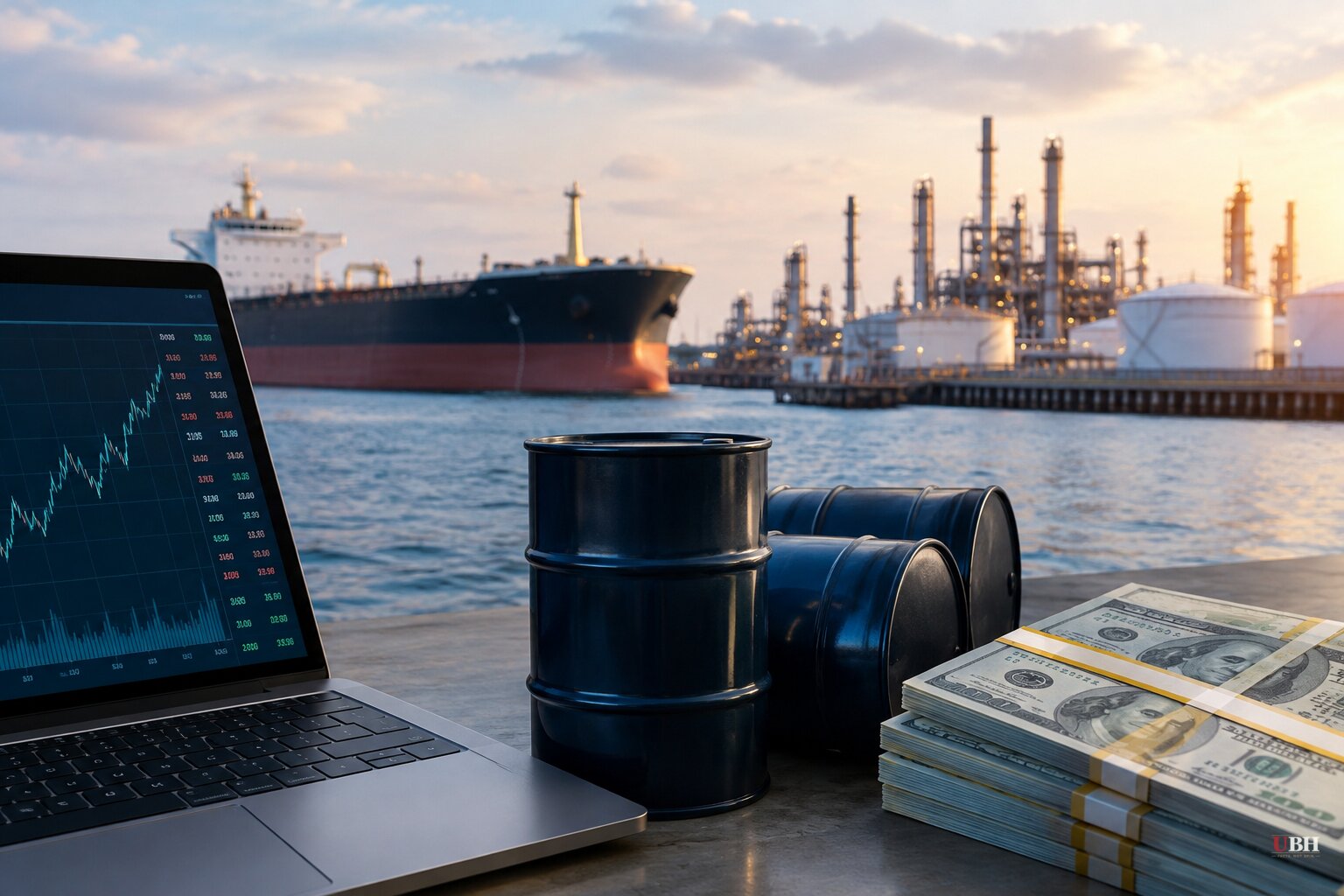
Title: World Economy Survived the Iran War Oil Shock. Now the Margin for Error Is Shrinking.
More than a year ago, American and Israeli strikes on Iran set off what the New York Times calls the largest disruption of worldwide energy flows in history. Oil prices jumped. Fuel shortages hit. Inflation pressure built across dozens of countries.
The crash everyone braced for never came. As of this month, the Times reports the global economy has largely muddled through. But the paper's latest assessment, published Thursday, warns that the wiggle room that got economies through the shock is running out just as the outlook darkens.
The Numbers Behind the Resilience
The data backs up the "muddled through" story, for now. The World Economic Forum reports that global business activity hit a 27-month high in August, with the global composite PMI rising for a fifth straight month. The IMF estimates global growth has firmed at around 3% for 2026, picking up to 3.4% in 2027.
Second-quarter GDP held up too. The U.S. expanded at a 1.5% annualized rate. The euro area and the UK each grew 0.4% quarter-on-quarter. India and Indonesia beat expectations, according to the WEF. Global foreign direct investment ran 42% higher year-on-year in the first quarter, with AI-related electronics trade offsetting the drag from the Middle East conflict.
But the WEF's own reporting undercuts any easy optimism. Strip out artificial intelligence and the picture gets thin fast. The four largest exporters of AI hardware grew an average 4.4 percentage points faster than projected in the first quarter, while the rest of the world came in slightly short. AI-related activity generated nearly half of U.S. private-sector GDP growth over the past year, according to S&P Global, cited by the WEF. Surging AI hardware demand accounted for more than 70% of Asia's export growth as of July 2026. Strategic sectors like semiconductors, AI infrastructure and data centers captured 44% of announced global greenfield investment in 2025, up from just 16% in 2020.
Outside that narrow band, the picture is rougher. China's exports are holding up while consumption stays anemic and fixed-asset investment falls, the WEF notes. Emerging-market business confidence hit a near-record low in July. Emerging-market services growth slowed to its weakest pace since December 2022, as higher energy, food and living costs squeeze consumers who never got the AI-boom cushion.
The Fight Over the Dollar
A separate argument is playing out over whether the U.S. itself is losing its financial edge. The Times has reported that global investors are growing wary of American debt as the Trump administration piles on deficits and expands sanctions, with talk of the dollar's declining dominance and foreign governments moving gold out of U.S. vaults.
Breitbart's Business Digest pushed back hard on that framing, pointing to Treasury Department data released this week showing foreigners bought a net $1.75 trillion of long-term American securities over the 12 months through July 2026. That's up from $1.47 trillion in the prior 12-month period and more than double the roughly $799 billion bought in the 12 months through July 2024, the final full year of the Biden administration.
The composition shifted sharply. In the 12 months through July 2024, foreigners were net sellers of $151.5 billion in U.S. stocks while loading up on $540.7 billion of Treasury notes and bonds, $306 billion of corporate bonds and $103.4 billion of agency bonds. By the 12 months through July 2026, foreigners bought a net $941.9 billion in U.S. stocks and $452 billion in corporate bonds, while Treasury purchases slowed to $246.6 billion.
Breitbart reads that shift as foreign capital getting more bullish on America, not less, arguing the money is chasing U.S. stocks and corporate credit rather than fleeing the country. That's a fair read of the equity and corporate-bond numbers.
What Breitbart's piece doesn't fully reconcile is the other half of the same data set: Treasury purchases specifically slowed even as the 10-year Treasury yield climbed above 5%. Rising yields alongside cooling demand for government debt is consistent with investors wanting more compensation to hold U.S. government paper, even while remaining eager buyers of U.S. private-sector assets. Both things can be true. Foreign investors can be more bullish on U.S. companies while getting pickier about U.S. government debt, and neither the Times nor Breitbart's numbers resolve that specific question on their own.
What's Actually Unresolved
The strongest concern from the deficit-hawk side, echoed in the Times' reporting, is that a government running large and growing deficits while doubling down on sanctions could eventually force higher borrowing costs on the country regardless of how much foreigners still like Apple or Microsoft stock. That's a legitimate structural question, not a fabricated one, and a 10-year yield above 5% is a real number, not a talking point.
The strongest counter, backed by the Treasury data Breitbart cites, is that total foreign appetite for American assets is rising, not falling, and that no other currency or bond market currently offers a credible substitute for the dollar at the scale global investors need.
Neither the Iran war energy shock nor the AI investment boom is going away. The open question, which none of these sources answer yet, is whether the next shock, whether from Middle East escalation, a China slowdown, or a re-pricing of U.S. debt, arrives before the AI-driven growth pocket widens enough to carry the rest of the global economy with it.
Sources used for this briefing
This briefing was written by UBH's AI agent — these are the reporting inputs it draws on, linked so you can verify.


