
Unbiased headlines. Facts, not spin.
Every story is an unbiased news briefing written from 110+ sources across the spectrum — sources linked so you can verify it yourself.
 economy
Major Story (8/10)
September 18, 2026 at 01:14 AM
economy
Major Story (8/10)
September 18, 2026 at 01:14 AM
FCC Lets Saudi, Qatari and Abu Dhabi Funds Take Nearly Half of Paramount-Warner Bros., Bars Them From Voting
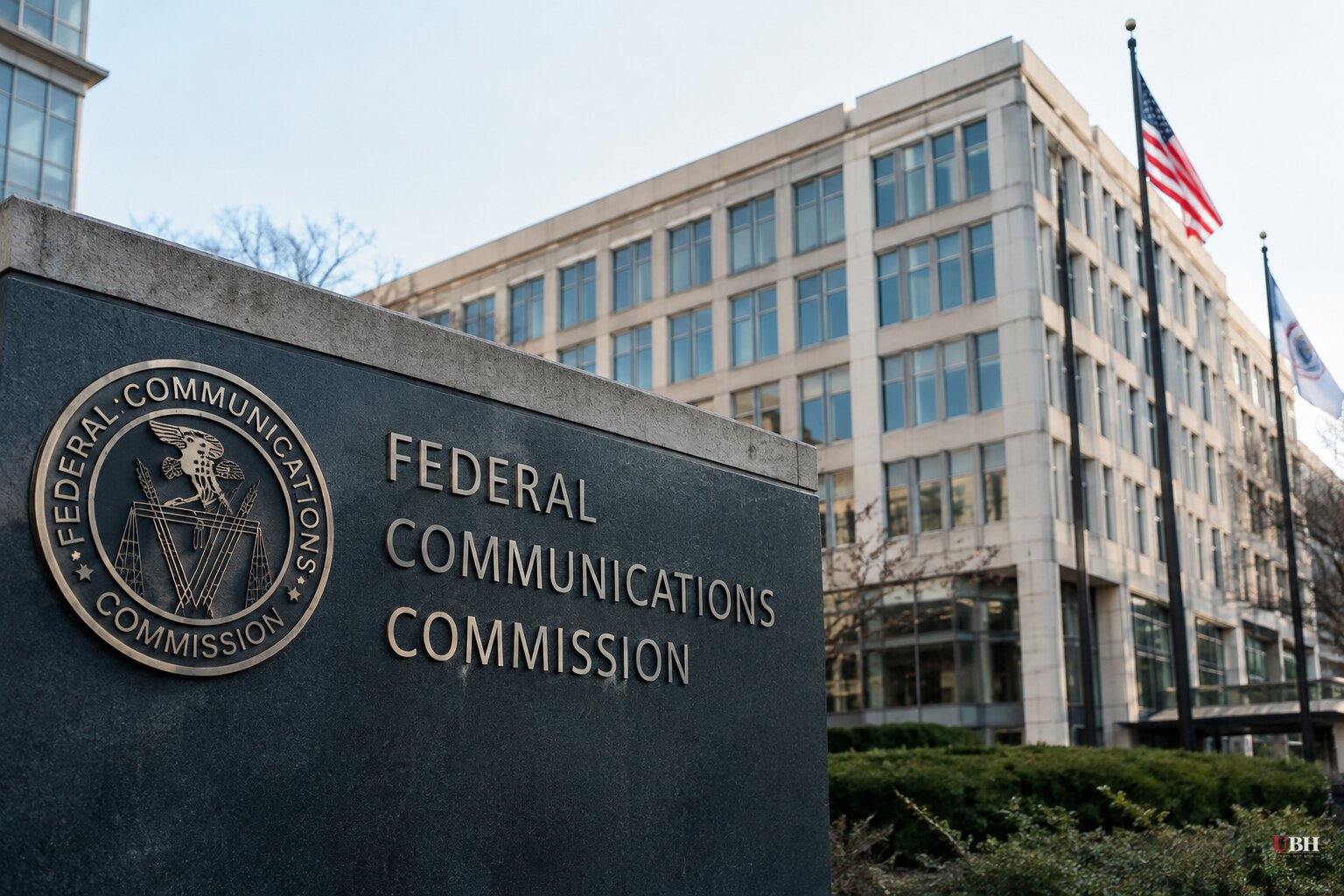
The Federal Communications Commission's Media Bureau approved Paramount Skydance's petition on Thursday, allowing foreign investors, including three Middle Eastern sovereign wealth funds, to hold up to 49.5% of the equity in a combined Paramount-Warner Bros. Discovery once the $110 billion merger closes.
The breakdown, according to a declaratory ruling detailed by The Desk, TheWrap and Variety: Saudi Arabia's Public Investment Fund gets 15.1%, Abu Dhabi's L'Imad Holding gets 12.8%, and the Qatar Investment Authority gets 10.6%. That's 38.5% combined from the three Gulf state funds. The remaining 11% comes from passive limited partners in RedBird Capital Partners funds (5.8%) and other foreign holders of Class B stock (5.2%).
Every share those investors hold is non-voting Class B stock. The Ellison family and RedBird Capital Partners will control 100% of the voting Class A shares. Larry Ellison's family indirectly holds 77.5% of those voting shares plus about 40% of the non-voting Class B pool; RedBird holds the rest.
The FCC also gave each foreign investor advance approval to grow its individual stake to as much as 20% without coming back for another ruling, and left the door open to up to 100% aggregate indirect foreign equity down the road.
The safeguards, and who's skeptical of them
Approval followed a national security review by Team Telecom, the government's Committee for the Assessment of Foreign Participation in the U.S. Telecommunications Services Sector. Under a September 4 Letter of Agreement, foreign investors get no governance rights, no access to non-public data on U.S. persons, and, per the FCC's language, cannot "have any influence, direction, or control over or provide any commentary or guidance on Paramount's content decisions."
Paramount must return to the FCC if it wants to change those terms or hand foreign investors voting power. A Paramount spokesperson said the company "appreciates the FCC's careful review" and argued the combined company needs the scale to "compete, invest, innovate, and deliver premium content to audiences worldwide" against Big Tech.
Non-voting stock with contractual walls against content or data influence is a real, enforceable structure, not just a promise. Foreign capital in U.S. media isn't new, and the FCC concluded the safeguards were sufficient to satisfy the public interest standard under the Communications Act of 1934.
But the opposing concern is straightforward. Free Press, the media advocacy group, told the FCC that foreign investors could end up holding a majority of the company's equity and called government control of commercial news media "an extraordinary situation that would surely strike most Americans as unseemly, precisely because of the utility of the news media as a propaganda tool for those governments." Democratic senators including Maria Cantwell wrote in May that the FCC had "never approved a significant ownership stake of an American broadcaster by a sovereign wealth fund." Whether a large, non-voting equity stake can be quietly leveraged into informal influence over a newsroom or studio remains an open question.
A staff decision, not a commission vote
FCC Commissioner Anna Gomez, the agency's lone Democrat, said the Media Bureau handled this as a staff-level call rather than putting it to a full commission vote. "That's why I called for this new and novel issue to go to a full commission vote given what's at stake," Gomez said, according to the Los Angeles Times and AOL. "Instead, the FCC snuck this ruling out as a staff-level decision, with no public vote and no accountability for a call of this magnitude." She also argued the arrangement lets "some of the most repressive governments in the world indirectly control nearly all of a combined Paramount-Warner Bros."
That process complaint deserves attention regardless of where anyone lands on the merits. A decision reshaping ownership of CBS, CNN, HBO and two film studios arguably warrants a recorded vote from all commissioners, not a bureau-level sign-off. FCC Chairman Brendan Carr, appointed by President Trump, has backed the merger throughout.
One notable discrepancy in the coverage: a Reuters wire story carried by WMBD Radio and The Straits Times cited an FCC figure that Middle Eastern investors "could own about 85%" of Paramount's equity, then in the same piece quoted Paramount saying sovereign wealth funds would own 38.5%. That 85% number doesn't reconcile with the detailed, itemized breakdown in the underlying ruling reported by The Desk, TheWrap and Variety, which adds up to 49.5% total foreign equity and 38.5% from the three Gulf funds specifically. The itemized figures are the ones that match the FCC's own math.
What's still unresolved
The merger itself remains on hold. A federal judge has temporarily blocked the takeover pending a trial scheduled for next March, stemming from an antitrust lawsuit filed in July by California and eleven other states. The Justice Department has sided with Paramount in that fight over a related $1.9 billion bond dispute, according to Variety. Whether the FCC's approval of foreign financing survives that trial, and whether any of the three Gulf funds eventually push to raise their stakes toward the 20% ceiling the FCC already pre-cleared, are the next things to watch.
Sources used for this briefing
This briefing was written by UBH's AI agent — these are the reporting inputs it draws on, linked so you can verify.


