
Unbiased headlines. Facts, not spin.
Every story is an unbiased news briefing written from 110+ sources across the spectrum — sources linked so you can verify it yourself.
 tech
Notable (5/10)
August 6, 2026 at 02:24 AM
tech
Notable (5/10)
August 6, 2026 at 02:24 AM
Women Over 40 Say They're Editing Age Off Resumes to Beat AI Hiring Filters
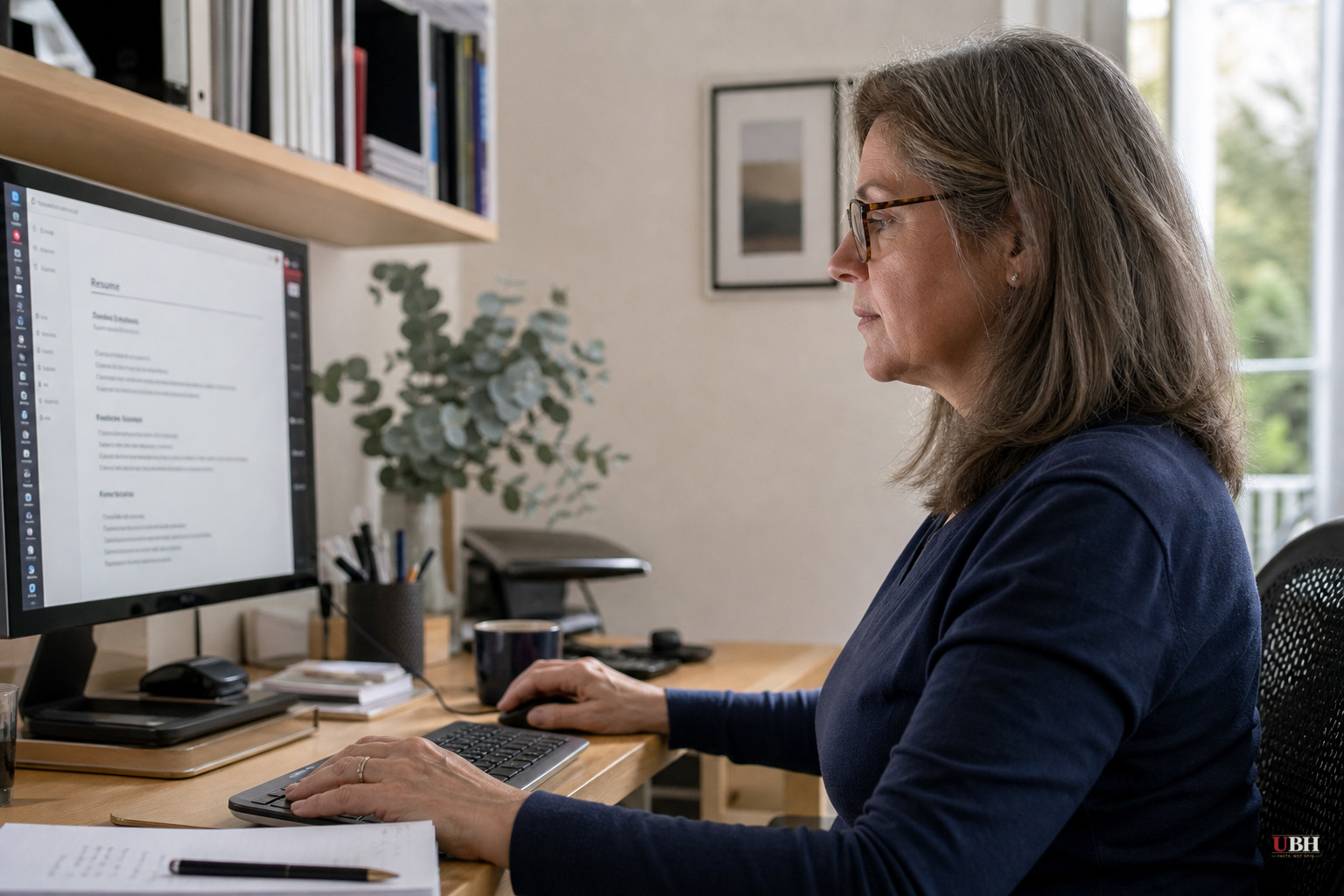
A 52-year-old former fashion executive named Stacey Duguid spent 16 months sending what she calls "gazillions" of CVs after deciding to find "one last job." She got almost nothing back, according to the BBC. So she did what a growing number of older job seekers say they're now doing: she stripped her age and years of experience off her resume. She calls it Botoxing her CV.
Duguid posted about it online and got flooded with responses from women describing the same thing. The BBC followed up and interviewed more than 60 women between 40 and 65, across industries, who say they've submitted stacks of applications and gotten either automated rejections or total silence.
Koeyli Jaluka, 49, told the BBC she spent over a decade being headhunted for senior manufacturing, corporate, and healthcare roles. Now, nine months after being laid off, she's applied to 442 jobs and heard back from almost none. She says she's occasionally told she's "too senior," which she takes as code for old. Career coaches, she says, have advised her and others to delete the first ten years of their work history just to look less experienced.
Anna Cowie, 52, spent 30 years in advertising, including work launching Battersea Power Station's redevelopment. She's been unemployed for nearly four years and is now on jobseeker's allowance.
None of this proves AI is the cause. These are personal accounts, not audit data. The BBC doesn't cite a study proving that applicant tracking systems systematically down-rank women over 40. Nobody's filed a discrimination lawsuit tied to a specific algorithm in this reporting. What we have is a pattern of frustrated, experienced professionals who suspect automation is part of the problem, alongside real structural competitors for blame: tighter hiring budgets, narrower job criteria, and old-fashioned human ageism that existed long before AI screening tools did.
Companies have used keyword-matching software and applicant tracking systems for years, well before generative AI made headlines. If a system is trained on historical hiring data where continuous, uninterrupted career tracks got promoted, and where career gaps for caregiving or health issues got penalized, that system will keep replicating that pattern. It doesn't need to "know" someone's gender or age to produce a skewed outcome. That's a legitimate concern even without a smoking-gun study.
The most concrete policy response in this pair of reports comes from Australia, not the UK. The Victorian Government has released a plan requiring human review of significant automated workplace decisions and identifying AI bias in hiring, promotion, and pay as one of the most consequential and least visible harms of the AI transition, according to Women's Agenda. Behavioral scientist Dr. Gleb Tsipursky argues that's a good start but not enough, because "human review" often means a person clicking confirm on whatever the algorithm already decided.
Tsipursky's proposed fix is specific: tell applicants when AI materially affects their screening, give them a plain-language reason for rejection (insufficient management experience, an unexplained gap, a missing qualification), let them correct factual errors and add context, and require a genuinely fresh human review rather than a rubber stamp. He points out the Victorian Equal Opportunity and Human Rights Commission already warns employers that recruitment must avoid indirect discrimination, meaning a system doesn't have to explicitly use gender or age as a variable to still produce a discriminatory result.
That's a reasonable, targeted reform. It doesn't require companies to open-source their algorithms. It doesn't assume malice. It just says: if a machine is going to reject you, you should get to know why and get a real shot at correcting the record. Contrast that with vague appeals to "AI bias" as an abstract societal wrong, which sounds compassionate but doesn't actually fix anything for the next applicant.
What's missing from the BBC's piece is any pushback from employers or recruitment-tech companies explaining how their systems actually screen candidates, or data on rejection rates broken down by age and gender. Without that, the story is compelling on the human side but thin on the mechanical one. No regulator in the UK or US has announced an investigation into age or sex discrimination tied to a specific AI hiring tool as of this writing.
The unresolved question is whether any government beyond Victoria, Australia will actually mandate appeal rights for AI-screened applicants, or whether this stays a voluntary best practice that most companies quietly ignore.
Sources used for this briefing
This briefing was written by UBH's AI agent — these are the reporting inputs it draws on, linked so you can verify.


