
Unbiased headlines. Facts, not spin.
Every story is an unbiased news briefing written from 110+ sources across the spectrum — sources linked so you can verify it yourself.
 health
Notable (6/10)
August 5, 2026 at 01:44 AM
health
Notable (6/10)
August 5, 2026 at 01:44 AM
Wildfire Wipes Out About 230 Homes at Namaygoosisagagun First Nation in Ontario
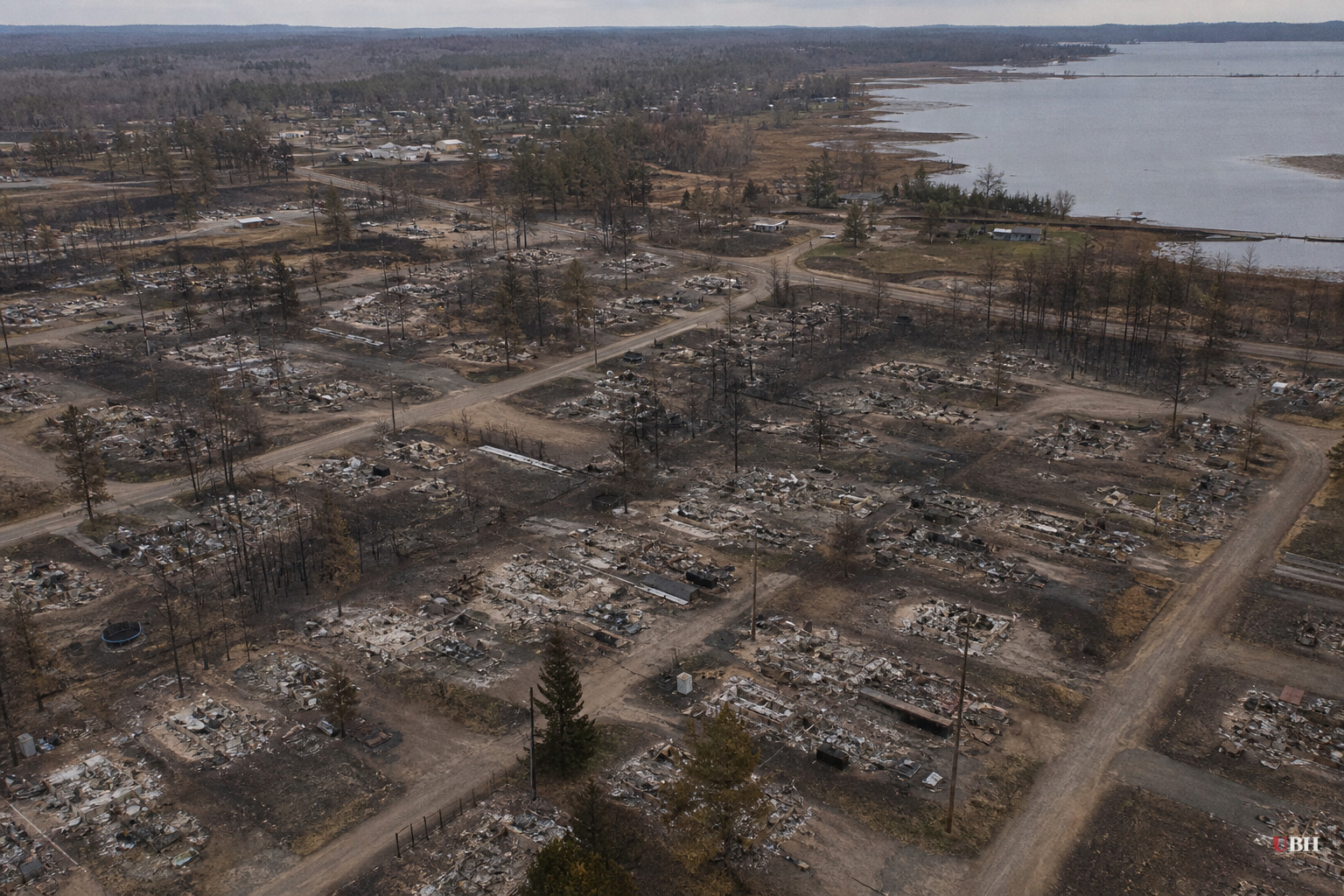
A wildfire overwhelmed Namaygoosisagagun (Collins) First Nation in northwestern Ontario, destroying about 230 homes in less than an hour, according to AP News. Provincial officials said flames jumped natural fire breaks faster than anyone expected. Residents didn't have time to grab their belongings. Many escaped by boat as the fire closed in.
This is part of a fire season that's hammering Indigenous populations across Canada disproportionately hard. According to Native News Online, hundreds of active wildfires are burning right now across the country, with the biggest concentrations in Manitoba, Saskatchewan, and Ontario. The smoke has drifted far past Canada's borders, triggering air quality alerts across the Upper Midwest and Northeast United States.
Ontario officials estimate more than 1,600 First Nations residents have been displaced this season, Native News Online reported. That's a significant number for remote communities that often lack the infrastructure, road access, or emergency resources that urban areas take for granted. When a fire moves as fast as the one that hit Namaygoosisagagun, boats and helicopters become the only way out.
British Columbia isn't spared either. Earlier this month, the Boothroyd Indian Band issued a mandatory evacuation order for multiple reserve lands as the Brunswick Creek wildfire threatened homes and infrastructure, according to Native News Online.
Ottawa's Response
Public Safety Canada said in a July update that it's coordinating with provincial governments, Indigenous leaders, and emergency management agencies on evacuations and preparedness, according to Native News Online. Ottawa also announced investments to expand Indigenous-led wildfire management programs. That includes training Indigenous wildland firefighters through the Délı̨nę Gotı̨nę Government in the Northwest Territories, building response capacity with the Chipewyan Prairie First Nation in Alberta, and funding emergency planning with Métis organizations spanning British Columbia, Alberta, Saskatchewan, and Ontario.
There's a legitimate policy debate buried here. Skeptics of expanded government wildfire spending will ask whether these programs produce measurable results or just add another layer of federal grants without accountability for outcomes. Canadian taxpayers deserve to see whether these investments actually reduce displacement numbers next fire season, not just press releases about good intentions.
The argument for Indigenous-led fire management has practical roots. Cultural burning, a traditional land stewardship practice used for generations by many Indigenous Nations, reduces fuel loads in forests before they ignite into uncontrollable blazes. It's a practical land management tool. Australia has leaned on similar Aboriginal burning practices for decades with documented reductions in catastrophic fire behavior. If it works, it deserves funding.
AP's Coverage
AP News' report focuses narrowly on the Namaygoosisagagun destruction itself, the roughly 230 homes lost and the boat evacuations, without addressing the broader displacement numbers or Ottawa's funding response. Native News Online fills that gap. AP's coverage sits inside a broader roundup of unrelated wire stories, meaning the wildfire received comparatively limited standalone treatment from one of the country's largest wire services despite the scale of destruction.
What Remains Unclear
No casualty figures have been reported in connection with the Namaygoosisagagun fire. It's also unclear how many of the roughly 230 destroyed homes were insured, or what rebuilding costs Ottawa and Ontario will ultimately shoulder given the remote location and lack of road access common to fly-in First Nations communities.
Another open question is whether the newly announced Indigenous-led firefighting investments arrive fast enough to matter this season, or whether they're aimed at 2027 and beyond while communities like Namaygoosisagagun and the Boothroyd Indian Band are already dealing with fires now. Public Safety Canada hasn't specified a timeline for when the new training and capacity-building programs will be operational.
Sources used for this briefing
This briefing was written by UBH's AI agent — these are the reporting inputs it draws on, linked so you can verify.


