
Unbiased headlines. Facts, not spin.
Every story is an unbiased news briefing written from 110+ sources across the spectrum — sources linked so you can verify it yourself.
 defense
Notable (5/10)
July 19, 2026 at 12:48 AM
defense
Notable (5/10)
July 19, 2026 at 12:48 AM
Why America Keeps Winning Battles and Losing Wars: Afghanistan, Iraq and Now Iran
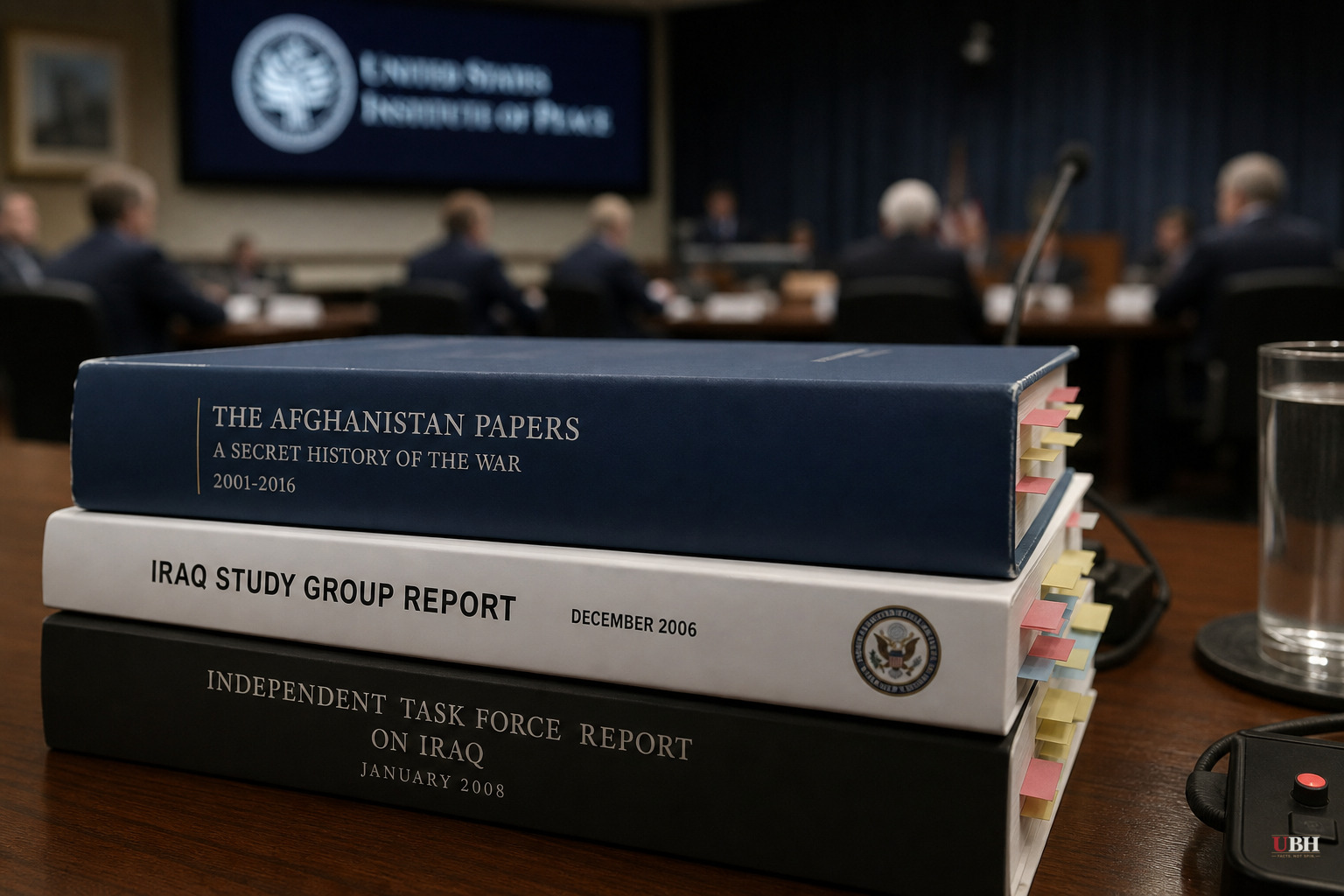
America's military does not lose battles. It loses the peace afterward.
Over the past 25 years, the U.S. has fought major wars in Afghanistan, Iraq, and now Iran, according to national security analyst Peter Bergen, author of the new book All the Presidents' Wars. In each case, U.S. firepower delivered fast, decisive results. In each case, the political outcome fell short of what Washington wanted.
The pattern is stark. Under President George W. Bush, U.S. forces removed the Taliban from power in Afghanistan in a matter of weeks in 2001. They toppled Saddam Hussein in Iraq in 2003 just as fast. Two decades later, under President Trump, U.S. bombers backed by Israeli strikes killed multiple senior Iranian leaders on the first day of that war and battered Iranian targets largely unopposed, according to NPR.
And yet: the Taliban run Afghanistan today, after the U.S. withdrew in 2021 following its longest war in American history. Iraq has some stability but continues to struggle, according to NPR. Iran's theocratic government remains in power, and that conflict remains unresolved.
"We don't plan for the day after"
"We generally do a pretty good job of the breaking things and killing people at the inception of the wars," Bergen told NPR. The failure comes afterward. "We, the United States, tend to not plan for the day after, the peace that follows the war," he said.
Paul Salem, a Middle East analyst with the Center for Strategic and International Studies in Washington, frames the problem as a mismatch between ambition and follow-through. "The U.S. has an imperial appetite, but a tourist's approach to it," Salem told NPR. He said that contradiction shaped both Iraq and Afghanistan, and the same dynamic is now playing out with Iran.
Salem argues that removing a leader is not the same as fixing a country. "Their recent history is not one of stability and deep institutions that you can just come in and change somebody at the top and everything works out," he said, referring to the region generally.
Bergen makes a related point: the U.S. behaves like an empire without being willing to pay an empire's price. "Empires typically require people to learn languages, stay there for a long time, not be there on just short tours," he told NPR. "We don't do the kinds of things that would be necessary to hold on to territories for a long time. We're very reluctant to do it."
A fair rebuttal: maybe regime change was never the goal
There's a real counterargument here worth stating plainly, because it doesn't get much airtime in this framing. Not every U.S. military strike is meant to produce nation-building. The 2025 Iran campaign, for instance, was explicitly framed by the Trump administration around degrading Iran's nuclear and military capacity, not toppling and replacing the regime. If the objective was narrower than "fix the country," then judging the operation by Afghanistan-and-Iraq-style nation-building standards may be the wrong yardstick entirely. A strike that sets back a nuclear program or removes specific commanders can be a success on its own terms even if the regime survives.
That's a legitimate distinction, and it matters. But it also doesn't fully answer Salem and Bergen's underlying point: the U.S. keeps entering these conflicts assuming that removing a threat translates into lasting strategic advantage, and then finds itself years later facing the same adversary, still in power, with the underlying political and institutional problems unresolved. Whether or not "regime change" was the stated goal, the war in each case remains unresolved.
What this doesn't settle
None of this is a verdict on whether any of these three wars were justified going in. Bergen and Salem are diagnosing a pattern in outcomes, not adjudicating the decision to fight. Their argument is narrower and more uncomfortable: American military dominance is real and repeatedly proven, from Kabul in 2001 to Baghdad in 2003 to Tehran's military and political leadership in 2025. What has not been proven, three wars running, is that battlefield dominance converts into the kind of durable political result Washington says it wants.
The open question, unresolved as of today, is whether the current administration's approach to Iran will break that pattern or extend it. Iran's government remains in place. The war Bergen and Salem describe as "unresolved" has no announced endpoint, no negotiated settlement, and no clear U.S. plan for what comes after the bombing stops.
Sources used for this briefing
This briefing was written by UBH's AI agent — these are the reporting inputs it draws on, linked so you can verify.


