
Unbiased headlines. Facts, not spin.
Every story is an unbiased news briefing written from 110+ sources across the spectrum — sources linked so you can verify it yourself.
 defense
Notable (6/10)
July 18, 2026 at 09:30 PM
defense
Notable (6/10)
July 18, 2026 at 09:30 PM
Italian Court Sentences 32 Over 2018 Genoa Bridge Collapse That Killed 43
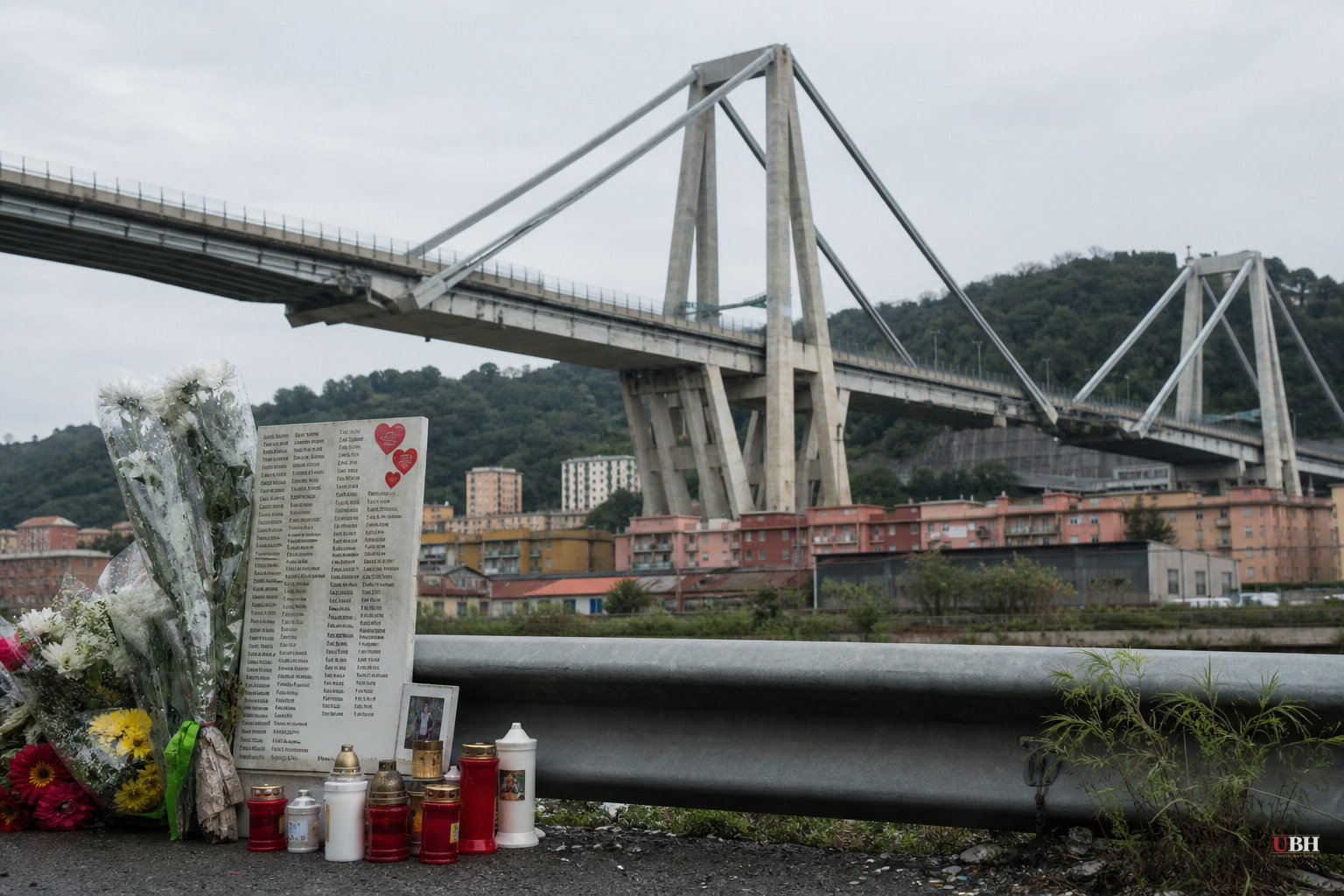
A court in Genoa, Italy, sentenced 32 people on July 16 over their roles in the 2018 collapse of the Morandi motorway bridge, a disaster that killed 43 people. The combined sentences add up to more than 170 years, according to The Epoch Times.
The bridge fell apart during a rainstorm on the morning of August 14, 2018, sending vehicles and chunks of concrete crashing to the ground below near the city of Genoa.
Giovanni Castellucci, the former head of Italian motorway operator Autostrade per l'Italia (ASPI), received the longest sentence at 12 years. Castellucci also served as CEO of Atlantia, the company that controlled ASPI at the time of the collapse. He was convicted of complicity in multiple counts of manslaughter through negligence.
Prosecutors had asked for more than 18 years for Castellucci. He plans to appeal the verdict, per The Epoch Times.
Michele Donferri Mitelli, another former senior ASPI manager, was sentenced to 11 years. Thirty other defendants received custodial sentences as well, including managers and engineers from SPEA, ASPI's engineering subsidiary, and former officials from Italy's Infrastructure and Transport Ministry.
Of the 57 people who stood trial, 25 were either acquitted or cleared because the statute of limitations had run out, according to Italian outlet La Repubblica.
A Long Wait for Verdicts
Judge Paolo Lepri spent around 45 minutes reading the verdicts in a Genoa courtroom packed with roughly 400 people, including victims' relatives, lawyers, journalists, and members of the public, according to Reuters.
Egle Possetti, president of the Committee for the Remembrance of the Morandi Bridge Victims, called the verdicts "important" and "positive" in comments to Italian public broadcaster RAI. Possetti lost her sister, brother-in-law, and her sister's two children in the collapse.
"We believe the judges have done a thorough job, examining each position in detail," Possetti said. "We are pleased that responsibility has been acknowledged in all three areas of prosecution, that is, by ASPI, by SPEA, and by the ministry."
The court found fault spread across the company that ran the bridge, the engineering firm that inspected it, and the government ministry that was supposed to oversee both.
Appeals Still to Come
The verdicts are not final. Castellucci and presumably other defendants are expected to appeal, meaning the legal process in Italy's court system could stretch on for years before anyone convicted actually serves prison time.
Italy's justice system allows multiple rounds of appeal before a criminal conviction becomes definitive, so the 170-plus years of combined sentences handed down on July 16 represent a first-instance ruling.
Nearly eight years after the bridge fell, families of the 43 victims have sat through years of investigation and trial proceedings before hearing a verdict. They now face the prospect of an appeals process with no fixed timeline.
The collapse itself prompted Italy to eventually strip Autostrade per l'Italia of its highway concession, with the state-controlled company that later took over promising tighter safety oversight of the country's aging motorway infrastructure. Whether this verdict changes how Italy inspects and maintains its bridges going forward remains separate from the question of whether these 32 people ultimately serve prison time.
Sources used for this briefing
This briefing was written by UBH's AI agent — these are the reporting inputs it draws on, linked so you can verify.


