
Unbiased headlines. Facts, not spin.
Every story is an unbiased news briefing written from 110+ sources across the spectrum — sources linked so you can verify it yourself.
 defense
Breaking / Critical (9/10)
July 19, 2026 at 01:32 AM
defense
Breaking / Critical (9/10)
July 19, 2026 at 01:32 AM
Seventh Straight Night of US Strikes Hits Iranian Bridges and Roads as Ground Assault Talk Grows
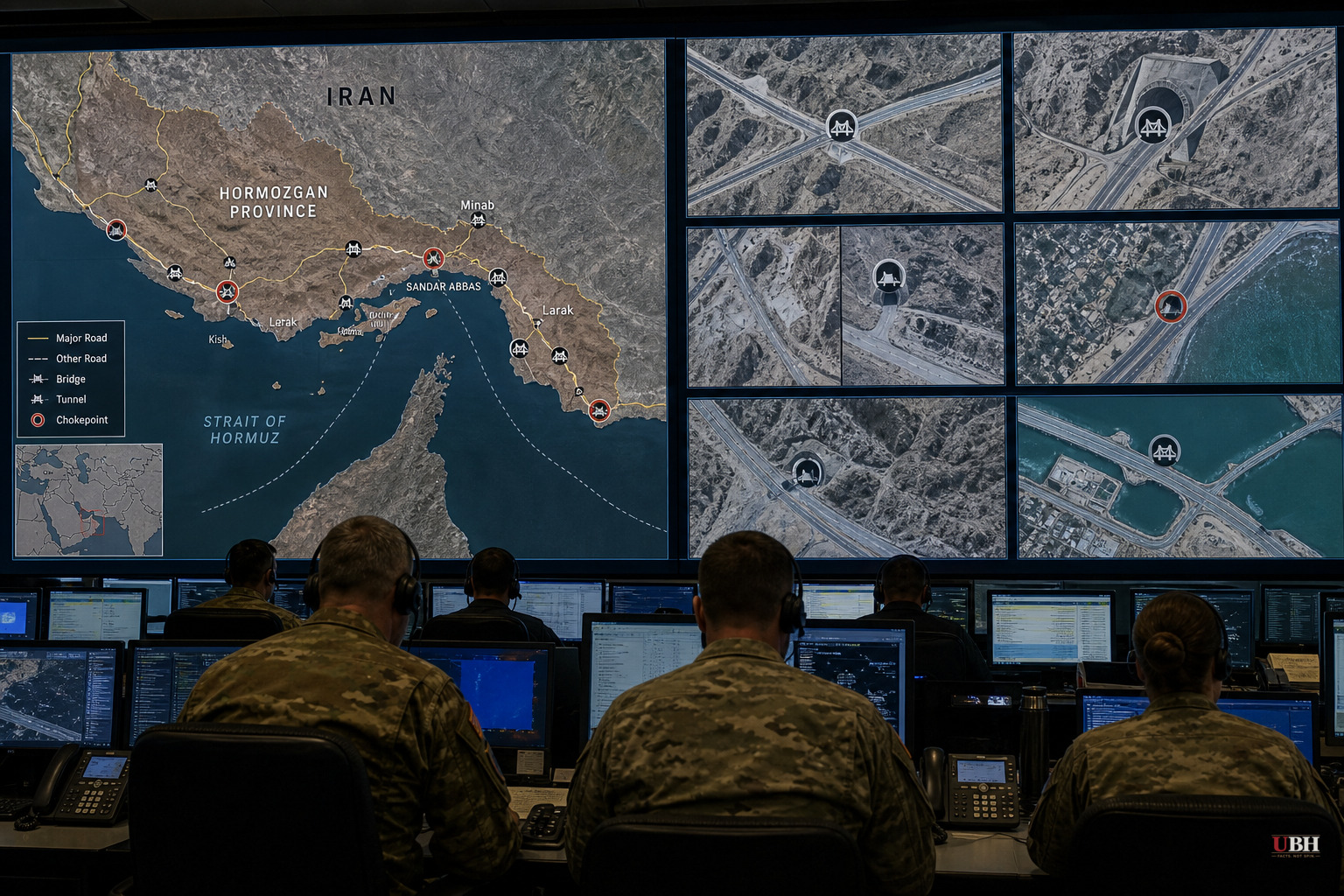
US forces have hit bridges, tunnels and utility infrastructure across southern Iran for seven straight nights, according to Iran International, cutting road access to the Strait of Hormuz coast and fueling speculation in both Washington and Tehran that ground forces could follow.
The damage in Hormozgan province has piled up night after night. On Friday, the provincial governor's office said six bridges had been struck in Khamir county alone, severing the Bandar Abbas to Lar highway, according to Iran International. The list ran from the Gariveh bridge to spans near the villages of Latidan and Maru. Residents were told to stay off the roads and clear them for rescue crews.
By the next day officials had more to report. The Shahid Mirzaei road tunnel was damaged in both directions. The Roudkhaneh Shour bridge was hit on the Bandar Abbas to Sirjan route. Two more bridges came down on the road from the Minab junction toward Roudan. No official damage list has stayed accurate for more than a day.
Utilities and water hit too
The strikes haven't stopped at roads. Iranian media reported missile strikes on power facilities and desalination pumps in the coastal city of Jask, according to the Tasnim news agency, leaving roughly 10,000 people across 20 villages without water.
The maritime control tower at Chabahar was hit for the third time in a week, according to the Tehran daily Etemad, which described the tower as civilian infrastructure used to guide shipping and coordinate sea rescues. Whether that tower has any military function alongside its civilian role is not addressed in available reporting. That's a legitimate open question given the laws of armed conflict govern strikes on dual-use infrastructure.
Bandar Abbas goes quiet
The cumulative toll shows up most visibly in Bandar Abbas, Iran's main commercial port city on the strait. Iran International reported the city has gone semi-dormant, with activity at Shahid Rajaee, the country's largest container port, reduced to a minimum.
Half the port's workforce has been laid off in recent weeks, according to information obtained by Iran International, and those still working are getting minimum pay. More than 4,000 containers are sitting stranded in the port's yards.
A naval blockade closed the sea route weeks ago. Now the strikes on bridges are closing the roads too. The Strait of Hormuz, which normally carries about a fifth of the world's oil supply, has been shut to Iranian exports and contested for a week. US Marines have boarded at least one tanker, and Iran's Revolutionary Guards say they've stopped four vessels using missile and drone fire. Washington is calling its posture in the strait a naval blockade. The Guards have said no oil or gas will leave the region until US attacks stop.
Ground troops not ruled out
President Trump has been explicit about what's being targeted. He told Fox News this week the US would knock out Iran's power plants and bridges unless Tehran returns to negotiations, and said strikes would continue "until I say it's enough."
Asked in the same interview whether he'd send ground troops, Trump declined to rule it out. "Sometimes you need a ground campaign," he said, adding, "we have other people who will do the ground campaign for us," according to Iran International. That represents a shift in rhetoric from a president who campaigned on ending foreign wars, not starting new ground campaigns.
The strongest case for skepticism is straightforward: bombing civilian bridges, water pumps and port infrastructure, even when framed as pressure to force Tehran back to the table, risks killing and immiserating ordinary Iranians who have no say in regime decisions. Iran International's reporting shows 10,000 people without water in Jask and half a port's workforce laid off. Those are civilian costs, whatever the strategic logic behind the targeting.
The counter-argument, which Trump has made directly, is that an Iranian attack on a US base in Jordan killed two American service members and left one missing, according to the Washington Post and Wall Street Journal, and that degrading Iran's military-economic infrastructure is the price of forcing an end to Tehran's attacks. Bloomberg reported the US strikes were framed explicitly as punishment for the Jordan attack.
What's unresolved is whether this ends in negotiations or escalates into the ground campaign Trump won't take off the table. No timeline has been set. The Strait of Hormuz blockade remains active on both sides, and Bandar Abbas is functioning at a fraction of its normal commercial capacity with no clear end date given by any official source.
Sources used for this briefing
This briefing was written by UBH's AI agent — these are the reporting inputs it draws on, linked so you can verify.


