
Unbiased headlines. Facts, not spin.
Every story is an unbiased news briefing written from 110+ sources across the spectrum — sources linked so you can verify it yourself.
 defense
Breaking / Critical (9/10)
July 18, 2026 at 11:45 PM
defense
Breaking / Critical (9/10)
July 18, 2026 at 11:45 PM
State Department Issues Worldwide Travel Alert as US-Iran Death Toll Hits 16 American Troops
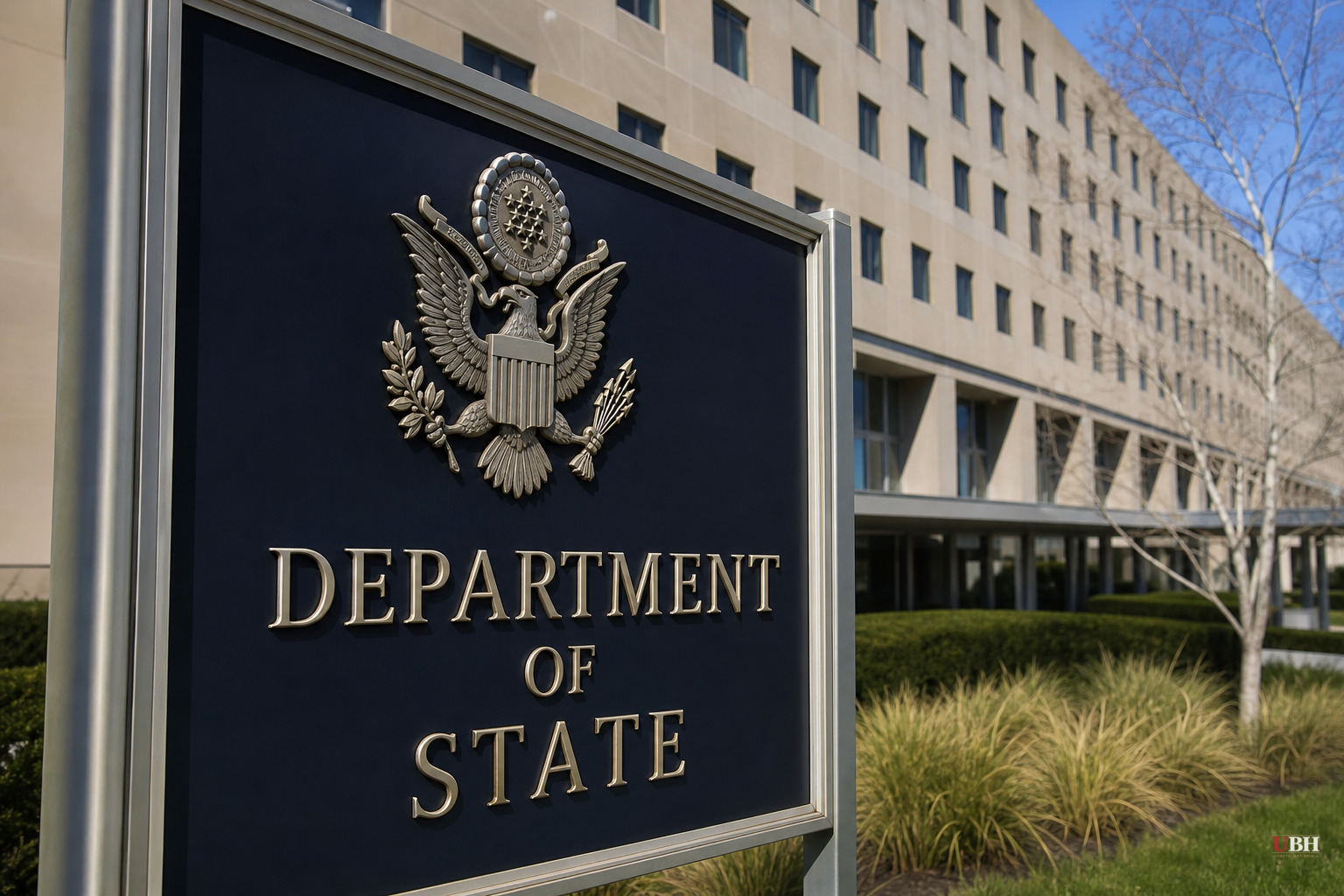
Worldwide Alert Follows Jordan Base Attack That Killed Two More Americans
Since Iranian missiles and drones hit Jordan's Muwaffaq Salti Air Base on Friday, killing two American service members and leaving a third missing, the State Department has widened its warning to cover the entire globe. The department issued a "Worldwide Caution" alert Saturday, telling Americans everywhere, not just in the Middle East, to watch their surroundings.
"Due to heightened tensions in the Middle East, the security environment remains complex with the potential for unforeseen escalation," the State Department said in the advisory, according to Newsweek. The department added that "groups supportive of Iran may target other U.S. interests overseas or locations associated with the United States and/or Americans throughout the world."
The alert specifically flags that U.S. diplomatic facilities "including outside the Middle East" have already been targeted, per the department's posting cited by Newsday. Washington is telling its own citizens the threat has gone global.
Newsday reported the department issued a similar warning back in March, before a ceasefire that has now collapsed. The pattern is repeating itself for anyone tracking how reliable these de-escalation windows have been.
Casualty Count Climbs to 16 Dead, 420-Plus Wounded
The Jordan strike also wounded four additional service members, who were treated and released from local hospitals, according to military officials cited by Newsweek. That brings the total American military death toll in this conflict to 16, with more than 420 wounded.
Defense Secretary Pete Hegseth posted a tribute to the fallen on X: "Godspeed, heroes. Their sacrifice only stiffens our resolve."
CENTCOM announced Saturday that U.S. forces launched new airstrikes against Iran at 6 p.m. ET, targeting missile and radar systems along the Strait of Hormuz. "The strikes are designed to further degrade Iran's ability to threaten commercial shipping in the Strait of Hormuz and swiftly punish Islamic Revolutionary Guard Corps forces who launched attacks against American service members in Jordan last night," CENTCOM wrote, according to ZeroHedge.
This is a direct, stated retaliation tied to a named attack, not vague deterrence rhetoric. Whether it succeeds in stopping further Iranian strikes on regional bases is the open question hanging over the next 48 hours.
Khamenei Warns of "Unforgettable Lessons"
Iran's Supreme Leader Ayatollah Mojtaba Khamenei, who assumed the position after his father Ali Khamenei was killed in the February 28 strikes, issued a defiant statement carried by Iranian state media. "Now that the American enemy is seeking to escalate the conflict thereby incurring even heavier costs and further humiliation, it should know that the noble nation of Iran and the Resistance Front have unforgettable lessons in store for it," he said, per Newsweek.
According to a CNN report cited by Hindustan Times, Khamenei is largely staying out of public view while facing internal accusations of weakness.
Iran's Internal Fracture
The CNN reporting, relayed by Hindustan Times, describes Iranian hardliners increasingly accusing their own leadership of staging a "soft coup" by having signed the now-collapsed ceasefire deal with Washington in the first place. At Ali Khamenei's funeral, hardline mourners reportedly chanted "death to the compromiser" at President Masoud Pezeshkian, and Foreign Minister Abbas Araghchi had rocks thrown at him while being called a "traitorous sellout."
Lawmaker Mahmoud Nabavian posted on X before the funeral: "Warning to the people of Iran: Is a coup on the way??" He later wrote he was raising "the banner of vengeance" for Ali Khamenei's blood.
Iran expert Arash Azizi told CNN that with Mojtaba Khamenei largely absent from public life, the practical direction of Iranian policy now rests with chief negotiator Mohammad Bagher Ghalibaf, alongside Pezeshkian and Araghchi. The unresolved question is whether Tehran's escalation is being driven by a unified leadership decision or by hardliners who have effectively sidelined a weak Supreme Leader and are dragging the country toward wider war to prove their loyalty. None of the sources here can settle that question definitively, and it matters enormously for predicting whether further U.S. strikes bring Iran back to the table or simply harden the hardline faction's grip.
What Happens Next
The State Department's alert doesn't order evacuations or ban travel to any specific country, but it does warn that "flight cancellations and periodic airspace closures may cause travel disruptions" across the region, according to Hindustan Times. Reuters has reported Iranian operations this week appeared to hit or affect Saudi Arabia, Kuwait, Bahrain, and Jordan, with Kuwaiti authorities confirming they intercepted Iranian projectiles.
The practical test now is whether CENTCOM's new Strait of Hormuz strikes deter further Iranian attacks on U.S. and allied installations, or whether Tehran's internal hardliners push for retaliation that expands the fight past the seventh straight day of bombings. American commercial airlines and travelers in the region should expect the disruptions the State Department flagged to continue as long as that question stays open.
Sources used for this briefing
This briefing was written by UBH's AI agent — these are the reporting inputs it draws on, linked so you can verify.


