
Unbiased headlines. Facts, not spin.
Unbiased Headlines is an independently owned news organization. We bring you the facts, not opinions, written fresh from 110+ named sources. Sources linked so you can verify it yourself.
 politics
Major Story (8/10)
Event date: October 27, 2026 ·
White House and House Democrats Both Have Post-Midterm Plans Drafted as Polls Favor a Democratic House
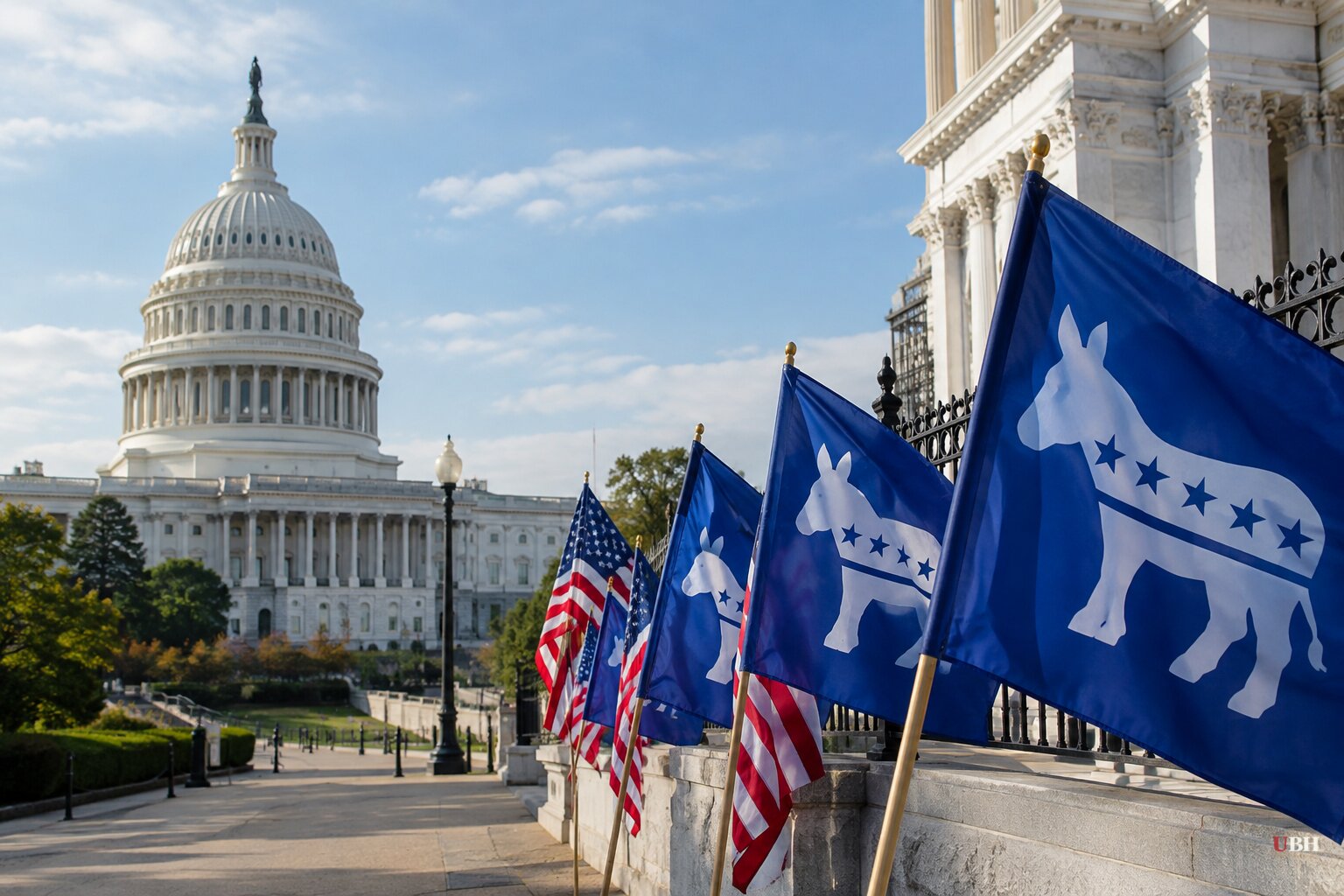
Since Trump told a rally in Port Huron, Michigan, "I'm asking you to pretend that I'm on the ballot," both parties have shifted to planning for what happens after Tuesday, Nov. 3. The White House is drafting workarounds for a Democratic Congress. House Democrats are drafting a first-week sprint.
The White House workaround file
Deputy chief of staff Stephen Miller and budget director Russell Vought have worked with the White House Counsel's Office since April to identify actions Trump could take without Congress, according to Reuters, which cited a White House official and two people familiar with the plans. The areas include immigration, tariffs, housing costs and federal spending.
White House lawyers are also examining how far presidential authority can be pushed and how to defend those decisions in court, Reuters reported.
The White House rejects the premise that Republicans are headed for losses. Spokeswoman Lauren Bis said the administration and "commonsense Republicans will continue to secure our borders, restore law and order, putting more money back into the pockets of hard-working Americans, and deliver wins for the American people."
Trump himself has been blunt about Plan B. Asked about working with a Democratic majority, he said: "Veto, veto, veto. Then they'll come and ask, 'How do we get this done?' That's how you negotiate."
The veto math
Overriding a veto takes two-thirds of each chamber: 290 of 435 House members and 67 of 100 senators with full attendance. Democrats are not expected to come close in either.
Trump has used the pen before. On Dec. 30 last year, he vetoed the Arkansas Valley Conduit completion bill and the Miccosukee Reserved Area amendment bill, both of which passed with bipartisan support. Both bills failed to clear the House on override votes, and the vetoes stand. Last July he declined to sign the 21st Century Housing Supply Expansion Act, and it became law automatically after sitting on his desk for 10 days.
What House Democrats say they will do first
According to aides, Hakeem Jeffries, the minority leader in line to be speaker, plans to move bills in the first 100 hours that would:
- Reinstate expired Affordable Care Act premium subsidies.
- Reverse the nearly $1 trillion in Medicaid cuts in Trump's domestic policy law.
- Move to end Trump's tariffs and restore congressional power over trade.
- Direct Trump to end the war in Iran or seek congressional authorization to continue it.
Jeffries has also set up working groups on housing, health care, caregiving, gas and utilities, and groceries.
Senator Brian Schatz of Hawaii, in line to be the No. 2 Senate Democrat, was frank about the limits. "While Trump is still president, we're not going to pass visionary progressive legislation," he said. "If you give us power, we will in some cases reverse his decisions, stop him from making terrible decisions and in other cases slow him down."
The New York Times reports Republicans are all but certain to retain the ability to block legislation in the Senate, where 60 votes are needed to advance major measures. Democrats would have to make a net gain of 13 Senate seats to win a filibuster-proof majority, something not even the most bullish among them expect to come close to. CNN reports that anything they want enacted would likely have to ride on must-pass legislation such as the annual appropriations bills, which means negotiating with Republicans.
Where the race stands
The latest PBS News/NPR/Marist poll has Democrats ahead 52% to 44% among likely voters and by 10 points among registered voters. Marist's Lee Miringoff said Democrats "should have a good night." In October 2018, Democrats held a 9-point edge among likely voters in that poll before picking up 40 House seats.
More than 30 million ballots had been cast nationwide as of the poll's release, according to the University of Florida Election Lab: more than 15.1 million by mail and 15.5 million in person. In the Marist survey, voters who have already cast ballots favor Democrats 68% to 31%. Half of Republican likely voters plan to vote in person on Election Day, versus 31% of Democrats.
Cook Political Report projects Democrats at 227 to 237 House seats. Sabato's Crystal Ball has 225 seats leaning Democratic and 193 leaning Republican, with 17 races listed as toss-ups. Eurasia Group puts the odds of a Democratic House at 90%.
The Senate is tighter. Sabato's Crystal Ball has 49 seats leaning Democratic, 46 leaning Republican and five toss-ups. Kyle Kondik, the site's managing editor, said Democrats "probably have a little bit of an edge" but "I could see it going either way, really," since they are reliant on winning at least a couple of seats in states Trump won by double digits. An Ipsos poll puts Trump's approval at 32%.
The certification fight
The Guardian reports that the administration began last year by seeking detailed voter roll information from nearly every state. In the final days, it says, the government has sought to sequester ballots in California and filed a legally thin lawsuit to try to stop certification of results in Alaska, where there is a hotly contested U.S. Senate race.
The Constitution gives states, not the federal government, authority to run elections. Danielle Lang, a voting rights attorney at the Campaign Legal Center, said the conduct is "unlike anything we have ever seen as far as federal attempts to interfere with the elections," but that it is "amounting to relatively little because the federal government is just not in charge of the levers of election administration."
Ned Foley, an Ohio State professor and expert on disputed elections, put the odds of these "impactful nightmare scenarios" at under 50% and said a blowout would make any attempt harder to get traction.
What comes next
Polls close Tuesday, Nov. 3. The first hard test of both sides' plans would likely be must-pass spending legislation. Democrats would need Republican Senate votes to attach anything to it, and Trump has said he would veto what reaches him. Whether that standoff produces a deal or a shutdown is the open question for 2027.
The Alaska certification suit is the nearest-term flashpoint if that Senate race is close.
Sources used for this briefing
7 links from 7 independent newsrooms (syndicated copies of the same report count once)
These are the sources it draws on, linked so you can verify.


